





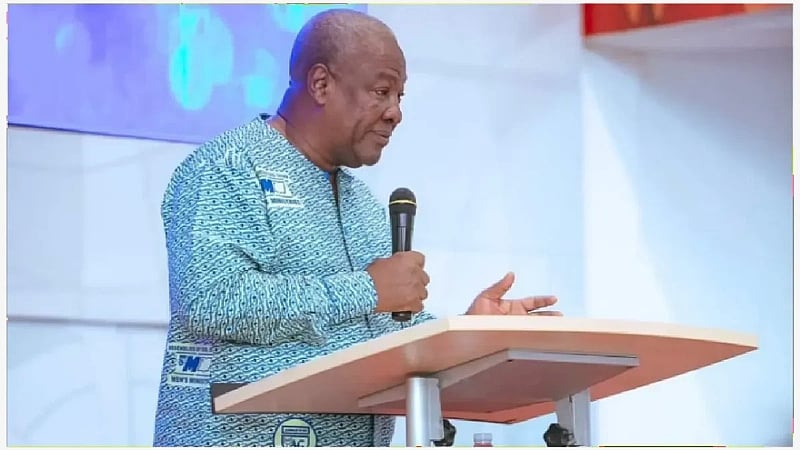
John Dramani Mahama, the former President of Ghana, recently shared a poignant reflection on the transient nature of power and the shifting sands of human relationships that accompany the transition from high office to private life. Speaking at a Thanksgiving service, Mahama recounted personal experiences highlighting the stark contrast between the bustling activity surrounding a sitting president and the quiet solitude that descends upon leaving office. His story centered on the wisdom imparted by former President John Agyekum Kufuor, which Mahama later came to experience firsthand following his own electoral defeat in 2016. Mahama’s reflection serves as a valuable lesson on the importance of humility and the understanding that genuine relationships are not contingent upon the trappings of power.
Mahama’s narrative began with a recollection of a visit he paid to Kufuor shortly after winning the 2012 elections. He vividly described the surprising quietude of Kufuor’s residence, a stark contrast to the vibrant atmosphere he had witnessed during Kufuor’s presidency. Mahama remembered the constant stream of visitors bearing gifts during festive seasons, a scene that had completely vanished by the time he assumed office. Intrigued by this transformation, Mahama inquired about the noticeable change, leading Kufuor to offer a prescient piece of advice: people are drawn to the position, not the person. He warned Mahama that the same bustling scenes he was currently experiencing would inevitably fade upon leaving office, leaving his own home just as quiet.
Years later, after his 2016 electoral defeat, Mahama found himself living out the very scenario Kufuor had described. The constant influx of well-wishers, the overflowing hampers of gifts during Christmas, and the queues of people seeking an audience – all disappeared. This personal experience resonated deeply with Kufuor’s earlier observation, driving home the ephemeral nature of political power and the fickle allegiance that often accompanies it. The sudden shift in social dynamics provided a stark and humbling lesson on the true nature of relationships within the sphere of political power.
The experience, while initially jarring, ultimately served as a profound learning experience for Mahama. He came to realize the superficiality of much of the adulation he had received while in office. The realization that many relationships were predicated on his position rather than his person allowed him to develop a more nuanced understanding of human interaction within the political landscape. He understood that true connection transcended the title and trappings of power, a lesson he now carries with him.
Mahama’s public reflection reveals a depth of self-awareness and a willingness to acknowledge the transient nature of power. It underscores the importance of recognizing the difference between genuine support and opportunistic allegiance. The experience transformed his perspective, fostering a greater appreciation for authentic relationships and a deeper understanding of the human condition within the context of power dynamics. He acknowledged that the cheers and applause are often directed at the office, not the individual, and that true relationships endure beyond the confines of political influence.
This anecdote serves as a valuable reminder, not just for politicians, but for anyone in a position of authority. It highlights the importance of humility and the need to discern between genuine support and fleeting allegiance. The story also emphasizes the importance of forming relationships based on mutual respect and shared values, rather than on the transient nature of power or position. Mahama’s reflection encourages a more grounded approach to leadership, one that prioritizes authentic connections and recognizes the impermanence of power and the value of genuine human relationships.








