Mahama’s Triumphant Return: A Resounding Victory in Ghana’s 2024 Presidential Election
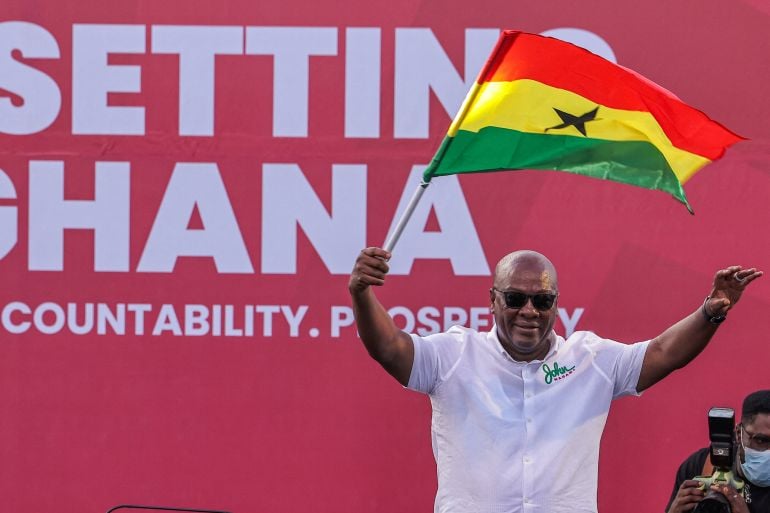
John Dramani Mahama, the flagbearer of the National Democratic Congress (NDC), has resoundingly secured victory in Ghana’s 2024 presidential election, marking a significant political comeback after his previous term from 2012 to 2016. Mahama’s victory, confirmed by the Electoral Commission (EC) Chairperson, Jean Mensa, represents a decisive mandate from the Ghanaian electorate, as he defeated incumbent Vice President Dr. Mahamudu Bawumia of the New Patriotic Party (NPP) by a substantial margin of over 1.6 million votes. This victory not only reinstates Mahama to the presidency but also signals a potential shift in Ghana’s political landscape, with the NDC strengthening its position in both the executive and legislative branches of government.
The official results announced by the EC Chairperson revealed a comprehensive win for Mahama, who garnered 6,328,397 votes, representing 56.55% of the valid votes cast. Dr. Bawumia, his closest competitor, secured 4,657,304 votes, translating to 41.61%. The EC Chair emphasized the clear and unambiguous nature of the results, stating that even if all outstanding votes from nine constituencies were added to Dr. Bawumia’s tally, it would not alter the outcome of the election. This decisive victory underscores the strong support Mahama received from the Ghanaian population and sets the stage for his return to the presidency.
The EC, led by Chairperson Jean Mensa, has affirmed the credibility and transparency of the electoral process. Mrs. Mensa declared the elections as "credible, fair, transparent, and peaceful," emphasizing that every vote counted. She highlighted the EC’s commitment to ensuring a smooth and efficient election process, citing various reforms and decisive actions taken by the commission. These included reprinting defective ballot papers, waiving verification fees, and implementing measures to enhance the integrity of the voting process. Mrs. Mensa expressed satisfaction with the outcome, stating that the elections were "acceptable by all," reflecting a broad consensus on the fairness and legitimacy of the process.
The 2024 election also saw significant participation from the Ghanaian electorate, with a voter turnout of 60.9%. A total of 11,191,422 valid votes were cast out of the 18,774,159 registered voters, indicating a healthy level of engagement in the democratic process. Despite challenges encountered in the lead-up to the polls, the EC Chair expressed confidence in the integrity of the election, emphasizing that the results would further solidify trust in Ghana’s electoral processes. This high voter turnout suggests a continued commitment to democratic principles and active participation in shaping the nation’s future.
Beyond the presidency, the election results also point towards a strengthening of the NDC’s presence in parliament. While the exact figures of parliamentary seats gained by the NDC are yet to be fully confirmed, initial reports suggest a significant increase in their representation. This potential shift in the legislative balance of power could further enhance the NDC’s ability to implement its policy agenda and govern effectively. The broader implications of this electoral outcome will likely unfold in the coming weeks as the new government takes shape and begins to address the challenges facing the nation.
Mahama’s return to power marks a pivotal moment in Ghana’s political history. His victory reflects not only the public’s endorsement of his leadership but also a desire for change and perhaps a renewed focus on the issues that resonate most with the Ghanaian people. As Mahama prepares to assume the presidency once more, the nation looks forward to a period of stability, progress, and continued commitment to democratic values. The peaceful and transparent nature of the election itself reinforces Ghana’s reputation as a beacon of democracy in the region. The incoming administration faces the task of addressing economic challenges, promoting social development, and further strengthening Ghana’s democratic institutions.