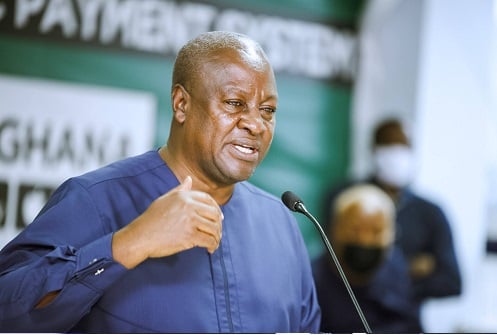
Former President John Dramani Mahama, the presidential candidate of the National Democratic Congress (NDC), has taken a proactive stance in his campaign for the upcoming elections by appealing directly to voters in the Upper West Region. He is particularly focused on urging constituents to refrain from supporting smaller political parties or independent candidates, emphasizing that the NDC is the most viable alternative to the ruling New Patriotic Party (NPP). In his address during a rally held in Nabullo, situated within the Sissala East constituency—an area that has historically leaned towards the People’s National Congress (PNC)—Mahama articulated his vision for a united voter base that can effectively challenge the NPP’s incumbency.
Mahama’s message centers around the risk of vote dilution among smaller parties, which he argues could undermine the opposition’s strength in the elections. He is keenly aware that dissatisfaction with the NPP exists among various voter segments and believes that the NDC can capitalize on this sentiment if voters consolidate behind his party. By advocating for a singular focus on the NDC, Mahama is aiming to rally supporters who may have previously wavered in their political loyalties, successfully steering them away from less prominent candidates that could siphon off critical votes.
In his remarks, Mahama acknowledged the qualifications of candidates from smaller parties, specifically mentioning Bernard Mornah, suggesting that while they may possess substantial merit, voting for them would ultimately equate to wasting votes that could bolster the NDC’s chances. His candid assertion underscores his understanding of the electoral dynamics at play, as he seeks to galvanize his supporters by framing the election as a pivotal moment for the opposition to reclaim power. By creating a narrative that elevates the NDC above competing factions, Mahama hopes to strengthen party unity and amplify the message that collective action is vital.
The overarching theme of Mahama’s campaign is the necessity for unity among the electorate to achieve a significant victory over the NPP. This call for solidarity extends beyond mere electoral tactics; it is a rallying cry for those who are disillusioned with the current government’s policies and performance. He aims to foster a sense of purpose among voters, reinforcing the idea that their collective decision to support the NDC is crucial for effecting meaningful change in governance. Through this approach, Mahama aspires to redefine the political landscape of the Upper West Region as one that is firmly aligned with the goals and aspirations of the NDC.
Moreover, Mahama’s engagement within Sissala East serves as a strategic move, as he targets constituencies that have previously demonstrated political loyalty to other parties. This tactic not only seeks to dismantle established voter bases but also positions the NDC as a unifying force capable of bridging ideological divides. His rhetoric suggests a confidence that a significant segment of the electorate is ready to pivot towards the NDC, provided that they are presented with a compelling alternative that addresses their needs and aspirations.
In conclusion, Mahama’s appeal to the voters of the Upper West Region encapsulates a broader strategy of consolidation among opposition supporters. By framing the upcoming election as a decisive battle against the NPP, he urges voters to recognize the importance of their individual contributions to the collective effort. His focus on discouraging support for smaller parties reflects not only a tactical approach but also an understanding of the complexities inherent in Ghana’s political landscape. Ultimately, Mahama’s message is one of unity and purpose, aimed at galvanizing a diverse voter base to stand firmly behind the NDC in pursuit of a shared vision for the future.