









Paragraph 1: The President’s Declaration of War on Corruption
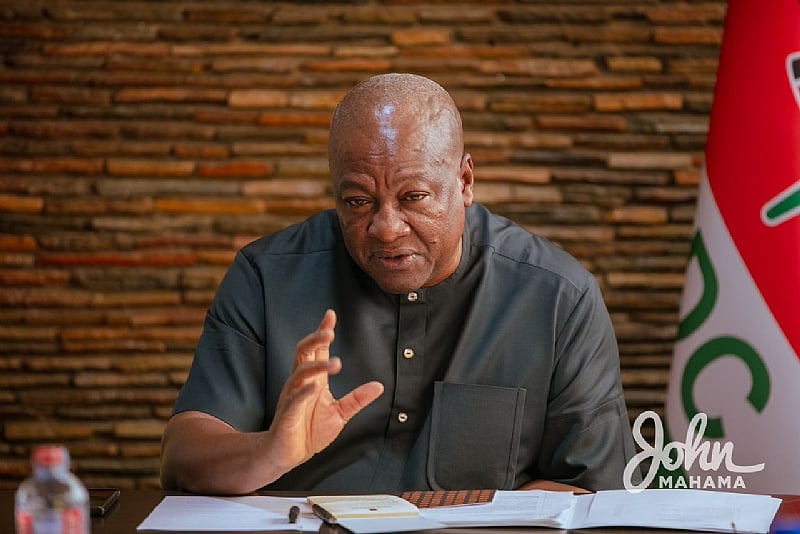
President John Dramani Mahama of Ghana has issued a stern warning to individuals engaging in corrupt practices, emphasizing that Ghana is no longer a sanctuary for such illicit activities. Speaking after receiving a report from the Operation Recover All Loots (ORAL) committee, established to gather information and facilitate his anti-corruption drive, President Mahama declared his unwavering commitment to combating corruption and ensuring accountability. He stressed that those who believe they can defraud the state and evade justice will be held accountable. This marks a decisive step by the Mahama administration to address the pervasive issue of corruption that has plagued Ghana for years, undermining its development and eroding public trust.
Paragraph 2: Reinforcing the Commitment to Accountability and Transparency
President Mahama reiterated his administration’s dedication to promoting integrity, accountability, and the rule of law. He assured anti-corruption advocates of the government’s unwavering support in their efforts to build a nation where honesty and hard work are rewarded. He called for a collective effort involving citizens, civil society organizations, the media, and public officials to create a just, transparent, and prosperous Ghana for future generations. This collaborative approach underscores the importance of a multi-faceted strategy to combat corruption, recognizing that it requires the active participation of all stakeholders.
Paragraph 3: Unveiling the Potential for Significant Financial Recovery
Samuel Okudzeto Ablakwa, Chairman of the ORAL Committee, revealed the staggering extent of potential financial recovery for the state. He reported that if buyers of state properties were compelled to pay fair market prices, Ghana could recoup $702.8 million. Ablakwa highlighted instances where state lands were sold for drastically undervalued prices, ranging from GH¢42,000 to GH¢160,000, while their actual market value ranged between $500,000 and $600,000. This discrepancy reveals a significant loss of revenue for the state, highlighting the need for greater transparency and accountability in the management of public assets.
Paragraph 4: Billions in Potential Recoveries from Ongoing Investigations
The ORAL Committee’s investigations have identified 36 cases that could potentially yield a staggering $20.49 billion in recoveries if successful. This significant figure demonstrates the scale of corruption within the country and the potential for recovering substantial funds that could be used to finance development projects and improve the lives of Ghanaians. The committee’s findings underscore the urgent need to pursue these cases diligently and ensure that those responsible for corruption are brought to justice.
Paragraph 5: The Significance of Operation Recover All Loots (ORAL)
The establishment of the ORAL committee and its subsequent findings represent a crucial step in Ghana’s fight against corruption. By systematically investigating instances of misappropriation of state assets and pursuing legal avenues for recovery, the government is sending a clear message that corruption will not be tolerated. The ORAL initiative demonstrates the administration’s commitment to holding those responsible for corruption accountable and recovering stolen public funds.
Paragraph 6: The Path Forward: Strengthening Institutions and Promoting Transparency
The fight against corruption requires a long-term commitment to strengthening institutions, promoting transparency, and fostering a culture of accountability. Beyond the immediate efforts of the ORAL committee, there is a need for comprehensive reforms to address systemic weaknesses that enable corruption to flourish. This includes strengthening the capacity of anti-corruption agencies, enhancing transparency in public procurement processes, and promoting ethical conduct within the public sector. By implementing these reforms, Ghana can build a stronger, more resilient society that is less susceptible to the corrosive effects of corruption.









