





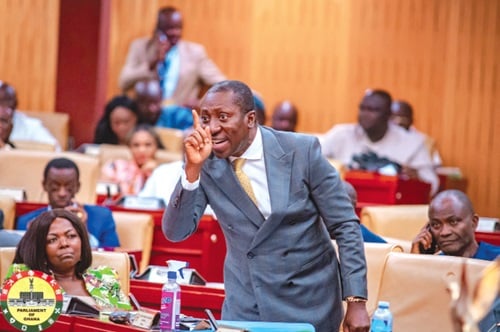
The Majority Caucus in Parliament has voiced strong opposition to Speaker of Parliament Alban Bagbin’s recent ruling that resulted in the declaration of four seats as vacant. This ruling stemmed from a petition filed by the Minority, seeking the removal of Members of Parliament (MPs) who are running as Independent Candidates in the forthcoming December elections. The MPs affected by this ruling include NPP’s Cynthia Morrison from Agona West, NPP’s Kojo Asante from Suhum, Fomena’s Andrew Asiamah, and NDC’s Kwakye Ackah representing Amenfi Central. The Speaker’s decision has ignited controversy and raised concerns about the stability of the parliamentary majority and the integrity of democratic processes in Ghana.
In their public statement on October 17, 2024, the Majority Caucus expressed fears that the Speaker’s ruling might be part of a deliberate strategy to manipulate parliamentary dynamics to favor the Minority. They pointed to the immediate proclamation by Minority Leader Cassiel Ato Forson, who claimed his faction was the new Majority following this decision, further fueling suspicions of political maneuvering. The NPP MPs see these developments as a serious threat to the foundational principles of fair representation and legislative integrity, underscoring their commitment to challenge what they categorize as an unconstitutional act by the Speaker.
Moreover, the Majority Caucus is determined to undertake all lawful measures required to counter this ruling and to restore what they perceive as the constitutional order that is under threat. They have called upon the Supreme Court to urgently address the case brought forth by the Majority Leader, emphasizing that the stability of Ghana’s democracy hangs in the balance following the Speaker’s controversial ruling. This appeal to the judiciary reflects the seriousness with which the Majority Caucus views the situation, as they believe it could have lasting repercussions on the political landscape.
In their statement, the Majority Caucus not only outlined their intentions but also appealed to Ghanaian citizens to remain vigilant regarding the protection of their constitutional rights and democratic principles. They have urged civil society organizations, legal experts, and all stakeholders to take a firm stand against what they describe as a perilous precedent being set by the Speaker. This call to action highlights the broader impact of the Speaker’s ruling, as it transcends parliamentary confines and touches on the fundamental tenets of democracy within Ghana.
The discourse emerging from this controversy encapsulates the tense political climate in Ghana, where the actions of a single political actor—the Speaker—can reverberate across the entire legislative framework and public trust in governance. The Majority Caucus’s reaction underscores the importance of perceived impartiality in parliamentary proceedings and the potential consequences of perceived biases by influential figures such as the Speaker. This situation marks a critical juncture for the Ghanaian legislature, setting the stage for further legal and political battles in the days leading up to the elections.
In conclusion, the Majority Caucus’s vehement opposition to Speaker Alban Bagbin’s ruling has thrown the parliamentary dynamics into turmoil and raised crucial questions about the integrity of democratic processes in Ghana. With significant stakeholders calling for judicial intervention and civic engagement, the fallout from this ruling is expected to influence not just the immediate legislative agenda but also the broader electoral landscape as Ghanaians prepare for the upcoming December elections. The response from civil society, legal institutions, and the electorate will be pivotal in shaping the future of Ghana’s governance and democratic practice.








