





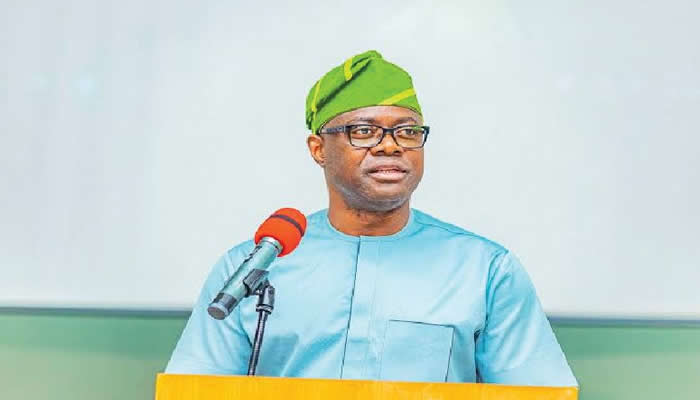
Governor Seyi Makinde of Oyo State has recently emphasized the urgent need for significant investments in science and technology from both federal and state governments. This assertion was made during his lecture at the inaugural convocation of Thomas Adewumi University in Kwara State. He underscored that to thrive in a world increasingly driven by technology, Nigeria must prioritize competitive innovation, resilience, and strategic insights. Makinde, represented by his Chief of Staff, Segun Ogunwuyi, articulated that the country risks falling further behind other nations unless concerted efforts are made to bolster technological advancement. He cited the example of South Korea, a leading name in global technology, attributing its success to substantial investments in education and innovation as key national priorities.
In his lecture titled “The Fourth Industrial Revolution and the Future of Work: Implications for Nigerian Graduates,” Makinde posed the idea that self-reliance should be cultivated through a sustainable approach to utilizing local resources, talents, and technologies while also engaging effectively in global markets. He pinpointed the necessity for the Nigerian government at all levels to invest extensively in Science, Technology, Engineering, and Mathematics (STEM) as catalysts for national transformation. The governor noted that a nation’s global competitiveness is not solely tied to its natural resources, a predicament Nigeria finds itself in, but fundamentally relies on its innovation capacity.
Makinde also addressed several pressing issues facing Nigeria, including widespread youth unemployment, heavy reliance on foreign technologies, and the underutilization of the country’s human and natural resources. He highlighted that despite Nigeria’s vast population of over 200 million, full of potential and talent, the reality remains that many young Nigerians find it difficult to secure meaningful employment. Moreover, the nation’s economy continues to import various goods, from basic necessities to advanced technologies, which could potentially be produced locally. This reliance stands in stark contrast to Nigeria’s wealth of resources and talent, indicating a pressing need for an urgent re-evaluation of the nation’s economic strategies.
During the same convocation event, the High Commissioner of Namibia to Nigeria and ECOWAS, Humphrey Geiseb, addressed the graduates, describing them as the future leaders poised to change the direction of Nigeria. He highlighted the transformative power of education, noting its ability to transcend geographic and cultural borders, while encouraging the graduates to leverage their knowledge for positive contributions to society. This sentiment echoes Makinde’s ideas on youth empowerment and innovation, suggesting a collective responsibility among the younger generation to address the challenges facing the country.
In light of enhancing the educational sector, Prof. Victor Olanrewaju, the Pro-Chancellor and Chairman of the Governing Council of Thomas Adewumi University, called on the Federal Government to reconsider its current position regarding the Tertiary Education Fund. He advocated for the inclusion of private universities in the funding framework, arguing that such support would foster their development and contribution to youth security, engagement, and overall societal growth. Olanrewaju’s appeal highlights the importance of bolstering all educational institutions in fostering innovation, skills development, and job creation, which are vital for addressing the challenges identified by Governor Makinde.
Concluding the event, the Vice Chancellor of Thomas Adewumi University, Prof. Franscisca Oladipo, announced the graduation of 26 students, with several achieving outstanding grades, including six with first-class honors. Johnson Adewumi, the founder of the university, reflected on the institution’s challenging journey, expressing pride in the outcome. Notably, he emphasized that the institution aims not only to produce graduates but also to nurture job creators who will actively contribute to addressing the pressing issues in Nigeria. This vision aligns with Governor Makinde’s advocacy for investing in education and technology as essential tools for national advancement and self-reliance, highlighting the university’s commitment to fostering the skills necessary for tomorrow’s challenges.








