





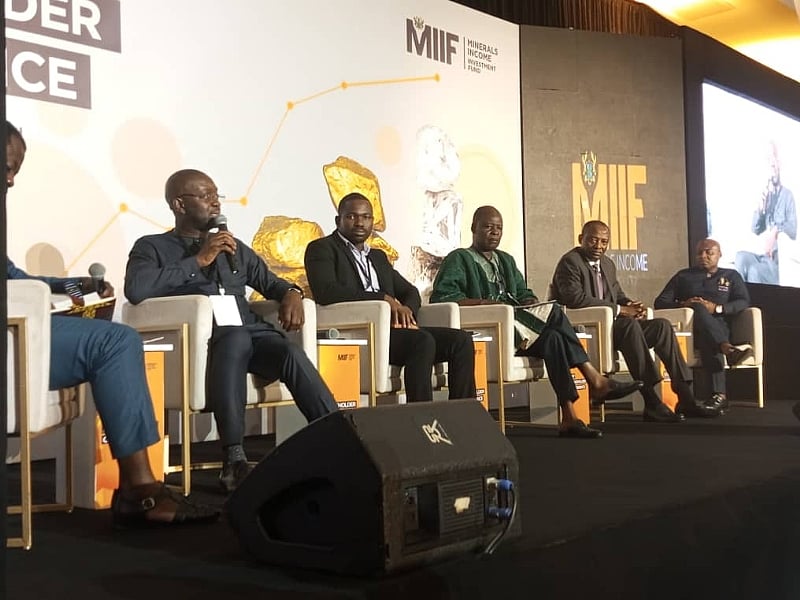
The Mineral Income Investment Fund (MIIF) is poised to implement a dividend pay-up policy designed to enhance the government’s capacity to fund economic development initiatives. Slated for finalization by the end of November, this policy is part of a medium-term strategy aimed at minimizing unnecessary interference and managing the risks associated with the practice of leveraging mineral incomes for immediate funding needs. This initiative aligns with section 3, clause (h) of the MIIF Act of 2018. During a recent panel discussion at the second MIIF stakeholder conference in Accra, Mr. Edward Nana Yaw Koranteng, the MIIF Chief Executive Officer, expressed the necessity of reevaluating the MIIF Act to bolster the fund’s independence and ensure it operates within its established mandate. This reflection is seen as crucial for maintaining focus and accountability in the management of mineral resources.
The conference, which centered around the theme “Minerals Value Addition and Value Chain Development – Essential tools for Ghana’s Development,” served as a platform for stakeholders to explore the future of Ghana’s mineral resource management. Mr. Koranteng stressed that the MIIF needs to be recognized as an independent Sovereign Wealth Fund, which would help mitigate any negative investor perceptions regarding its operational integrity and independence. He believes that a sense of autonomy is vital for attracting and retaining investor confidence, ultimately facilitating sustainable development that leverages Ghana’s mineral wealth effectively. Ensuring that the MIIF does not overreach its mandate is critical for its stability and credibility within the industry.
Dr. Steve Manteaw, Co-Chair of the Ghana Extractive Industries Transparency Initiative, proposed a review of the MIIF Act to include an oversight committee driven by citizens. This citizen-led body would be tasked with reporting on the use of mineral revenues and ensuring transparency in how these resources are managed. Manteaw emphasized the importance of public engagement and accountability, suggesting that such a committee would foster a more inclusive approach to the governance of mineral wealth. This proposal reflects a broader need for public oversight in resource management, aiming to create a framework that acknowledges the benefits accrued from mineral exploitation while also promoting inter-generational equity.
The discussion also revisited Ghana’s political history, particularly the commitments made by the New Patriotic Party (NPP) regarding mineral revenue management. Manteaw pointed out that back in 2016, the NPP manifesto included promises of establishing a minerals revenue management framework that paralleled the Petroleum Revenue Management Act. He questioned whether the current state of MIIF fulfills that vision, highlighting the need for consistent policy frameworks that govern resource management in a way that is both sustainable and equitable. This historical perspective underscores the gap that may exist between political promises and actual legislative outcomes, prompting a call for enhanced alignment between aspirations and achievements in resource governance.
Mr. Denis Gyeyir from the Natural Resource Governance Institute (NRGI) provided valuable insights into the MIIF’s responsibilities, advising the organization to commit to a high standard of transparency. Gyeyir underscored the necessity of public disclosures regarding financial statements, contractual agreements, and details concerning assets under management. By making such information readily available and timely, MIIF can foster greater trust among stakeholders, ensuring that all operations are conducted transparently. This commitment to openness is seen as essential for the credibility of the fund and for engaging citizens in the conversation about how mineral wealth is being utilized.
Established under the MIIF Act of 2018 (Act 978), the MIIF is mandated to manage revenue generated from royalties tied to mineral production activities in Ghana. The fund’s income is derived from royalties associated with various minerals, including gold, limestone, and manganese, among others. In managing these resources, MIIF plays a crucial role in ensuring that the government’s equity interests in mining companies are effectively monitored and leveraged for national development. The introduction of a dividend pay-up policy represents a significant step towards ensuring that Ghana’s mineral revenues are harnessed for the country’s growth, creating a pathway for sustainable economic development through strategic resource management. As MIIF moves forward with its initiatives, the insights shared at the stakeholder conference will likely shape the future of mineral revenue management in Ghana, promoting a holistic and strategic approach to resource value addition and economic benefit.








