









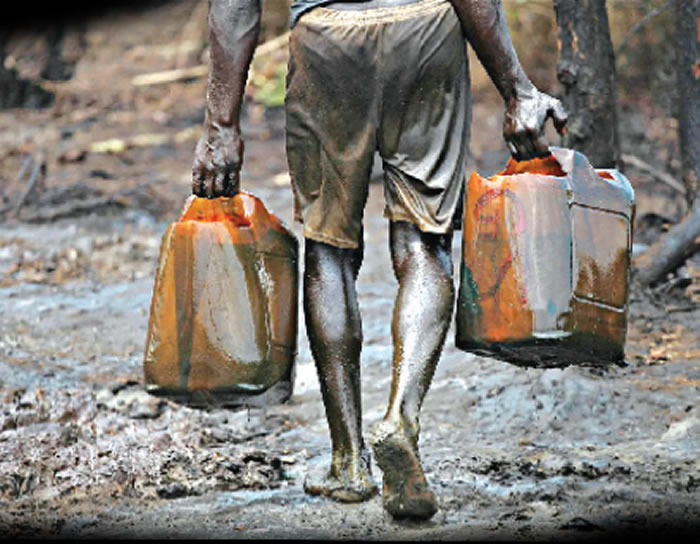
The 6 Division of the Nigerian Army has undertaken significant operations in the Niger Delta region, resulting in the dismantling of 34 illegal crude oil refining sites, the arrest of 11 suspected oil thieves, and the recovery of over 80,650 liters of both stolen crude and refined products. These operations occurred between November 18 and 24, 2024, spanning across multiple states, including Rivers, Bayelsa, Delta, Edo, and Akwa Ibom, demonstrating the military’s commitment to combating oil theft and illegal refining, which have plagued the area and have substantial economic and environmental repercussions.
In Rivers State, extensive operations led by the military produced noteworthy achievements. Troops deactivated eight illegal refining sites in the Buguma Creeks area of Asari-Toru Local Government Area, seizing over 25,000 liters of stolen products. In addition, they discovered a wellhead used for loading crude, cooking pots, and several wooden boats, confiscating more than 8,000 liters of stolen products in the process. Near Ogaji-Ama in Buguma South East River, two wooden boats containing 3,000 liters of stolen crude were intercepted, illustrating the ongoing battle against sophisticated methods employed by thieves to siphon the region’s oil resources.
The operations were not limited to Rivers State; significant efforts were also made in Bonny Local Government Area, where an illegal refining site containing 10,000 liters of stolen crude was dismantled. In Ahoada West Local Government Area, troops intercepted a wooden boat loaded with 2,000 liters of stolen products, and in ONELGA, a confrontation with an armed vandal resulted in the neutralization of the threat, along with the recovery of a pump-action gun and cartridges. The army’s relentless pursuits demonstrate a strategic approach to not just dismantling illegal operations but also securing the safety of their personnel against potential violence from armed thieves.
In Bayelsa State, operations also yielded positive results. Troops intercepted a wooden boat carrying 2,500 liters of stolen crude at Clough Creek within Ekeremor Local Government Area and dismantled another illegal refining site at Sangakubu in Nembe Local Government Area, where 1,500 liters of stolen products were recovered. Additionally, illegal refining sites and a wooden boat with unquantified stolen products were addressed in Southern Ijaw Local Government Area, emphasizing a comprehensive sweep against crime across various locales.
Delta and Edo States also faced scrutiny during these operations. In Delta State, troops intercepted over 2,500 liters of stolen crude stored at a hotel in the Uvwie Local Government Area, showcasing a strategic shift towards places that could potentially harbor stolen resources. Likewise, in Abe Community of Orhiomwon Local Government Area in Edo State, two vehicles loaded with stolen products were intercepted, expanding the operational reach of the military in confronting oil theft beyond traditional sites and methods.
In Akwa Ibom State, the army continued to maintain its presence in land and waterways, ensuring persistent pressure on criminal activities. Throughout these comprehensive operations in the Niger Delta, a total of 34 illegal refining sites were dismantled, 11 suspects apprehended, and a total of 80,650 liters of stolen products recovered. Additional seizures comprised 180 cooking drums, 29 metal container receivers, vehicles, and motorcycles, underscoring the scale of these activities.
The accomplishments of these operations have garnered commendation from the General Officer Commanding 6 Division, Maj. Gen. Jamal Abdussalam, who recognized the troops’ efforts in securing Nigeria’s crucial oil and gas resources. He emphasized the necessity of sustaining these operations, not just for the immediate impact of curtailing oil theft but also for boosting production and ensuring stability in the region. The military’s recent successes indicate a robust commitment to addressing the long-standing issue of illegal oil refining in the Niger Delta, with the potential for lasting impacts on both the economy and the environment.









