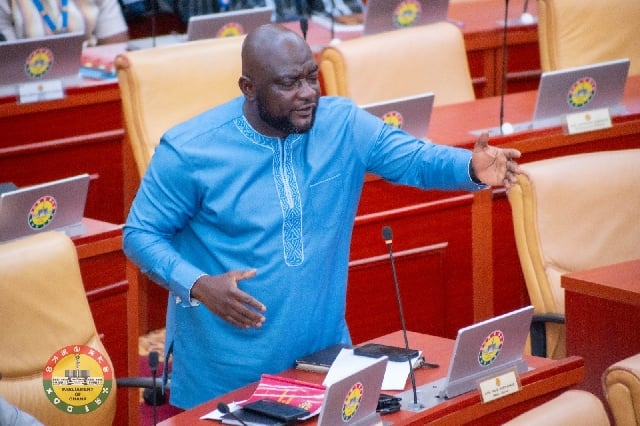
Davis Ansah Opoku (OPK), a Member of Parliament representing Mpraeso, has issued a strong caution to the Minister for Communications, Samuel Nartey George, against actions that could potentially compromise the independence of the National Communications Authority (NCA). OPK’s concern stems from the Minister’s directive for a selective audit of frequency authorizations granted within the past 60 days. He argues that this directive undermines the NCA’s autonomy, which is legally enshrined in the Electronic Communications Act 2008 (Act 775). This Act explicitly states that the NCA is not subject to the control of any person or authority in the execution of its duties, except as specifically outlined within the Act itself. OPK emphasizes that the Minister lacks the legal standing to dictate the NCA’s audit procedures or to revoke frequency authorizations. Any such review, he insists, should originate from the NCA itself and adhere to established due process, free from ministerial influence.
At the heart of OPK’s argument is the principle of regulatory independence. He contends that the Minister’s selective audit, targeting only the last 60 days of frequency authorizations, raises serious questions about its true motivation. If the objective were truly about transparency and regulatory compliance, OPK posits, the audit should encompass all frequency allocations, irrespective of their timing. The focus on such a specific and recent timeframe, he suggests, raises the specter of political motivations, potentially targeting specific media outlets that may have received authorizations during that period. This targeted approach, he argues, risks jeopardizing the integrity of the regulatory process and casts doubt on the Minister’s commitment to a fair and impartial media landscape.
OPK underscores the vital role of radio in Ghana’s democratic process, describing it as the “heartbeat” of their democracy. Radio, he explains, provides a crucial platform for citizens to express their views and engage in public discourse, a function essential for a thriving and healthy democracy. He warns that any attempt to selectively audit or revoke frequency authorizations could be interpreted as an attempt to suppress press freedom and manipulate the flow of information. Such actions, he argues, would have chilling effects on media pluralism and could ultimately undermine the democratic principles that Ghana upholds.
The Member of Parliament calls for a reaffirmation of the NCA’s independence and urges the Minister to allow the regulatory body to operate without undue political interference. He stresses the importance of a transparent and impartial regulatory environment that fosters a diverse and vibrant media landscape. OPK’s appeal emphasizes the need for all regulatory institutions, including the NCA, to operate within the boundaries of the law and to uphold the principles of fairness and accountability. He warns against actions that could erode public trust in these institutions and undermine their credibility.
Beyond the immediate issue of the frequency audit, OPK’s concerns highlight the broader importance of protecting media freedoms in Ghana. He underscores the need for unrestricted access to diverse and independent media voices, allowing citizens to access a wide range of perspectives and information. He argues that this is crucial for holding those in power accountable and fostering informed public participation in democratic processes. Any attempt to control or manipulate the media landscape, he suggests, represents a direct threat to the foundations of a democratic society.
OPK concludes by urging Parliament to take a proactive role in safeguarding media freedom and ensuring the independence of regulatory institutions. He calls on his fellow parliamentarians to uphold the principles of transparency and accountability in all regulatory processes, ensuring that all Ghanaians have unfettered access to a variety of independent media voices. This, he argues, is essential for preserving the integrity of Ghana’s democratic institutions and fostering a vibrant and participatory democracy. He emphasizes the need for a regulatory framework that is free from political influence and promotes a diverse and competitive media landscape, enabling citizens to access a wide range of information and perspectives.