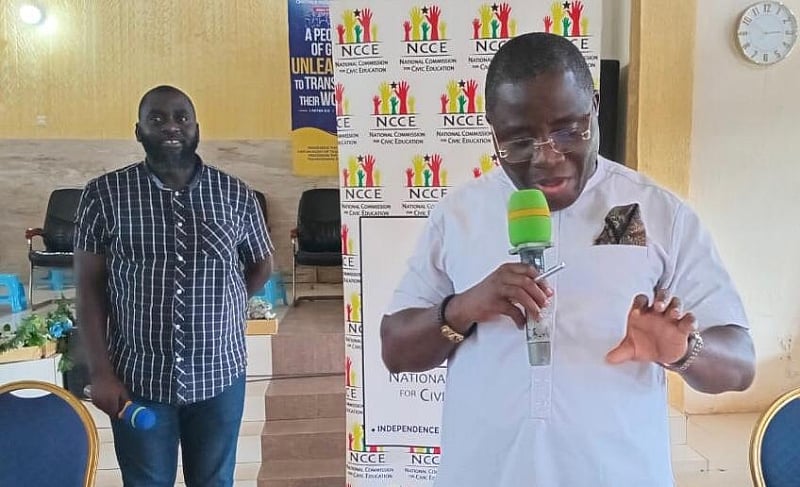
The National Commission for Civic Education (NCCE) is a vital governance institution in Ghana, established under Article 231 of the country’s Constitution, aimed at promoting and sustaining democracy through civic education. Recently, the NCCE has taken proactive steps to fulfill its mission by organizing a dialogue platform that fosters engagement between parliamentary aspirants and voters in the district. The primary objective of this initiative, aligned with the upcoming 2024 general elections, is to address community expectations and explore pertinent policies. Key dignitaries, including local police and electoral commission representatives, participated, highlighting the collaborative effort of various stakeholders in the political sphere. This gathering illustrated the NCCE’s commitment to a democratic process characterized by active citizenship and informed voter participation.
The NCCE event was marked by a significant opening address by Madam Adelaide Narkie Adettie, the district director. Her remarks underscored the importance of dialogue, collaboration, and unity in political engagements. Madam Adettie emphasized the unique opportunity the event provided to present research findings regarding the electorate’s expectations for the upcoming elections. She called on participants to engage constructively while upholding democratic values such as tolerance and unity. The chairman of the occasion, Nana Yaw Ankamah II, encouraged candidates to focus their campaigns on issues that genuinely resonate with voters, advocating for a discussion-driven election cycle rather than one dominated by partisanship or personal attacks.
Three parliamentary aspirants have emerged in the district for the 2024 elections, representing different political parties: Hon. John Kobina Abbam Aboah Sanie of the New Patriotic Party (NPP), Hon. Henry Godfred Bentil of the National Democratic Congress (NDC), and Hon. Theresa Kwaw of the Liberal Party of Ghana. Notably, Hon. Bentil declined to participate in the dialogue at the last minute due to directives from his party’s regional executives. This choice signifies the challenges of intra-party dynamics that can impact candidate participation in public forums, even those aimed at fostering constructive dialogue. Nevertheless, the event proceeded with the participation of the other candidates, who were presented with questions aimed at addressing critical issues such as health, education, and infrastructure.
As the dialogue unfolded, Mr. Benjamin Gaisie from the district education directorate moderated the session, facilitating discussions that invited the candidates to outline their policies and respond to pressing community concerns. The questions posed were comprehensive, touching upon essential areas including governance, justice and security, and economic development. This aspect of the event was crucial, as it allowed candidates to directly address voter expectations and articulate their visions for the district’s future. The resulting discourse served not only as a platform for political expression but also reinforced the NCCE’s role in encouraging candidates to engage openly with constituents.
The interaction with attendees further expanded the dialogue, enabling community members to voice their concerns and expectations directly to the candidates. Chief Supt. Williams Gyamfi, representing the District Election Task Force and the District Security Committee (DISEC), reassured the audience about the commitment to law and order during the elections. He articulated a comprehensive security strategy to ensure that the elections would be free and fair, emphasizing the role of citizens in maintaining the peace that Ghana currently enjoys. His remarks reflected the collaborative responsibility of both security forces and the public in safeguarding the democratic process.
In conclusion, the NCCE’s initiative represents a robust commitment to fostering civic engagement and promoting informed electoral participation ahead of the 2024 elections in Ghana. By creating a dialogue platform between parliamentary aspirants and the electorate, the NCCE not only promotes transparency and accountability in political processes but also enhances the electorate’s understanding of their rights and responsibilities. In an election environment that demands constructive discourse, the forthcoming engagements will be crucial in guiding voters to make informed choices while holding candidates accountable to their commitments. Ultimately, this initiative exemplifies how civic education and public participation can reinforce the pillars of democracy and contribute to national unity in Ghana.