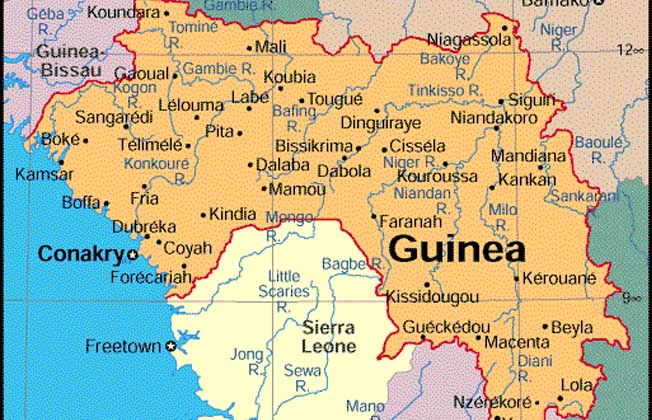
On Sunday, a tragic incident unfolded in N’Zerekore, Guinea’s second-largest city, during a football match where violent clashes erupted among fans, resulting in widespread fatalities. Hospital sources reported scenes of overwhelming devastation, with a doctor at a local hospital revealing that the facility’s morgue had reached capacity and bodies were being stacked in hallways due to the influx of casualties. Estimates of the deceased range from dozens to around 100, showcasing the alarming scale of the violence. Eyewitness accounts and social media videos corroborate these reports, depicting chaotic scenes with numerous bodies lying in the streets outside the venue.
The violence is said to have ignited from a contentious referee decision that incited crowds, leading to fans pouring onto the pitch in anger. As tensions escalated, demonstrators resorted to vandalism, setting fire to the N’Zerekore police station, illustrating a breakdown of order during an event intended for community entertainment. The match was part of a tournament held in honor of Guinea’s junta leader Mamadi Doumbouya, who came to power in a 2021 coup. This tournament, framed within the context of a potential presidential run by Doumbouya, highlights the increasingly volatile intertwining of sports and politics in Guinea.
Doumbouya’s rise to power followed the ousting of the previous president, Alpha Conde, and since then, he has promised a return to civilian governance by the end of 2024. However, recent actions indicate a departure from these commitments; Doumbouya recently promoted himself to the rank of general and has cracked down on political dissent, leading to the detention and exile of many opposition figures. This authoritarian posture suggests that Doumbouya aims to consolidate power rather than act as a transitional leader, further complicating the political landscape in Guinea.
Despite Doumbouya’s pledge to restore constitutional order through elections, the timeline for these elections continues to shift, now purportedly set for 2025. His military regime has faced international scrutiny and pressure regarding the return to a civilian government, yet the junta remains entrenched in power, with growing support from political figures for Doumbouya’s potential candidacy. Over the past few years, various nations in West Africa have experienced similar military coups, indicating a troubling trend in the region’s governance.
N’Zerekore, the city where the violent clash occurred, represents a microcosm of Guinea’s broader socio-political issues, marked by its population’s struggles amidst significant natural resources. Over the years, the nation has been grappling with systemic poverty and governance crises, often resulting from prolonged periods of authoritarian rule. The events during the football match serve as a stark reminder of how deep-rooted frustration and discontent can explode into violence, particularly when coupled with political tensions and instability.
In summary, the football match in N’Zerekore tragically exemplifies the intersection of sport and political strife in Guinea under Doumbouya’s junta rule. While the nation is yet again at a crossroads, contemplating its next steps toward democratic governance, the violent outburst underscores the urgent need for dialogue and reform in a society rife with discontent. As Guinea navigates these challenging waters, the international community watches closely, hoping for a peaceful resolution to its political turmoil.