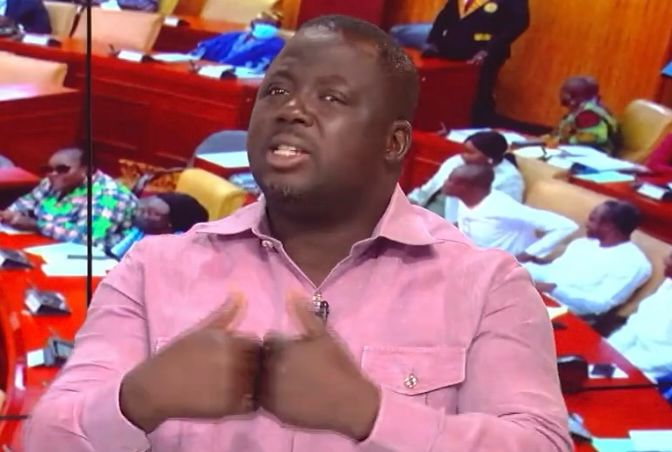
The controversy surrounding alleged threats against the Minority Leader in Parliament, Alexander Afenyo-Markin, has taken center stage in Ghanaian politics. Mustapha Gbande, a Deputy General Secretary of the National Democratic Congress (NDC), vehemently denies accusations made by the New Patriotic Party (NPP) caucus that he threatened to “sacrifice” Mr. Afenyo-Markin during a live interview. This denial comes amidst a broader debate about selective application of justice and the role of political rhetoric in escalating tensions.
The NPP caucus, in a press conference, highlighted what they perceived as a double standard in the handling of potentially inflammatory statements. They pointed to the National Intelligence Bureau’s (NIB) invitation of their Chief Whip, Frank Annoh-Dompreh, for allegedly inciting NPP supporters against the NDC in the Ablekuma North parliamentary dispute. Juxtaposing this with the NIB’s apparent inaction regarding Mr. Gbande’s alleged threat against Mr. Afenyo-Markin, the NPP caucus suggested a bias towards their party. This accusation of selective enforcement further fuels the ongoing political rivalry between the two dominant parties.
Mr. Gbande, however, insists that his words were misinterpreted and taken out of context. He clarifies that his comments were directed at Mr. Afenyo-Markin’s conduct during the Appointments Committee proceedings. Specifically, Mr. Gbande claims he was cautioning the Minority Leader against being manipulated by his party leadership into actions that could have legal repercussions. He argues that his statement about “sacrifice” was metaphorical, referring to the potential abandonment of individuals by their parties if they face legal consequences for actions taken at the behest of their leaders.
The crux of Mr. Gbande’s argument lies in the distinction between literal threat and political commentary. He emphasizes that he holds no ill will towards Mr. Afenyo-Markin and that his intention was not to incite violence or harm. Instead, he portrays his words as a cautionary tale about the dangers of blind loyalty and the potential consequences of following party directives without considering ethical and legal implications. He maintains that his statement was made within the context of political discourse and should not be interpreted as a genuine threat.
The controversy highlights the delicate balance between freedom of speech and the potential for inflammatory rhetoric to escalate political tensions. While Mr. Gbande maintains his innocence, the NPP caucus insists that his words carried a menacing tone and contributed to a climate of hostility. This incident underscores the need for responsible political discourse and the potential for misinterpretations to exacerbate existing political divides.
The differing interpretations of Mr. Gbande’s comments reflect the deep polarization within Ghanaian politics. While the NDC portrays the incident as an overreaction by the NPP, seeking to capitalize on a misconstrued statement for political gain, the NPP views it as a serious threat that should not be dismissed lightly. This incident adds another layer to the ongoing tensions between the two parties and further underscores the challenges of maintaining civil and productive political dialogue in a highly charged environment. The NIB’s response, or lack thereof, will likely be scrutinized by both sides, further fueling the debate over perceived bias and the application of justice.