









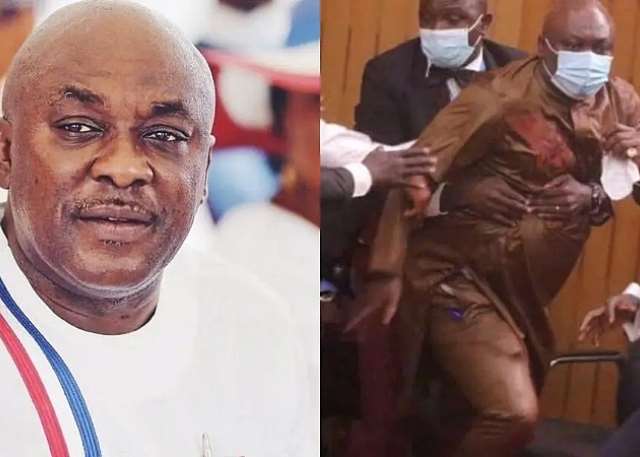
The extraordinary events of January 7, 2021, during the election of the Speaker for Ghana’s 8th Parliament, remain etched in the nation’s political memory. Carlos Ahenkorah, then a Member of Parliament representing Tema West, dramatically snatched ballot papers in a desperate attempt to disrupt the process that was leading to the victory of Alban Bagbin, the National Democratic Congress (NDC) candidate, over the incumbent, Prof. Mike Oquaye of the New Patriotic Party (NPP). This unprecedented act plunged the parliamentary chamber into chaos, prompting a stunned silence followed by an eruption of outrage and disbelief across the country. The incident, broadcast live on national television, became an instant symbol of political desperation and a stark illustration of the heightened tensions surrounding the closely contested 2020 general elections. Ahenkorah’s actions sparked widespread condemnation, raising questions about the integrity of the electoral process and the conduct of elected officials.
In a recent interview, Carlos Ahenkorah provided a candid account of the personal and political ramifications of his actions. He acknowledged the profound impact the incident had on his family, particularly his children, who were subjected to intense public scrutiny and online harassment. The weight of the national attention and the subsequent backlash created a challenging environment for his loved ones, adding a layer of personal anguish to the political storm he had unleashed. The social media onslaught, often vicious and unrelenting, amplified the consequences of his actions, extending the ordeal beyond the confines of the parliamentary chamber and into his private life. He admitted that the period following the incident was a difficult one for his family, forcing them to grapple with the public fallout and the intense media scrutiny.
Despite the heavy personal toll and the widespread condemnation, Ahenkorah maintained that he does not regret his actions. He framed his decision to snatch the ballot papers as an act of loyalty to his party, the NPP, believing at the time that he was acting in their best interest. He described the intense pressure and the sense of urgency that permeated the chamber as the votes were being counted, fueling his impulsive act. He argued that he was driven by a desire to prevent what he perceived as an unfavorable outcome for his party, caught in the heat of the moment and swept up in the high-stakes political drama unfolding before him. He portrays his actions as a desperate, albeit misguided, attempt to protect his party’s interests in a highly charged political environment.
However, Ahenkorah clarified that his decision was a solitary one, taken without the knowledge or endorsement of the NPP leadership. He revealed that even President Nana Akufo-Addo, the leader of the NPP, did not approve of his actions. This revelation underscores the isolation of Ahenkorah’s actions, distancing the party from his controversial move. It also suggests a level of internal dissent within the NPP regarding the incident, indicating that his actions did not represent a concerted party strategy. This clarification attempts to delineate a distinction between his personal motivations and the official stance of the party, suggesting a disconnect between his individual actions and the collective will of the NPP.
Reflecting on the incident with a degree of introspection, Ahenkorah conceded that, with hindsight, he would not repeat his actions. This acknowledgement, while not an outright apology, signals a recognition of the impropriety of his conduct and suggests a degree of personal growth and understanding of the gravity of the situation. He admitted that the experience has provided him with valuable lessons about the implications of impulsive actions and the importance of adhering to parliamentary procedures. His willingness to acknowledge his mistake demonstrates a degree of self-awareness and a willingness to learn from the experience, perhaps paving the way for a more measured and considered approach to political engagement in the future.
The ballot-snatching incident involving Carlos Ahenkorah remains a highly controversial episode in Ghanaian parliamentary history. It serves as a stark reminder of the fragility of democratic processes and the potential for individual actions to disrupt established norms and procedures. Ahenkorah’s personal account, revealing the emotional and political pressures that fueled his actions, provides valuable context for understanding the incident. While his reflections do not erase the transgression, they offer a glimpse into the human element behind the political drama, reminding us of the complex interplay of personal motivations, party loyalties, and the pressures of high-stakes political contests. The incident continues to spark debate about political ethics, the role of individual actors in democratic processes, and the importance of upholding the integrity of parliamentary institutions.









