The aftermath of the New Patriotic Party’s (NPP) 2024 election defeat has sparked internal debate and reflection within the party. Dr. Mahamudu Bawumia, the former Vice President and NPP flagbearer, embarked on a thank-you tour following the election, addressing party members and acknowledging the factors that contributed to their loss. During a stop in the Western Region, Dr. Bawumia cited a combination of internal party issues and external economic pressures as contributing factors. These included economic hardships faced by Ghanaians, perceived arrogance of power among government officials, unpopular policies like the E-Levy and the Domestic Debt Exchange Programme (DDEP), and internal party management challenges. He presented these factors not as excuses, but as an honest assessment based on feedback received by the party.
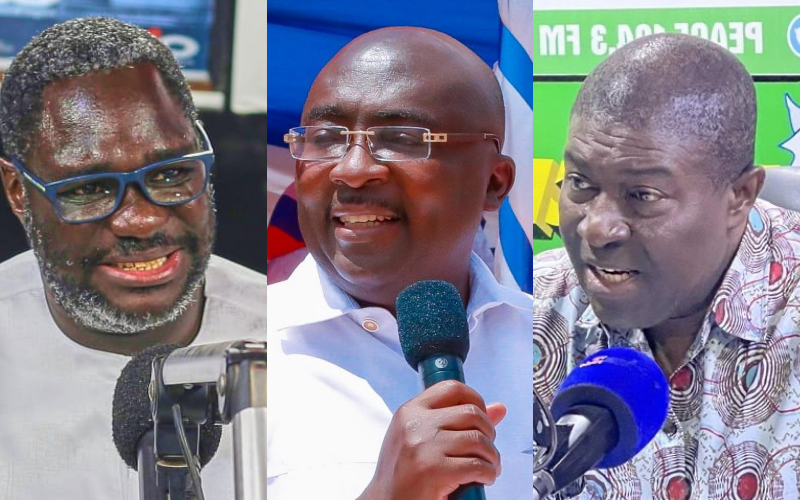
Dr. Bawumia’s address, however, drew criticism from Dr. Palgrave Boakye-Danquah, a former government spokesperson on the economy. Dr. Boakye-Danquah accused Dr. Bawumia of belatedly raising these concerns, suggesting he was attempting to distance himself from responsibility for the election loss. He argued that Dr. Bawumia, as Vice President, had the opportunity and platform to voice dissent and influence policy but chose not to, only raising these issues now to serve his political ambitions. He specifically pointed to Dr. Bawumia’s purported earlier support for the E-Levy, contrasting it with his current criticism of the policy. He also criticized Dr. Bawumia’s handling of the DDEP, accusing him of attempting to evade accountability for its impact.
In response to these accusations, Nana Akomea, Vice Chairman of Dr. Bawumia’s 2024 flagbearer campaign team, issued a strong rebuttal. He asserted that Dr. Bawumia was not shifting blame, but rather relaying the findings of the party’s official post-election review committee, chaired by Professor Mike Ocquaye. This committee had gathered feedback from party members across the country, identifying the factors that led to their electoral defeat. Akomea emphasized that Dr. Bawumia, along with NPP General Secretary Justin Kodua and prominent party member Kennedy Agyapong, publicly acknowledged these shortcomings and apologized to party members. Their message, according to Akomea, was one of acceptance of responsibility and a commitment to learn from the mistakes.
Akomea’s statement highlighted the content of Dr. Bawumia’s address, emphasizing that he was merely echoing the concerns voiced by party members themselves. He quoted Dr. Bawumia as saying, “These are what you, party people, have said about us. We acknowledge them and apologize for them.” Akomea challenged the notion that this constituted blame-shifting, asking to whom Dr. Bawumia was supposedly shifting blame. He pointed out that the party members, far from being offended, responded positively to the acknowledgement and apology, further reinforcing the idea that Dr. Bawumia’s intent was to address the concerns honestly and transparently.
The core issue at hand revolves around the interpretation of Dr. Bawumia’s remarks. Dr. Boakye-Danquah viewed them as an attempt to deflect responsibility for the NPP’s loss, portraying Dr. Bawumia as someone who remained silent during crucial decision-making periods and only spoke up after the fact to protect his political future. Nana Akomea, on the other hand, presented a different narrative, arguing that Dr. Bawumia was acting as a conduit for the concerns of the party base, acknowledging the shortcomings identified by the review committee, and offering an apology on behalf of the party leadership.
This exchange highlights the internal tensions and differing perspectives within the NPP following their electoral setback. It reflects the challenges of post-election analysis and the complexities of assigning responsibility for political outcomes. The public disagreement between Dr. Boakye-Danquah and Nana Akomea underscores the importance of clear communication and the potential for misinterpretations, especially in the emotionally charged environment of a post-election period. The episode also underscores the importance of internal party reviews and the role they play in identifying weaknesses and informing future strategies. The NPP, like any political party facing defeat, must grapple with these internal debates and strive to find common ground to move forward and rebuild for future elections.