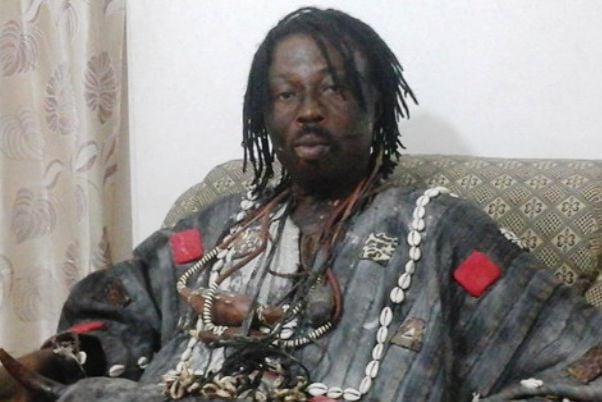
Nana Kweku Bonsam, a prominent traditional priest from Ghana, has emerged from the recent election cycle with a sense of vindication. His predictions of John Dramani Mahama’s electoral victory have proven true, and he now uses this platform to address what he perceives as a crisis of authenticity within the prophetic community. Disappointed by the conduct of some pastors, whom he accuses of misusing their religious authority, Bonsam calls for a return to genuine spiritual practice and warns against the dangers of false prophecy. His pronouncements extend beyond the spiritual realm, touching upon the critical issue of corruption within Ghana’s political landscape.
Bonsam’s journey through the election period was fraught with challenges. His unwavering support for Mahama, fueled by his spiritual insights, drew criticism and even acts of vandalism against his property. While other self-proclaimed prophets confidently predicted a victory for Mahamudu Bawumia, often disparaging Bonsam and his prophecies, he remained steadfast in his belief. Now, with the election results confirming his predictions, he questions the source of these opposing prophecies, suggesting a disconnect from genuine divine guidance. His challenge to these “false prophets” is to seek him out for spiritual healing, a gesture he believes can realign their pronouncements with divine truth.
The implications of Bonsam’s statements reach far beyond personal vindication. His critique of false prophecy extends to a broader concern about the integrity of religious leadership. In a country where religious figures wield considerable influence, the misuse of spiritual authority for political gain or personal aggrandizement can have far-reaching consequences. Bonsam’s call for accountability within the prophetic community serves as a reminder of the ethical responsibilities that come with spiritual leadership and the importance of aligning one’s actions with professed beliefs.
Furthermore, Bonsam’s focus on corruption within Ghana’s political system underscores the interconnectedness of spiritual and political life in the country. He argues that President-elect Mahama has a crucial task ahead – to investigate and recover funds allegedly misappropriated during the previous administration. This call for accountability aligns with a broader public sentiment for greater transparency and integrity in governance. By linking economic stability with the recovery of allegedly stolen funds, Bonsam highlights the tangible impact of corruption on the lives of ordinary citizens.
Bonsam’s outspokenness, rooted in his traditional beliefs, challenges the conventional boundaries between the spiritual and the political. He doesn’t shy away from expressing his views on governance, even suggesting specific actions for the incoming president. This blurring of lines reflects the deeply intertwined nature of spiritual and political authority in Ghana. His pronouncements, however controversial they may be, contribute to a broader national conversation about accountability, ethical leadership, and the role of faith in public life.
Beyond the immediate political context, Bonsam’s story speaks to a larger struggle for authenticity within spiritual traditions. His experience mirrors the challenges faced by religious figures across various faiths who seek to uphold the integrity of their practices in the face of charlatanism and exploitation. His call for spiritual healing can be interpreted as a call for renewal and a return to the core values that underpin genuine spiritual leadership. By challenging those who misuse religious authority, he implicitly champions the importance of truth, integrity, and service to the community as foundational principles for religious practice. In his view, a true prophet is not merely a predictor of future events but a moral compass, guiding individuals and societies towards a path of righteousness and justice.