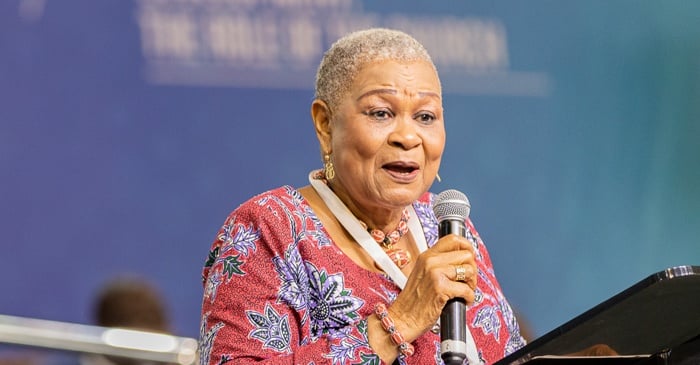
Dr. Joyce Aryee, a trustee of the National Cathedral project, recently dismissed worries about staff payments during the project’s construction hiatus as “ridiculous.” This statement comes amidst increasing apprehensions regarding the delay of the National Cathedral’s construction and its effect on staff remuneration. In response to these concerns, Aryee remarked during a symposium in collaboration with TD Jakes’ divinity school that the implication that people should cease working simply because specific funds are not available is flawed. She expressed her astonishment at the speculation surrounding the project, underscoring her refusal to even comment on the matter any further. Aryee’s strong defense highlights a broader commitment to the continuity of the project, emphasizing the ongoing efforts to keep the initiative moving forward despite financial challenges.
In line with Aryee’s remarks, Dr. Paul Opoku-Mensah, the Executive Director of the National Cathedral, has been working to dispel misunderstandings about the project. He articulated that the National Cathedral is not merely a building for church services; it is conceived as a cultural and economic asset for Ghana. Opoku-Mensah emphasized the potential of the cathedral to generate revenue and promote Ghana’s cultural heritage on a global stage. This vision aligns with the broader narrative that the cathedral can serve as an important national resource, transcending mere religious significance and providing a platform for cultural exchange and financial activity.
The National Cathedral project has faced resistance from various quarters, with critics questioning the appropriateness of government participation and exposing fears regarding financial transparency. Despite these challenges, Opoku-Mensah maintains a hopeful perspective, particularly after the recent symposium designed to illuminate the myriad roles the national cathedral is expected to play. The symposium emphasized the cathedral’s potential as an educational and cultural center, supporting broader discussions about faith’s role in contemporary Ghanaian society while bridging connections to the African diaspora.
This vision includes the establishment of Africa’s first Museum of the Bible, which will be a collaboration with the Museum of the Bible based in Washington, D.C. The intent behind this initiative is not only to create a sacred space for religious gatherings but also to engage in critical dialogues surrounding Africa’s rich theological history and contemporary religious practices. The cathedral is positioned to be more than just a place of worship; it aims to facilitate discussions on national, continental, and global issues that deeply affect the African community at large.
The National Cathedral represents a significant opportunity to foster a sense of unity within the Pan-African community. The initiative aims to address issues related to historical, racial, and contemporary contributions of Africa to the global theological landscape. By supporting such dialogues, the cathedral seeks to position itself as an institution of learning and reflection on Africa’s diverse contributions to world religious practices. The collaboration with TD Jakes’ divinity school signifies an important step toward creating educational pathways that empower individuals across the continent with a deeper understanding of their heritage and faith.
In sum, both Dr. Joyce Aryee and Dr. Paul Opoku-Mensah are actively working to refocus the narrative surrounding the National Cathedral project. Their statements highlight the determination to manage the project sustainably, despite the financial and political challenges it faces. They emphasize that the cathedral is not just a building but a multifaceted institution aimed at enriching societal discourse and celebrating the rich cultural and spiritual life of Ghana and Africa as a whole. Their commitment to educating the public about the broader implications of the project points toward a legacy that transcends traditional worship spaces, fostering a holistic understanding of the future role of the National Cathedral in Ghanaian and African society.