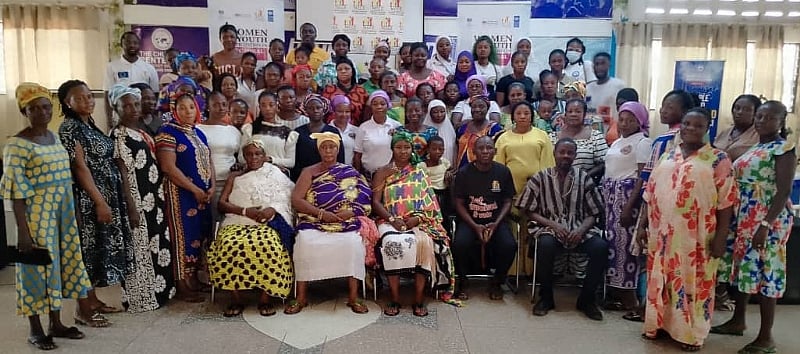
The National Commission for Civic Education (NCCE), in collaboration with the United Nations Development Programme (UNDP), organized a crucial engagement initiative in the Atebubu-Amantin municipality, focusing on empowering women to actively participate in the electoral process. Sixty women representing diverse groups, including market women, trade associations, queen mothers, religious groups, and persons with disabilities, participated in the program, highlighting the initiative’s commitment to inclusivity and broad-based participation. The program aimed to equip these women with the knowledge and understanding necessary to effectively engage in Ghana’s democratic processes, emphasizing their rights and responsibilities as citizens. This initiative underscores the growing recognition of women’s pivotal role in fostering transparent and accountable governance.
Mr. Patrick Tampugre, the municipal director of the NCCE, set the tone for the engagement by emphasizing the importance of transparent governance, inclusive dialogue, and women’s crucial role in achieving these objectives. He underscored the program’s aim to empower women to fully understand and exercise their democratic rights, ultimately contributing to national development. The program’s core focus revolved around several key areas, including the right to vote and be elected, active participation in democratic processes, holding elected officials accountable, and ensuring public policies are transparent and responsive to the needs of all citizens. By addressing these critical aspects of democratic participation, the initiative aimed to equip women with the tools and knowledge to become effective agents of change within their communities.
Nana Akosua Gyambea, the Nkosohemaa of the Atebubu Traditional Area, offered a powerful perspective on the challenges women face in exercising their political rights. She acknowledged the constraints posed by limited resources, particularly financial limitations, and highlighted the detrimental impact of unsupportive attitudes amongst women themselves. Drawing inspiration from the historical figure of Yaa Asantewaa, a symbol of courage and female leadership, Nana Gyambea urged women to cultivate mutual support and solidarity to overcome these challenges. This call for unity and collective action resonated with the program’s overall objective of empowering women to claim their rightful place in society and actively participate in shaping their future.
Pastor Nelson Aho of the Galilean Prayer Ministry provided a motivational perspective, emphasizing the importance of purpose, focus, tenacity, and perseverance. He encouraged the women to recognize their inherent strength and overcome societal obstacles, leveraging opportunities for personal and collective advancement. His message resonated with the program’s broader goal of empowering women to actively participate in shaping their communities and the nation’s political landscape. This focus on personal development and empowerment served as a crucial complement to the program’s focus on civic education.
During the interactive sessions, participants identified education as a significant barrier hindering women’s social and political advancement. This underscores the importance of addressing educational disparities to ensure women can fully participate in democratic processes. The women also offered valuable suggestions on how to enhance their active roles in democratic governance, providing crucial insights for policymakers and organizations working to promote gender equality and inclusive participation. These insights from the ground level provided a valuable contribution to the ongoing dialogue surrounding women’s political empowerment.
Mr. Eric Djabatey, representing the NCCE’s director of programs, addressed the critical issue of misinformation and disinformation, particularly within the context of social media. He cautioned participants against sharing unverified information, highlighting the potential legal consequences associated with spreading false information. This important element of media literacy reinforces the importance of responsible digital citizenship in the age of rapidly disseminating information. The participants’ overall appreciation for the initiative, coupled with their call for more such engagements, demonstrates the program’s effectiveness and the growing desire among women to actively participate in shaping their communities and the nation’s future. This resounding endorsement underscores the need for continued investment in empowering women to become active and informed participants in the democratic process.