The National Commission for Civic Education (NCCE), with the backing of the United Nations Development Programme (UNDP), spearheaded an initiative in Techiman Metropolis, Ghana, aimed at empowering women within the realm of governance. Themed “Promoting Transparent and Accountable Governance in Ghana,” this town hall meeting brought together a diverse representation of women’s groups, including market women, hairdressers, dressmakers, Christian mothers, and queen mothers. The core objective of this engagement was to bolster women’s participation in the electoral process, both as active voters and as elected representatives, recognizing the pivotal role women play in fostering inclusive and sustainable democratic governance. This initiative underscores the global movement toward increased female representation in leadership positions, while acknowledging the persistent challenges that hinder progress towards gender parity in this sphere.
The Techiman Municipal Director of the NCCE, Mr. Joseph Adomah, emphasized the critical importance of women’s participation in governance for achieving inclusive development, ensuring sustainable democracy, and crafting equitable policies. He highlighted the existing global disparity between men and women in leadership roles, despite significant strides made in advancing women’s representation. Mr. Adomah underscored the urgent need to address the societal issues that marginalize women and impede their progress, arguing that achieving gender equality in leadership is paramount to overcoming these challenges. This initiative acknowledges the interconnectedness of women’s empowerment and broader societal development, recognizing that a society that empowers its women is a society poised for greater progress and stability.
Nana Yeboah Asuamah, the Adontenhemaa and acting queen mother of the Techiman Traditional Area, expressed her appreciation to the NCCE and the UNDP for their collaborative effort in organizing this vital platform for women’s voices to be heard. She reiterated the significance of women’s involvement in governance for national development, recognizing the unique perspectives and experiences women bring to the table. Her endorsement of the initiative underscores the importance of engaging traditional leaders and authority figures in the effort to promote gender equality and women’s empowerment. The presence and support of such influential figures can serve as a powerful catalyst for change within communities and across the nation.
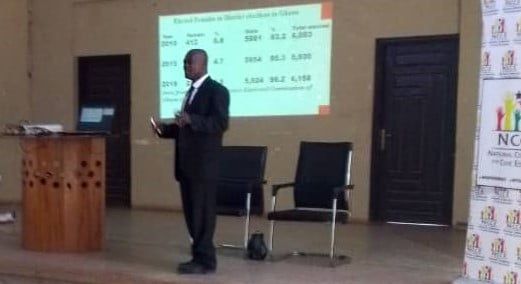
Mr. Joseph Kwaku Yeboah, the Bono East Regional Director of the NCCE, presented a stark picture of the current state of women’s representation in Ghanaian politics. Despite constituting 50.7% of the population, women hold a mere 6% of elected assembly member positions nationwide. This disparity, supported by data from the National Association of Local Authorities of Ghana (NALAG) and the Electoral Commission of Ghana, highlights the significant underrepresentation of women in decision-making roles. Mr. Yeboah attributed this imbalance to deep-rooted cultural norms, specifically patriarchy and male dominance, which perpetuate subservient roles for women. He further identified unequal resource allocation by political parties as another significant barrier to women’s political participation, hindering their ability to effectively compete with male counterparts.
To rectify this imbalance and foster greater female representation at the local level, Mr. Yeboah proposed a significant increase in the proportion of female appointees in district, municipal, and metropolitan assemblies. He suggested raising the current quota from 30% to 50%, arguing that such a move would provide more opportunities for women to gain experience and contribute their perspectives to local governance. This recommendation underscores the need for proactive measures and policy changes to dismantle structural barriers and create pathways for increased female representation in leadership positions. It also highlights the importance of addressing the systemic inequalities that hinder women’s access to resources and opportunities in the political arena.
Reverend Prince Owusu Aseku, the Bono East Regional Chairman of the National Peace Council, underscored the crucial role of conflict resolution in effective governance. He defined conflict resolution as the process of addressing disputes and achieving peaceful and mutually beneficial outcomes, emphasizing its importance in maintaining social cohesion and stability. Reverend Aseku highlighted the immense potential of women as agents of peace and reconciliation, advocating for greater inclusion of women in decision-making processes related to conflict resolution. He argued that women’s inherent nurturing qualities and their experiences navigating complex social dynamics often equip them with unique skills and perspectives valuable in mediating disputes and fostering understanding. Reverend Aseku’s call for increased awareness of women’s vital contributions to society resonates with the broader theme of the initiative, emphasizing the need to recognize and leverage the full potential of women in building a more just and peaceful nation. He championed the idea that empowering women to participate fully in conflict resolution mechanisms can significantly enhance the effectiveness of these processes and contribute to more sustainable peacebuilding efforts.