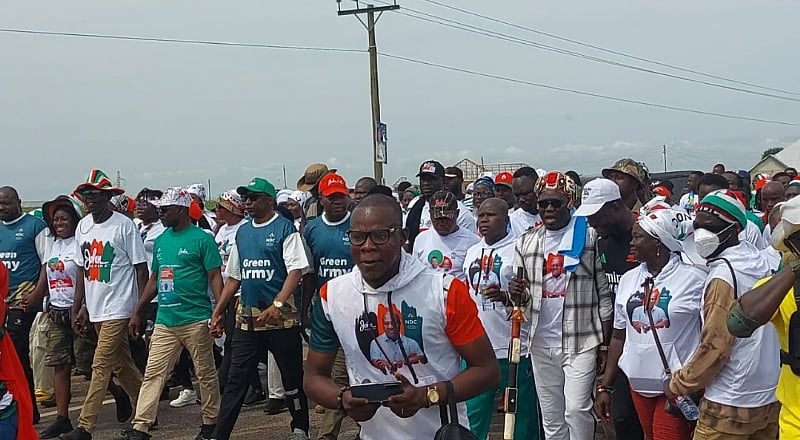
Members of Parliament from Ghana’s National Democratic Congress (NDC) have intensified their push for the establishment of a new region within the Upper East Region, specifically targeting the Kusaug administrative area. At a rally in Garu marking the campaign kickoff for Dr. Thomas Anaba, the NDC’s parliamentary candidate, notable figures such as Hon. Mahama Ayariga and Hon. Hajia Laadi Ayishetu Ayamba conveyed their vision for enhanced development through regional creation. The MPs stressed that the initiative would benefit every resident, cutting across party lines, and called upon supporters of the NDC to unite in their efforts for the upcoming elections. Hon. Ayariga underscored that establishing the new region would pave the way for substantial advancement across all local communities. The collective message centered on the importance of civic unity, urging both NDC and New Patriotic Party (NPP) members alike to support the cause for the overall good of the Kusaug land.
During the campaign, Dr. Thomas Anaba highlighted his dedication to healthcare in the region by donating a new ambulance to the Garu constituency. His actions were aligned with a wider appeal for overwhelming voter support to ensure the election of capable leaders who would prioritize the region’s well-being. At the rally, Alhaji Chief Sofo Azoka, the NDC National Vice Chairman, echoed calls for the retention of all six parliamentary seats held by the party in Kusaug during the forthcoming 2024 elections, also emphasizing the need for unity among constituents to foster progress. The MPs’ unified political stance reinforced the party’s commitment to realizing the aspirations of the local populace.
In Binduri, the discourse shifted towards scrutinizing the current leadership, as Hon. Isaac Adongo, the MP for Bolga Central, urged voters to part ways with the incumbent MP, Alhaji Abdulai Abanga. In Nayoko, he articulated concerns regarding the NPP’s economic management, arguing that current hardships faced by Ghanaians are tied to governmental mismanagement. Adongo reiterated the NDC’s promise of a new region, emphasizing this pledge made by former President John Dramani Mahama during a recent visit. Accusations against Alhaji Abanga for stalling development projects were also made; Adongo claimed that the incumbent had only initiated construction on critical infrastructure as a last-minute electoral strategy. His appeal was clear: to ignite change in the 2024 elections by voting NDC.
NDC’s call for youth engagement remained prominent, articulated by Lawyer Osman Ayariga, the party’s National Deputy Youth Organizer, who reached out to the youth across Bawku and the Kusaug area. He urged them to place their confidence in the NDC, citing a wave of resignations from disillusioned NPP members as a sign of the ruling party’s weakening support base. Ayariga did not shy away from promising accountability for members involved in corruption, echoing sentiments of discontent with the current governance. Likewise, Malik Basintale, NDC’s Deputy National Communications Officer, lamented the deteriorating security situation in Bawku, which has significantly impacted community morale and holiday traditions, underscoring the urgency for change.
As the campaign progressed towards Tempane, NDC MPs rallied behind Hon. Lydia Akanvariba Adakudugu, vehemently encouraging the electorate to reject Vice President Dr. Mahamudu Bawumia and Lawyer Joseph Dindiok Kpemka for their unfulfilled promises. The MPs emphasized that the region has suffered under the policies of the NPP, thereby positioning the NDC as a source of hope for peace and development. Their campaign narrative revolved around addressing systemic issues faced by the community and condemning the previous administration’s ineffective governance, thereby framing the upcoming elections as a pivotal moment for restorative change.
The series of events across the Kusaug administrative area symbolizes a collective political will among NDC MPs to galvanize support from constituents while addressing the critical needs for regional development. The proposed establishment of a new region resonates with the community’s aspirations for improved governance and enhanced living standards, thereby serving as a central theme in their campaign narrative. Call for voters to analyze their current political landscape, reject ineffective leadership, and place their trust in the NDC reflects the party’s strategy aimed at fostering unity inaction among its supporters. With the elections on the horizon, the NDC’s appeal to the electorate appears focused on leveraging local grievances and community needs to secure a favorable outcome amidst a challenging political environment.