





The Coalition of NGOs in Water and Sanitation (CONIWAS) has seen a significant commitment from major political parties in Ghana, namely the National Democratic Congress (NDC), the New Patriotic Party (NPP), and the Convention People’s Party (CPP), as they have each signed the WASH Manifesto. This document articulates a collective pledge to prioritize Water, Sanitation, and Hygiene (WASH) in Ghana, with an emphasis on achieving the Sustainable Development Goal (SDG) 6 by 2030. By highlighting the current challenges, including disparities in access to water and sanitation, CONIWAS calls on these political parties to incorporate WASH into their policies, ensuring that it remains a focal point during the upcoming 2024 elections.
The WASH Manifesto emphasizes the critical need for increased financing and the addressing of climate-related challenges that affect water and sanitation services in Ghana. It advocates for comprehensive policy frameworks that would enhance WASH access not only in everyday communities but also in essential sectors like healthcare and education. The manifesto outlines necessary steps, including institutional alignment and effective monitoring, advocating for WASH to be positioned as a cornerstone for development, thus linking improved water and sanitation services to broader goals of economic growth and public health.
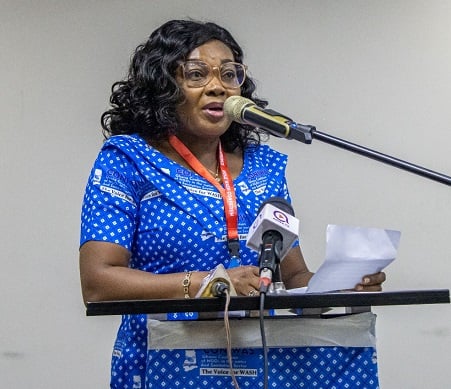
Ms. Basilia Nanbign, the Executive Secretary of CONIWAS, has publicly commended the political parties for their commitment to the WASH Manifesto and urged them to prioritize WASH in their policy development and budget planning. Her call to action emphasizes the importance of timely funding and the enhancement of services impacting maternal health and education through improved WASH practices. According to her, a concerted effort is imperative to strengthen WASH coordination across various sectors, including health and agriculture, which can lead to more effective data-driven decision-making.
The significance of water and sanitation extends beyond mere access; it is viewed as a fundamental human right and essential for Ghana’s sustainable development trajectory. Currently, while 87.7% of the population enjoys access to basic water services, only 25.3% have access to adequate sanitation, compounded by issues of widespread open defecation. Ms. Nanbign underscores the political parties’ commitment to ensuring WASH becomes a central policy priority at all levels, emphasizing the necessity for consistent funding, effective monitoring, and accountability frameworks to support these initiatives.
Mrs. Esi Boni-Morkla, representing the Ministry of Sanitation and Water Resources, reaffirmed the ministry’s dedication to advancing WASH in alignment with SDG 6 objectives. She acknowledges the persistent gaps in service accessibility, particularly the troubling statistic that approximately 25% of the population does not have access to safe sanitation. This situation underlines the urgent need for a collaborative approach involving various stakeholders, including the government, civil society, academic institutions, traditional leaders, and the private sector, to foster effective solutions and close the existing WASH gaps.
In conclusion, the signing of the WASH Manifesto by Ghana’s leading political parties serves as a vital step toward addressing the pressing challenges in water and sanitation services. CONIWAS envisions a future where universal access to clean water and sanitation is a reality by 2030, termed as fundamental to both public health and economic development. The call for collective action highlights the importance of embedding WASH in national planning and funding strategies, advocating for a holistic approach to make significant advancements in achieving sustainable development and improving the quality of life for all Ghanaians.








