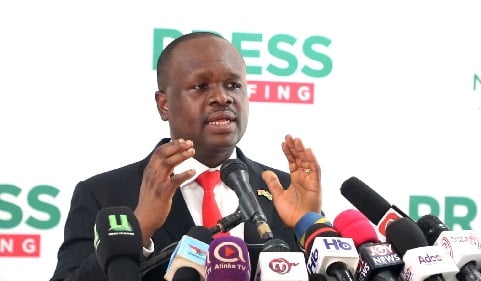
The unfolding political drama in Ghana surrounding the December 2020 general elections has taken a new turn, escalating tensions between the National Democratic Congress (NDC) and the Electoral Commission (EC). The heart of the contention lies in the EC’s decision to invalidate parliamentary results declared in nine constituencies, a move that the NDC’s Director of Elections and IT, Dr. Edward Omane Boamah, has vehemently condemned. EC Chairperson Jean Mensa’s justification for the nullification, citing declarations made under duress and threats, has been met with fierce resistance and accusations of political maneuvering. Dr. Boamah has labeled the EC’s press conference announcing the decision as “useless” and a blatant attempt, allegedly orchestrated by the ruling New Patriotic Party (NPP), to undermine the NDC’s projected two-thirds majority in the incoming parliament. This escalating conflict raises serious concerns about the integrity of the electoral process and the potential for post-election instability.
The nine constituencies embroiled in this controversy represent key battlegrounds in the parliamentary elections. They include Nsawam-Adoagyiri, Ahafo Ano South, Ahafo Ano North, Obuasi East, Okaikwei Central, Ablekuma North, Tema Central, Techiman South, and Dome-Kwabenya. The EC’s assertion that declarations in these constituencies were made under duress casts a shadow over the legitimacy of the results and fuels suspicion of manipulation. The lack of transparency and detailed evidence presented by the EC to substantiate these claims further exacerbates the situation, creating an environment ripe for mistrust and accusations of partisan bias. The NDC’s counter-claim of possessing pink sheets, the official vote tally documents, that prove their victories in these constituencies adds another layer of complexity to the dispute. This discrepancy in reported results underscores the urgency for a transparent and impartial investigation to ascertain the true outcome of the elections in these areas.
Dr. Boamah’s accusation of the EC acting under the influence of the NPP adds a political dimension to an already contentious electoral process. He alleges that the EC’s decision is a calculated move to dilute the NDC’s parliamentary majority, a claim that further undermines public confidence in the impartiality of the electoral body. This perception of political interference is highly damaging to the democratic process and could potentially trigger further unrest and instability. The NDC’s insistence on an emergency Inter-Party Advisory Committee (IPAC) meeting, a platform for dialogue and consensus-building between political parties and the EC, being ignored fuels their suspicions and reinforces their narrative of a deliberate attempt to suppress their concerns. This lack of engagement and communication further exacerbates the tension and mistrust between the two parties.
The EC’s decision to invalidate results without presenting concrete evidence of duress, coupled with the NDC’s counter-claims of possessing evidence to the contrary, creates a confusing and uncertain landscape. This situation demands a thorough and transparent investigation into the circumstances surrounding the declarations in the disputed constituencies. An independent inquiry involving all stakeholders could help establish the facts and ensure that the will of the people is truly reflected in the final parliamentary composition. Without such a process, the legitimacy of the election outcome will remain in question, potentially undermining the stability of the newly elected government and the broader democratic process.
The current standoff between the NDC and the EC highlights the fragility of democratic institutions and the importance of upholding the principles of transparency, accountability, and impartiality in the electoral process. The EC’s actions, particularly the lack of transparency and engagement with the NDC, have created a perception of bias and political manipulation, potentially eroding public trust in the electoral body. This erosion of trust can have long-term consequences for the stability and legitimacy of the democratic system. Moving forward, it is crucial for the EC to prioritize transparency and engage in meaningful dialogue with all stakeholders to address concerns and restore confidence in the electoral process.
The unfolding situation in Ghana serves as a reminder of the importance of robust electoral systems and the constant vigilance required to protect the integrity of the democratic process. The allegations of political interference, the disputes over election results, and the lack of transparent communication between the EC and political parties underscore the vulnerabilities within the system. Addressing these vulnerabilities through electoral reforms, stronger institutional safeguards, and a commitment to impartiality is crucial to ensuring the long-term stability and legitimacy of Ghana’s democracy. The current crisis demands a commitment from all stakeholders to de-escalate tensions, engage in constructive dialogue, and uphold the principles of democracy and the rule of law. A peaceful resolution to this dispute is vital to preserving Ghana’s democratic gains and ensuring a smooth transition of power.