









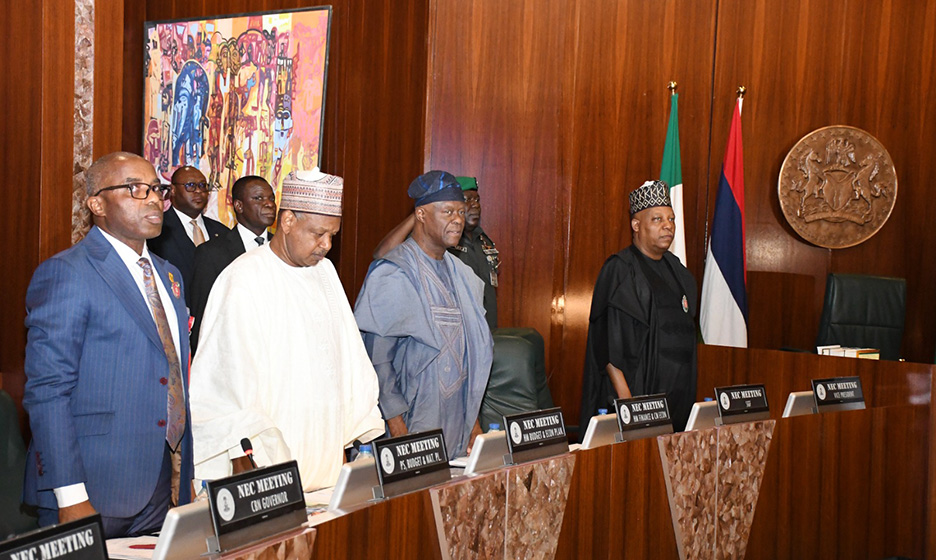
The National Economic Council (NEC), chaired by Vice President Kashim Shettima and composed of all 36 state governors, convened to discuss the establishment of state police forces in Nigeria. This meeting, a continuation of ongoing deliberations, focused on compiling the official positions of all states and the Federal Capital Territory (FCT) on the matter. While a majority of states had previously submitted their reports, a few, including Adamawa, Kebbi, Kwara, and the FCT, were given a deadline to finalize their positions. The consolidation of these reports is crucial for the NEC to present a unified stance on state police to the federal government, marking a significant step towards potential implementation. The meeting aimed to finalize the collection of these reports and pave the way for concrete action on the long-debated issue.
The push for state police has gained momentum in recent years due to increasing security concerns across the nation. The centralized nature of the current Nigerian Police Force has been criticized for its perceived inability to effectively address the diverse security challenges faced by different regions. Proponents of state police argue that localized forces would be better equipped to understand and respond to specific threats, fostering closer community engagement and improved policing effectiveness. This localized approach, they argue, is vital for enhancing security and tailoring responses to specific regional needs.
However, concerns persist regarding the potential for abuse of power within state police forces. Opponents worry that state governors, wielding significant political influence, could manipulate these forces for their own interests, potentially suppressing dissent or targeting political rivals. This politicization of law enforcement, they argue, could exacerbate existing tensions and undermine the principle of impartial policing. Furthermore, the disparity in resources among states raises questions about the equitable distribution of funding and training for state police forces, potentially creating an uneven landscape of security provision across the nation.
The NEC’s deliberations on state police represent a critical juncture in Nigeria’s ongoing security reforms. The establishment of state police forces has the potential to significantly reshape the country’s security architecture, bringing law enforcement closer to the people. However, the process requires careful consideration to mitigate potential risks and ensure that these forces uphold the principles of justice and accountability. Striking a balance between local autonomy and national oversight will be crucial for the successful implementation of state police and the overall enhancement of security in Nigeria.
The timeline of discussions reveals a concerted effort to move towards a resolution on the state police issue. Following initial agreements between the federal government and state governors earlier in the year, the NEC tasked each state with submitting detailed reports outlining their positions and implementation plans. While a majority of states complied within the initial timeframe, several required extensions, highlighting the complexities involved in reaching a consensus. The NEC’s emphasis on receiving final submissions underscores the urgency of the matter and the commitment to progressing towards a definitive decision.
The slow pace of progress over the past months can be attributed to several factors, including bureaucratic processes within individual states, the need for thorough consultations, and the delicate task of balancing competing interests. While the desire for enhanced security is widely shared, navigating the legal and logistical intricacies of establishing state police forces requires careful consideration. Furthermore, the need to secure buy-in from all stakeholders, including the federal government, state governments, and the public, necessitates extensive dialogue and consensus-building.
The debate surrounding state police encapsulates the broader challenges faced by Nigeria in balancing national unity with regional autonomy. The centralized nature of the current police force, while intended to ensure uniformity and prevent fragmentation, has been perceived by many as unresponsive to local needs. The creation of state police forces is seen as a potential solution to bridge this gap, empowering regions to take greater control of their security while remaining accountable to national standards. The NEC’s ongoing deliberations reflect a recognition of the need for a more nuanced approach to security governance, one that acknowledges the diversity of Nigeria’s regions while preserving the integrity of the nation as a whole.









