





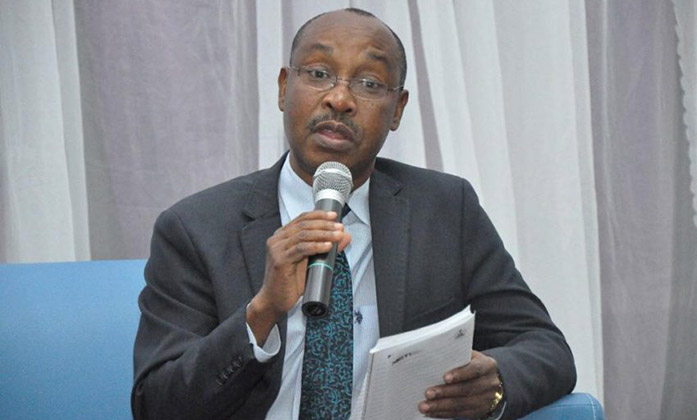
The Nigeria Extractive Industries Transparency Initiative (NEITI) is collaborating with the Economic and Financial Crimes Commission (EFCC) to recover significant sums of money owed to the Federal Government by oil sector players. The amount in question totals approximately $6 billion and N66 billion. This information was revealed by NEITI’s Executive Secretary, Ogbonnaya Orji, during a budget defense session with the House Committee on Petroleum Resources (Upstream). NEITI, established to promote transparency and accountability within Nigeria’s oil, gas, and mining sectors, emphasized its role in recovering outstanding liabilities, highlighting a recent recovery of over N3.7 billion from operating companies. The agency’s proposed 2025 budget of N6.5 billion was broken down into N2.22 billion for personnel, N1.72 billion for overhead, and N2.58 billion for capital expenditure. Key activities outlined for the 2025 fiscal year include industry reports, audits, research studies focusing on petrol consumption and the economic impact of energy transition, and a national perception survey on EITI implementation.
The budget proposal, however, faced scrutiny from House Committee members who questioned the repetition of items from the previous year’s budget and the inclusion of expenditures deemed unjustifiable given the current economic climate. Particular concern arose over a N32 million allocation for meals, considered excessive during a period of economic hardship for many Nigerians. Committee members stressed the need for government agencies to align their budget proposals with specified line items and prioritize prudent spending, emphasizing that budget defense should not be viewed as an opportunity to simply “get a share” of available funds. The prevailing public perception of the National Assembly as a “rubber stamp,” automatically approving agency proposals, further underscored the need for rigorous scrutiny and justification of expenditures.
Representative Kafilat Ogbara questioned the rationale behind the N32 million meal allocation, emphasizing the importance of aligning budget proposals with specific line items and their intended purposes. She stressed the need for fiscal responsibility, especially given the prevailing economic hardship faced by many Nigerians. The call for accountability and prudent spending resonated throughout the committee’s questioning. Another lawmaker, Ademorin Kuye, echoed these concerns, urging government agencies to be mindful of the nation’s economic situation when preparing their budgets. He emphasized the need to counter the public perception of the National Assembly as merely a rubber stamp for agency proposals.
Committee Chairman Alhassan Ado-Doguwa also criticized the agency’s budget language and the inclusion of the National Assembly in its welfare package. He questioned the rationale behind this inclusion, particularly since the committee had not yet conducted an oversight visit to the agency. Ado-Doguwa reiterated the importance of fiscal prudence in light of the prevailing economic hardship and cautioned against budget presentations that could be perceived as “funny and insulting” to the Nigerian public. He highlighted the need for agencies to justify their expenditures and stressed that all proposed spending would ultimately come at the expense of the Nigerian people.
Despite the criticisms, Ado-Doguwa pledged the committee’s support for the agency in fulfilling its mandate, provided the agency could justify its expenditure requests. He emphasized the legislature’s commitment to providing a supportive financial environment for agencies to carry out their duties, contingent upon clear and demonstrable justifications for proposed spending. This conditional support reflects the committee’s commitment to ensuring responsible use of public funds and holding government agencies accountable for their budgetary requests.
The interaction between NEITI and the House Committee underscores the importance of transparency and accountability in government spending, particularly within the extractive industries. The committee’s scrutiny of the proposed budget highlights the crucial role of legislative oversight in ensuring responsible fiscal management and safeguarding public resources. The focus on justifying expenditures and aligning them with the nation’s economic realities demonstrates the committee’s commitment to upholding its responsibilities and serving the interests of the Nigerian people. Furthermore, the emphasis on countering the perception of the National Assembly as a rubber stamp reinforces the importance of robust legislative scrutiny and the pursuit of accountable governance.








