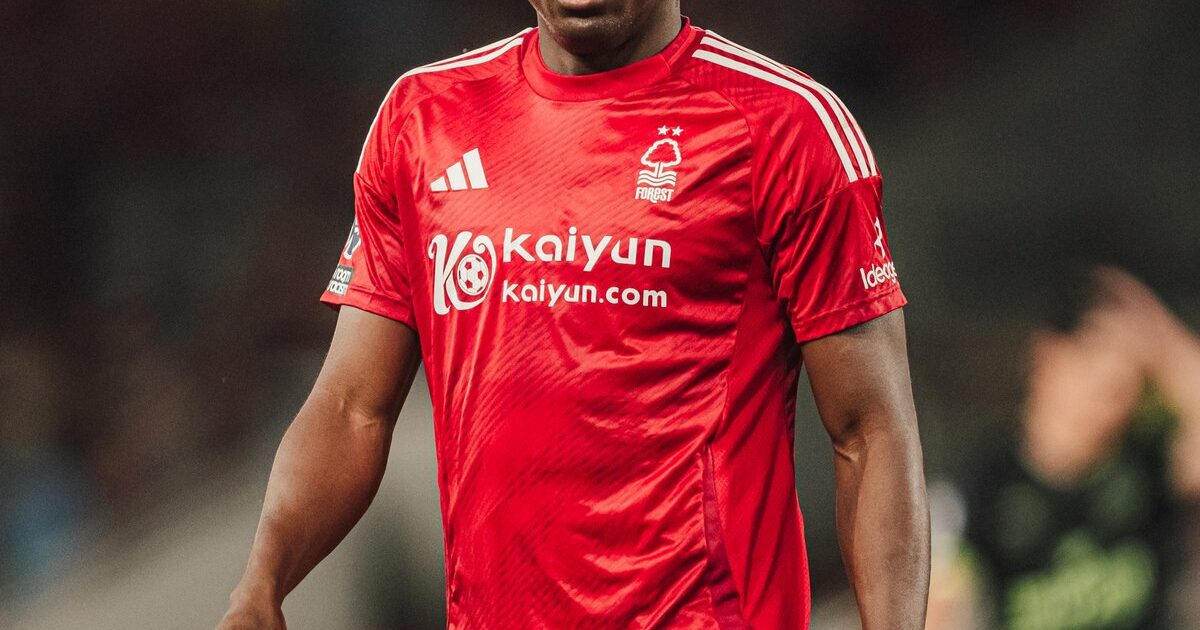
The Nigerian international footballer, Taiwo Awoniyi, found himself at the heart of a complex legal dispute involving Nottingham Forest owner Evangelos Marinakis and former Manchester United player turned pundit, Gary Neville. The incident stemmed from a serious injury Awoniyi sustained during a Premier League match against Leicester City. Attempting a goal, Awoniyi collided with the goalpost, leading to a ruptured intestine that required immediate hospitalization and an induced coma. The severity of the injury visibly distressed Marinakis, who entered the pitch after the game to question manager Nuno Espírito Santo’s handling of the situation. This action drew sharp criticism from various football pundits, most notably Gary Neville, who labeled Marinakis’s behaviour as “scandalous” during his live commentary for Sky Sports and later reiterated his criticism on social media, urging Nuno to “negotiate his exit” from the club.
These remarks became a pivotal point in a £2.1m libel suit filed by Marinakis, who alleges a coordinated smear campaign aimed at damaging his reputation. Marinakis claims that this campaign has fueled “hostile and ill-founded criticism” from prominent media figures, including Neville. The legal documents submitted by Marinakis’s legal team identify Neville as one of several journalists and pundits allegedly targeted as part of this orchestrated effort to spread misinformation. Marinakis, who also owns Greek football club Olympiacos, asserts that the defamation campaign is orchestrated by Irini Karipidis, owner of rival Greek club Aris, and Ari Harow, a former Israeli political advisor. He accuses them of falsely portraying him as a “leader of a criminal organization” involved in a range of illegal activities, including match-fixing, arson, fraud, and international drug trafficking. Both Karipidis and Harow vehemently deny these accusations, setting the stage for a protracted legal battle.
The incident involving Awoniyi’s injury and the subsequent actions of Marinakis became a subject of intense scrutiny and debate. Nottingham Forest released a statement defending Marinakis, emphasizing that his pitch-side intervention was motivated solely by concern for Awoniyi’s well-being. Internal sources at the club expressed disappointment that the owner’s emotional response to a medical emergency had been misconstrued and exploited within the public discourse. The inclusion of Neville’s comments in the libel suit underscores the significance Marinakis’s legal team places on the framing of the incident by British media figures, specifically how they portrayed the owner’s reaction. This highlights the intersection of on-field events, media commentary, and legal action, emphasizing the potential for even seemingly spontaneous actions to have far-reaching consequences.
Marinakis’s libel suit paints a larger picture of alleged reputational damage, extending beyond the Awoniyi incident. He claims to be the victim of a sustained and malicious campaign designed to undermine his credibility and standing within the football world. The accusations levelled against him, ranging from match-fixing to international drug trafficking, are serious and could have significant repercussions for his business interests and personal reputation. By including Neville’s comments in the lawsuit, Marinakis appears to be arguing that the pundit’s criticisms contributed to this broader negative portrayal, amplifying the existing accusations and potentially influencing public perception. This strategy also underscores the power and reach of media commentary in shaping public opinion, particularly in the highly visible world of professional football.
The ongoing legal proceedings will likely involve a detailed examination of the evidence presented by both sides. Marinakis will need to demonstrate a clear link between the alleged smear campaign orchestrated by Karipidis and Harow and the subsequent negative commentary from figures like Neville. He will need to prove that these comments were not simply independent opinions based on observable events, but rather part of a concerted effort to damage his reputation. The defense, on the other hand, will likely argue that Neville’s comments were fair comment based on his observations of a public event and that Marinakis’s actions warranted criticism. The legal battle will delve into the complexities of freedom of speech, media ethics, and the responsibility of public figures, particularly in the context of emotionally charged situations like Awoniyi’s injury.
As the legal battle unfolds, Awoniyi himself has been recovering from his surgery and was present to witness Forest’s final game of the season, a 1-0 defeat against Chelsea. While he remains on the sidelines, the club continues to express unwavering support for the player and acknowledges the widespread concern and well wishes from fans and the broader football community. This incident demonstrates the interconnectedness of football, media, and legal matters, highlighting how an on-field injury can escalate into a complex legal dispute involving high-profile individuals. The outcome of the libel suit will have significant implications not only for Marinakis and Neville but also for the broader landscape of media commentary and its potential impact on the reputations of individuals within the football industry.