









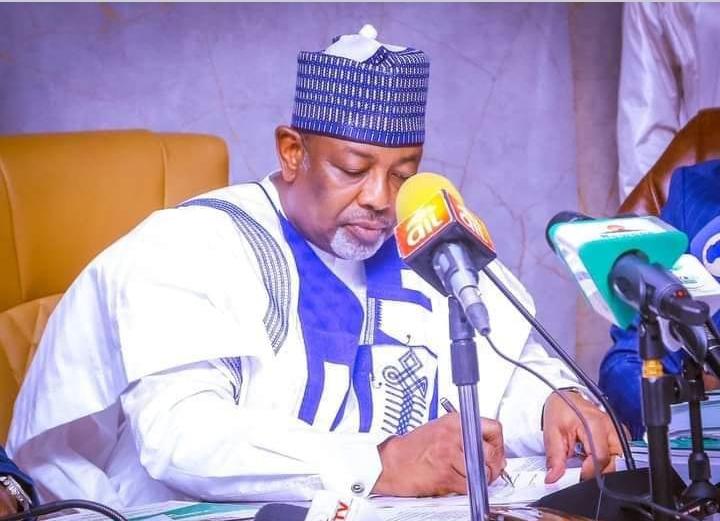
The Federal Government of Nigeria, in collaboration with the Ministry of Agriculture and Food Security and Brazil’s Fundação Getulio Vargas (FGV), has entered into a Memorandum of Understanding (MoU) aimed at enhancing the growth of the private sector within the agricultural realm. This partnership was formalized during the G20 Leaders’ Summit in Rio de Janeiro, where Mr. Temitope Fashedemi, the Permanent Secretary of the Ministry of Agriculture and Food Security, represented the Nigerian government, and Prof. Carlos Ivan Simonsen Leal, the President of FGV, represented the Brazilian side. The agreement delineates a framework for bolstering initiatives in fertiliser production, hybrid seed technology, and agricultural finance within Nigeria, moving towards a shared goal of agricultural improvement and sustainability.
According to a statement by Mr. Abiodun Oladunjoye, the State House Director of Information and Publicity, this MoU is expected to bring in an impressive $4.3 billion in private-sector investments towards various agricultural projects. The announcement highlights the significance of this collaborative effort labeled ‘Nigeria, Brazil sign MOU to boost agribusiness in 774 Local Government Areas,’ emphasizing its broad scope and potential impact on the agricultural landscape in Nigeria. The financial influx through private-sector engagement is seen as a vital catalyst for transforming agricultural practices, improving infrastructure, and ultimately boosting food production to meet the growing needs of the population.
This strategic agreement represents a crucial step in the ongoing cooperation between Nigeria and FGV, particularly under the auspices of the Green Imperative Project (GIP). Launched in 2018, the GIP encompasses a robust $1.2 billion initiative aimed at modernizing Nigeria’s agricultural sector by leveraging Brazilian expertise in tropical agriculture. The ambition behind the GIP is to foster a comprehensive development strategy that not only enhances agricultural productivity but also ensures food security and economic viability within the region. The partnership is structured to facilitate the transfer of agricultural technology and knowledge, thereby equipping Nigerian farmers and agribusinesses with the necessary tools to thrive in a competitive market.
The MoU has emerged after extensive discussions since its inception in 2018, with both parties determining critical pathways for its practical implementation and design. Supported by Deutsche Bank, the GIP aspires to provide transformative agricultural technologies over a ten-year period. This strategic engagement aims to create sustainable agricultural practices and enhance the capabilities of Nigeria’s farming communities. Over the next five years, the focus will be on supporting one agribusiness in each of Nigeria’s 774 local government areas, ensuring these initiatives are well-supported with both technical expertise and financial backing, thereby creating a ripple effect that influences local economies and bolsters food systems.
Mr. Fashedemi emphasized that this partnership not only signifies a strategic alignment between Brazil and Nigeria but also establishes a robust framework for leveraging private sector investment in pivotal areas crucial for food security. The MoU invites Brazilian expertise to work alongside Nigerian agriculture, aspiring to unlock significant potential and opportunities that arise from collaborative investment. This engagement is poised to drive innovation and technological advancement in Nigeria’s agricultural sectors, making them more resilient and rewarding for farmers and investors alike.
The signing ceremony witnessed the presence of key figures from the Nigerian presidency, officials from the Ministry of Agriculture and Food Security, and FGV’s leadership, marking a historic moment for bilateral cooperation in agriculture. The collaboration is more than just an agreement; it reflects a shared vision for sustainable agricultural growth and development between Nigeria and Brazil. This initiative serves as a clear signal of commitment towards fostering a better agricultural future, where enhanced productivity, sustainability, and food security can be realized through strategic partnerships and investments in innovative agricultural technologies.









