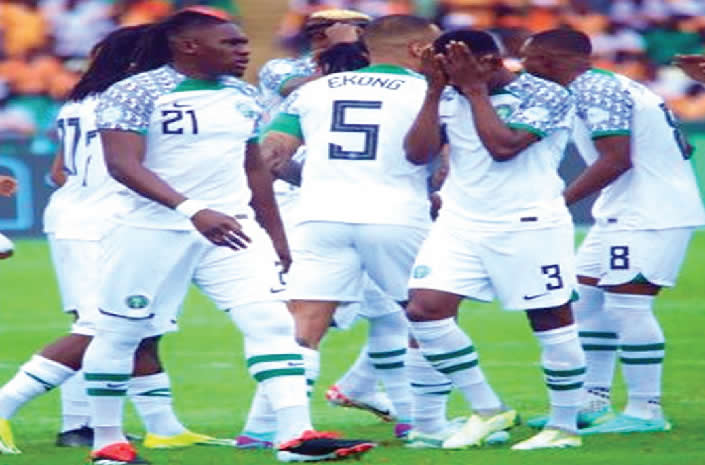
The Super Eagles of Nigeria have experienced a significant drop in their FIFA rankings, plummeting eight places from 36th to 44th in the world, according to a recent report by PUNCH Sports Extra. This decline marks the largest drop among all nations in the November rankings and represents a troubling trend for Nigeria’s national football team. The Eagles, who proudly hold three African titles, have faced persistent challenges on the pitch that have resulted in their dismal slide. The latest rankings were released by FIFA on Thursday, and the stark decrease in Nigeria’s position reflects ongoing struggles within the team.
The drop in the FIFA rankings has been primarily attributed to Nigeria’s poor performance during their last international outing. During this window, the team suffered an embarrassing 2-1 defeat at home against Rwanda during the qualifiers for the 2025 Africa Cup of Nations (AFCON). This defeat not only marked the end of the Eagles’ unbeaten streak in the qualifying series but also underscored the growing concerns regarding the team’s form and consistency. Furthermore, the Eagles had previously secured a rather disappointing 1-1 draw against Benin Republic, which, while technically earning them a spot in the upcoming AFCON in Morocco, contributed negatively to their overall standing.
The implications of the recent FIFA rankings are substantial, as Nigeria’s position has now dropped to fifth in Africa, slipping from fourth. This decline represents the most considerable decrease for the Super Eagles since February 2024 when they saw a notable rise from 42nd to 28th in the world, marking their most significant leap since 2013. Such fluctuations in rankings highlight the volatility of international football; a few poor performances can drastically alter a team’s global and continental standing.
In the broader landscape of world football, Argentina remains the top-ranked team despite facing challenges, including a recent loss to Paraguay during World Cup qualifiers. The French team holds the second position, with Spain, England, and Brazil following as the top five teams. Conversely, the rankings for the African teams show Morocco retaining the top position on the continent, despite its drop to 14th globally. Senegal and Egypt follow closely in the rankings, with Algeria now overtaking Nigeria to claim the fourth spot in Africa.
Notably, Niger was recognized as the biggest climber in the latest rankings, moving up from 131st to 122nd and scoring an impressive 31.23 points in the process. Meanwhile, DR Congo witnessed the largest point drop, losing 35.53 points and further emphasizing the competitive nature of the international football stage. Comoros also made headlines as they climbed to the rank of 103rd, marking a significant achievement in their football journey. These movements in the rankings serve as a reminder of the unpredictability of national team performances and the continuous shifts in football dynamics.
As the Super Eagles prepare for upcoming competitions, they face the urgent need to reassess their strategies and performance to regain both their stature in global football and confidence heading into the next rounds of international play. With the AFCON qualifiers approaching, the pressure is on for the team to improve and reclaim their previous ranking status. Fans and analysts alike will be watching closely to see how the Super Eagles respond to this setback and whether they can rise to the occasion in the critical months ahead. The journey back to the top of African football will require resilience, tactical adjustments, and successful execution on the pitch.