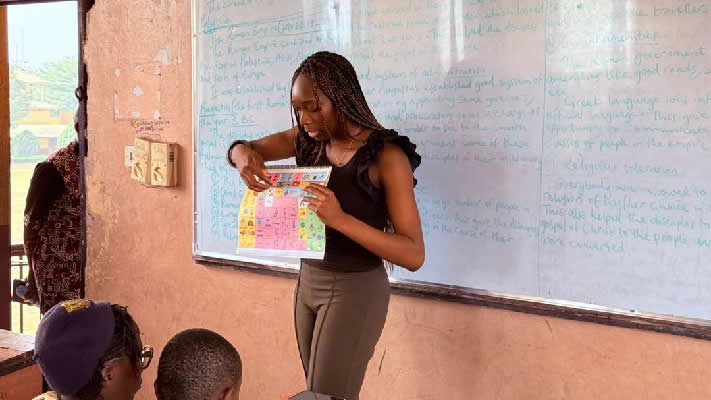
Fife Famurewa, a driven high school student from Houston, Texas, and founder and president of the Sports for Special Needs Club at Kinkaid, is embarking on a mission to bridge the gap between Nigeria’s medical community and the latest advancements in assistive technology. Driven by a deep passion for the intersection of engineering and medicine, particularly in addressing the needs of individuals with disabilities, Famurewa seeks to introduce innovative devices and technologies that can significantly improve the lives of those with special needs in Nigeria. Her involvement with the Easter Seals Houston Chapter, a non-profit organization dedicated to providing comprehensive disability services, has further fueled her commitment to this cause. This experience, coupled with her personal research and hands-on engagement with assistive technology centers, has ignited a desire to share this knowledge with medical professionals in Nigeria, ultimately enhancing the quality of life for individuals with disabilities.
Famurewa’s initiative stems from her active involvement in various foundations focused on special needs and assistive technology. Realizing the potential impact of these technologies, she felt compelled to translate her passion and experiences into tangible action. This led her to develop a research project centered on connecting Nigerian medical professionals with global advancements in assistive technology. Her approach combines research with practical application, as demonstrated by her collaboration with the Texas Technology Access Program to provide 3D-printed tactile symbols and communication boards to schools for children with autism in Nigeria. This initiative aims to directly address the communication challenges faced by these children, offering a concrete example of how assistive technology can make a real difference.
A pivotal moment in Famurewa’s journey was her visit to an assistive technology center as part of her involvement with the Easter Seals Houston Chapter. This firsthand experience exposed her to the transformative potential of these technologies, sparking a desire to share this knowledge with Nigerian medical professionals. This experience also highlighted the disparity in access to such technologies between developed nations like the United States and developing nations such as Nigeria. Recognizing this gap, Famurewa became determined to bridge it by facilitating the transfer of knowledge and resources to Nigeria. She envisioned a future where Nigerian medical professionals are equipped with the knowledge and tools to effectively utilize assistive technology, empowering them to better serve the needs of individuals with disabilities.
Driven by her research goals, Famurewa worked directly with schools in Lagos, Nigeria, gaining valuable insights into the practical application of assistive technology within the local context. Specifically, she collaborated with two private schools, further refining her understanding of the challenges and opportunities present within the Nigerian educational system. These experiences provided her with crucial on-the-ground perspectives, shaping her approach to bridging the knowledge gap and ensuring the effective implementation of assistive technology solutions. This direct engagement with the target community underscores her commitment to developing practical, sustainable solutions, tailored to the specific needs of individuals with disabilities in Nigeria.
Famurewa’s project underscores the importance of collaborative efforts in addressing global health challenges. By connecting the resources and expertise available in developed countries with the needs of developing nations, she aims to create a more equitable landscape for individuals with disabilities. Her initiative serves as a model for how individuals can leverage their skills and passion to effect positive change on a global scale. Through research, practical application, and cross-cultural collaboration, Famurewa is paving the way for a more inclusive and accessible future for individuals with special needs in Nigeria.
The impact of Famurewa’s work extends beyond the immediate provision of assistive devices. By empowering Nigerian medical professionals with knowledge and resources, she is fostering a sustainable system of care that can continue to benefit individuals with disabilities long after the initial implementation of her project. This capacity-building approach ensures that the impact of her efforts is amplified and sustained over time, creating a lasting legacy of improved access to assistive technology in Nigeria. Her initiative represents a significant step towards creating a more inclusive and supportive environment for individuals with special needs, enabling them to participate more fully in society and reach their full potential.