









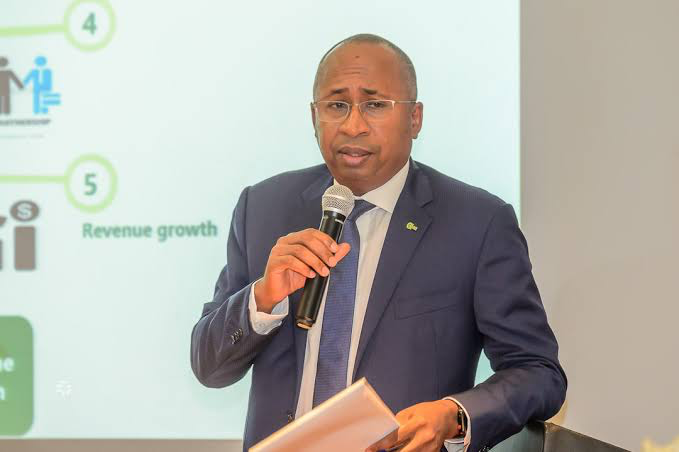
The landscape of cybersecurity in Nigeria poses daunting challenges for businesses, with the Nigerian Central Securities Clearing System (CSCS) reporting an alarming average of 2,560 cyber attacks each week. This alarming statistic exemplifies the escalating threat that companies face as they increasingly adopt digital operations. The Managing Director and Chief Executive Officer of CSCS Plc, Haruna Jalo-Waziri, made this assertion during the fifth edition of the CSCS Cybersecurity Conference in Abuja. He underscored the pressing need for a synergy between artificial intelligence (AI) and infrastructure, as the capabilities of AI can serve as vital resources for modern development activities, particularly in the realm of cybersecurity.
During the conference, Jalo-Waziri highlighted the global increase of cyber attacks by 45 percent, showcasing the pressing need for urgent action to protect businesses and their assets. He pointed out the projected economic toll of cybercrime, which is set to reach a staggering $10.5 trillion in 2024, a dramatic leap from previous years. This significant rise emphasizes that cybersecurity must evolve beyond being merely an IT issue to becoming a national priority vital for economic stability and public trust. As businesses navigate the complex landscape of digital transformation, they must swiftly adapt to the sophisticated cyber threats that accompany this evolution.
Vice President Kashim Shettima, represented by his Special Assistant on ICT Systems and Digital Skills, Bashir Shuaibu, reinforced the notion that investing in artificial intelligence is crucial for building a cyber-resilient Nigeria. The Vice President outlined that the relentless flood of cyber attacks not only endangers sensitive data but also calls for solid security strategies to combat diverse digital threats. He emphasized the critical role cybersecurity plays in safeguarding the national economy, arguing that, in an era defined by digital transformation, the protection of infrastructure and systems is of paramount importance. Shettima’s remarks echoed the sentiment that cybersecurity transcends technical issues, forming the cornerstone of Nigeria’s economic resilience.
The conference also featured insights from the National Security Adviser, Malam Nuhu Ribadu, who framed the dialogue around the interplay between the rapid growth of AI technologies and the pressing need for robust cybersecurity measures. Represented by the National Cybersecurity Coordinator, Saad Abubakar, Ribadu emphasized the government’s advancements in fortifying national security assets, achieving 85 percent of its AI programming through local vendors. This initiative reflects a commitment to ensuring that critical infrastructure is safeguarded against cyber attacks. Ribadu further insisted on the necessity of collaboration among various stakeholders to effectively combat cyber threats, advocating for a unified effort to bolster Nigeria’s defenses against potential cybercriminals.
Moreover, Director-General of the Securities and Exchange Commission, Dr. Emomotimi Agama, contributed to the conversation by noting the vital intersection between cybersecurity and financial technology (fintech). He identified cybersecurity as essential not only for the stability of capital markets but also for the economic well-being of the nation. The threats posed to financial institutions, where sensitive information can be exploited by hackers, necessitate a robust cybersecurity framework as part of the country’s national security strategy. Agama’s remarks signified the urgent need for protective measures in the increasingly digitized and interconnected financial landscape, reiterating that cybersecurity is foundational to maintaining public confidence in financial systems.
The comprehensive discussions at the CSCS Cybersecurity Conference highlighted the urgent need for an integrated approach to combatting cyber threats in Nigeria. As cybercrime continues to surge at an exponential rate, it is clear that multifaceted strategies that leverage technology, expert collaboration, and national prioritization are crucial for protecting both infrastructure and sensitive data. The emphasis on harmonizing artificial intelligence with cybersecurity denotes a future-facing approach that recognizes the dual roles of these technologies as both challenges and solutions in safeguarding national interests. Collaborative efforts among stakeholders, from government officials to tech experts, are essential for paving the way toward a cyber-resilient Nigeria, which is crucial for ensuring long-term economic stability and growth in this increasingly digital era.









