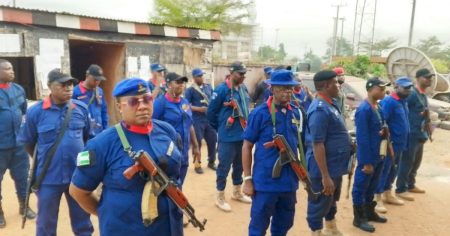
Nigeria, despite substantial investments in maritime security, continues to bear the burden of War Risk Insurance (WRI) premiums on inbound cargoes. This financial imposition persists even as piracy incidents within Nigerian waters have demonstrably decreased. The Nigerian Maritime Administration and Safety Agency (NIMASA) has voiced its concerns regarding this disparity, urging the international community to acknowledge Nigeria’s progress and reassess the necessity for such high premiums. NIMASA Director-General, Dr. Bashir Jamoh, highlighted this issue during a meeting with representatives from the Danish Ministry of Foreign Affairs, emphasizing the need for a corresponding reduction in WRI premiums in light of Nigeria’s enhanced security measures. This situation underscores the complex interplay between perceived risk, actual security improvements, and the economic implications for nations striving to combat maritime crime.
NIMASA’s efforts to improve maritime security have been multifaceted, encompassing capacity building, international collaborations, and engagement with media for enhanced awareness. The agency has partnered with the Kofi Annan International Peacekeeping Training Centre (KAIPTC) on various capacity development programs, focusing on areas such as conflict resolution, peacekeeping, and maritime security. These collaborations aim to bolster the skills and expertise of Nigerian maritime personnel in addressing security challenges effectively. Additionally, NIMASA has actively engaged with the media to improve the accuracy and comprehensiveness of maritime reporting. A specialized media training program, conducted in partnership with KAIPTC, has demonstrably enhanced the quality of maritime journalism in Nigeria, contributing to a more informed public discourse on maritime security issues.
The disparity between improved security and persistent high WRI premiums raises questions about the criteria used for assessing maritime risk and the responsiveness of international mechanisms to positive developments. NIMASA argues that the continued imposition of high premiums unfairly penalizes Nigeria despite its demonstrated progress in curbing piracy. This situation not only creates an additional financial burden for the country but also potentially undermines investor confidence and hinders economic growth within the maritime sector. NIMASA’s call for a review of WRI premiums is therefore not just an economic plea but also an assertion of its commitment to maritime security and a request for equitable recognition of its achievements.
The Danish Ministry of Foreign Affairs’ visit to NIMASA offered an opportunity for dialogue and exchange of perspectives on maritime security cooperation and the role of institutions like KAIPTC. The Danish delegation, led by Ms. Kristin Skov-Spilling, sought to understand Nigeria’s experience collaborating with KAIPTC, indicating a broader international interest in the effectiveness of such partnerships. This engagement signifies the importance of cross-border collaboration in addressing shared maritime security challenges and the potential for learning from best practices across different nations. The meeting also provided a platform for NIMASA to highlight its concerns regarding WRI premiums and advocate for a more nuanced and responsive approach to risk assessment by the international community.
Beyond the immediate issue of WRI premiums, the discussions between NIMASA and the Danish delegation underscore the broader need for collaborative approaches to maritime security. Combating piracy and other maritime crimes requires international cooperation, information sharing, and coordinated efforts to address the root causes of insecurity. Capacity building initiatives, such as those undertaken by NIMASA in partnership with KAIPTC, play a crucial role in strengthening national capabilities and fostering regional collaboration. By investing in training and development, countries can enhance their ability to respond effectively to security threats and contribute to a more secure maritime environment.
Looking ahead, NIMASA aims to further strengthen its international collaborations and explore opportunities for knowledge sharing with institutions like the Danish Maritime Authority. The agency recognizes the value of exchanging best practices and learning from the experiences of other nations in addressing maritime security challenges. Such collaborations can contribute to the development of more effective strategies and enhance the overall security posture of the maritime domain. By continuing to invest in capacity building, fostering international partnerships, and advocating for fair and responsive risk assessment mechanisms, NIMASA is striving to create a safer and more secure maritime environment for Nigeria and the wider international community.