









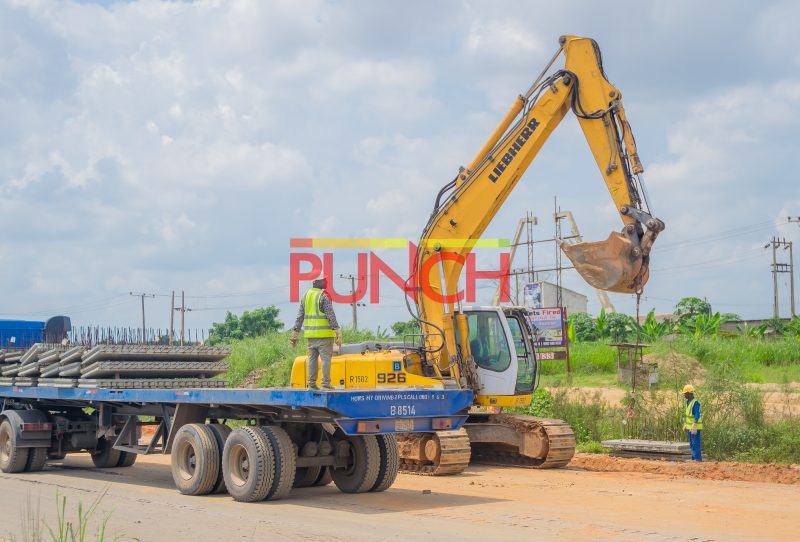
The fiscal health of Nigeria’s subnational governments is facing significant strain, with 29 states grappling with a combined N4.25 trillion deficit in funding crucial capital projects. This substantial shortfall has led to delays and disruptions in various infrastructure development initiatives across the affected states. The states collectively disbursed N3.76 trillion towards capital projects in the first nine months of 2024, against a budgetary target of N8.25 trillion, leaving a gaping N4.25 trillion funding gap. Worryingly, this disbursement represents a N280 billion decrease compared to the N4.04 trillion spent on capital expenditure in the entire 2023 fiscal year, despite a 40% increase in monthly federal allocations. This stark reality underscores a significant disconnect between planned capital investments and the actual financial commitment by these subnational entities.
The underlying issue contributing to this fiscal predicament is a misallocation of resources, with a disproportionate emphasis on recurrent expenditures. Despite the pressing need for infrastructure development, state governments prioritized recurrent expenses, totaling N1.994 trillion between January and September 2024. These expenses encompassed areas such as refreshments, sitting allowances, travel, and utilities, diverting funds away from critical capital projects that could stimulate long-term economic growth and improve the quality of life for citizens. Furthermore, a significant portion of state resources was channeled towards debt servicing, with N658.93 billion spent on servicing local, foreign, and multilateral debts. While states also acquired N533.29 billion in loans, this borrowing further exacerbates the financial burden and potentially crowds out essential capital investments.
Compounding the financial challenges, states fell short of their internally generated revenue (IGR) targets. Despite collecting N1.92 trillion in IGR, they missed their target of N2.868 trillion, resulting in a revenue deficit of N948.28 billion. This shortfall further restricts their capacity to fund vital capital projects and underscores the need for improved revenue generation strategies. The consequences of this funding deficit are substantial. Capital spending, which encompasses long-term investments in infrastructure such as roads, bridges, schools, hospitals, and public transport, is crucial for driving economic growth, enhancing public services, and improving the overall quality of life for citizens. The current funding gap jeopardizes these critical investments and hinders the states’ ability to achieve sustainable development.
A detailed analysis of capital spending across individual states reveals a wide disparity in performance. While Lagos, Rivers, and Delta states emerged as the top investors in infrastructure development, only 11 states managed to achieve over 50% of their projected capital spending. Seven states reached between 30% and 40% implementation, while a concerning 11 states spent less than 30% of their allocated budget on capital investments. This uneven distribution of capital expenditure highlights the varying levels of fiscal discipline and prioritization among the states. For instance, Abia State achieved a mere 26.09% implementation rate, spending N128.15 billion out of a budgeted N475.74 billion. Similarly, Akwa Ibom State spent only 16.9% of its targeted expenditure, while Benue State achieved a meager 14.7% implementation rate. These low implementation rates reflect the challenges states face in translating budgetary allocations into actual project execution.
This concerning trend of prioritizing recurrent expenses and debt servicing over capital investments raises serious concerns about the long-term economic development prospects of these states. Independent assessments by credit rating agencies, such as Fitch, corroborate these findings, highlighting the pervasive under-execution of capital expenditure budgets across Nigerian states. Fitch estimates that states typically execute only around 60% of their budgeted capital expenditure, citing funding and implementation constraints, subdued IGR growth, and rising current spending due to inflation and wage increases as key contributing factors. This systemic underperformance in capital spending perpetuates a cycle of underdevelopment, hindering economic growth and limiting the states’ ability to address critical infrastructure needs.
The fiscal challenges faced by state governments are mirrored at the federal level, where capital spending also experienced a decline. In the first half of 2024, federal capital spending decreased by 25.3% to N1.99 trillion compared to N2.68 trillion in the same period the previous year. The proposed 2025-2027 Medium-Term Expenditure Framework (MTEF) further underscores this de-emphasis on capital expenditure, with allocations projected to decrease from 42.3% of the total budget in 2024 to 34.4% in 2025. Conversely, allocations for debt servicing, personnel costs, and overhead costs are expected to rise, further squeezing the fiscal space available for crucial capital investments. This fiscal trajectory raises concerns about the nation’s ability to address its significant infrastructure deficit and achieve sustainable economic growth. The persistent underfunding of capital projects at both the state and federal levels poses a significant threat to Nigeria’s long-term development prospects. Addressing this issue requires a concerted effort to prioritize capital investments, enhance revenue generation, improve budget execution, and foster greater fiscal discipline across all levels of government.









