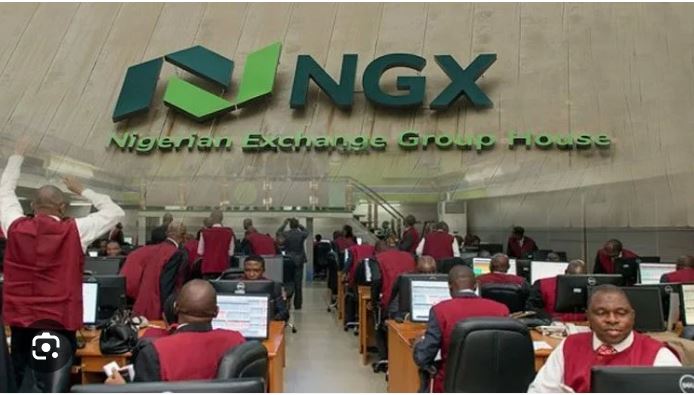
November 2024: A Dip in Transactions on the Nigerian Exchange
The Nigerian Exchange experienced a downturn in trading activity during November 2024, with total transactions declining by 12.01% to N442.34 billion compared to N502.73 billion in October 2024. This decrease was observed across both domestic and foreign investments. Domestic transactions, which constitute the bulk of the market activity, fell by 11.83% to N401.40 billion, while foreign transactions contracted by 13.74% to N40.94 billion. This overall decline in trading activity suggests a temporary cooling off in investor sentiment during the month. While several factors could contribute to such fluctuations, including global economic conditions, local political developments, and company-specific news, the specific drivers behind November’s decline require further analysis.
Retail Investors Shine Amidst Institutional Retreat
Within the domestic market, a notable divergence in investor behavior emerged. Retail investors demonstrated increased participation, with their transactions growing by 14.90% to reach N195.38 billion. Conversely, institutional investors, typically large financial institutions like pension funds and asset management companies, pulled back, resulting in a substantial 27.77% drop in their transactions to N206.02 billion. This contrasting pattern suggests that retail investors may have perceived investment opportunities or maintained a more optimistic outlook than institutional counterparts, who might have adopted a more cautious approach due to perceived market risks or broader portfolio adjustments.
Year-to-Date Performance and Long-Term Trends
Despite the November downturn, the Nigerian Exchange recorded significant trading activity in the first eleven months of 2024. Total transactions for this period reached N4.913 trillion, a substantial increase compared to N3.234 trillion during the same period in 2023. This growth was fueled primarily by domestic investors, whose transactions amounted to N4.128 trillion, while foreign investors contributed N785.28 billion. This year-to-date performance highlights the overall positive trajectory of the Nigerian stock market in 2024, despite the monthly fluctuations.
Examining the long-term trends over a 17-year span (2007-2023) reveals a different picture. Total domestic transactions decreased by 10.94% from N3.556 trillion in 2007 to N3.167 trillion in 2023, while foreign transactions saw a more pronounced decline of 33.28%, falling from N616 billion to N411 billion. These long-term trends suggest underlying structural factors might be influencing investor behavior, possibly relating to regulatory changes, macroeconomic conditions, or the development of alternative investment avenues.
Dominance of Domestic Investors and Year-over-Year Growth
A recurring theme in the Nigerian Exchange’s performance is the dominant role of domestic investors. In November 2024, despite the overall decline in transactions, domestic investors outpaced foreign investors by approximately 82%. This trend underscores the increasing importance of local capital in driving market activity and the potential for further growth as the Nigerian economy expands and the investing public becomes more engaged with the stock market.
Comparing November 2024 with the same month in the previous year reveals significant growth. Total transactions in November 2024 were 47.12% higher than the N300.67 billion recorded in November 2023. This year-on-year increase reinforces the positive momentum observed in the market during 2024 and suggests that the November decline might be a temporary blip rather than a reversal of the broader upward trend.
Conclusion: A Market in Flux
The Nigerian Exchange’s performance in November 2024 presents a mixed picture. While the overall decline in transactions raises some concerns, the robust year-to-date performance and the significant year-on-year growth offer reasons for optimism. The divergent behavior of retail and institutional investors adds another layer of complexity to the analysis, highlighting the dynamic nature of the market and the varying perspectives of different investor segments. Further investigation is needed to pinpoint the specific drivers behind the November slowdown and to assess the long-term prospects of the Nigerian stock market in the context of evolving economic conditions and investor behavior. The continued dominance of domestic investors suggests a growing local interest in the stock market, which could be a key driver of future growth and stability.