The clash at Old Trafford between Manchester United and Nottingham Forest ended in a 3-2 victory for the visitors, marking their first win at the iconic stadium since 1994 and inflicting a second consecutive Premier League defeat on Ruben Amorim’s struggling side. The match unfolded as a rollercoaster of emotions, with both teams trading blows and showcasing both attacking prowess and defensive vulnerabilities. Forest’s win propelled them to a surprising fifth place in the league standings, while United languished further down in 13th, adding pressure on Amorim after his initial positive start following the dismissal of Erik ten Hag. The defeat highlighted United’s ongoing struggles, particularly with set-pieces, and raised further questions about their ability to compete effectively this season.
The match began with a setback for Manchester United as Nikola Milenković capitalized on a corner in the second minute, heading the ball past Lisandro Martínez to give Forest an early lead. This early goal underscored United’s persistent vulnerability defending set-pieces, a recurring theme in their recent struggles. However, the Red Devils responded swiftly, equalizing in the 18th minute through Rasmus Højlund. Højlund’s goal, his first for the club, came after Alejandro Garnacho’s shot was blocked by Forest goalkeeper Matz Sels, allowing the young striker to pounce on the loose ball and restore parity. The game then settled into a period of back-and-forth action, with both teams creating opportunities but failing to convert.
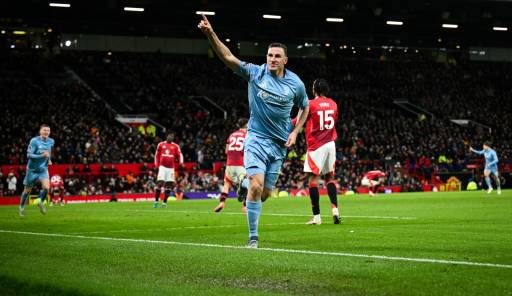
Nottingham Forest regained the upper hand early in the second half, capitalizing on a Manchester United error. Bruno Fernandes’s loss of possession to Callum Hudson-Odoi proved costly as Hudson-Odoi set up Morgan Gibbs-White for a stunning 20-yard strike that beat Andre Onana. This goal reinstated Forest’s lead and highlighted United’s defensive fragility. Their woes were compounded just minutes later when Chris Wood extended Forest’s advantage with a looping header from a Gibbs-White cross, exposing further weaknesses in United’s backline. The goal highlighted a lack of communication and organization, leaving Onana, Martínez, and Matthijs de Ligt stranded as Wood found the back of the net.
Despite the two-goal deficit, Manchester United refused to surrender and mounted a comeback attempt. Just past the hour mark, Amad Diallo’s assist set up Fernandes, who redeemed himself somewhat with a powerful strike from the edge of the box, reducing the deficit to a single goal. This injection of hope revitalized Old Trafford, and the home crowd roared their support as United pressed for an equalizer. The momentum shifted, and Forest found themselves under increasing pressure, forced to defend resolutely against a barrage of United attacks.
The final stages of the match were a tense affair, with Manchester United throwing everything forward in search of an equalizer. Substitutes like Marcus Rashford were introduced to inject fresh energy and attacking impetus, but Forest’s defense held firm, repelling wave after wave of attacks. Despite late efforts from Rashford and Martínez, Forest’s disciplined and determined defensive display ensured they held on for a famous victory. The final whistle was met with jubilation from the traveling Forest supporters, while the home crowd was left to ponder another disappointing performance from their team.
The ramifications of this result extended beyond the immediate disappointment for Manchester United. The defeat raised further questions about the team’s direction under Ruben Amorim, who had initially brought a sense of optimism following the tumultuous end to Erik ten Hag’s tenure. The loss highlighted the ongoing defensive frailties that have plagued the team, particularly their vulnerability to set-pieces. The pressure mounted on Amorim to address these issues and find a way to instill greater consistency and resilience in his squad. For Nottingham Forest, the victory provided a significant boost in confidence and cemented their impressive start to the season. The win at Old Trafford was a statement of intent, signaling their ambition to compete at the highest level and challenge for a top-half finish.