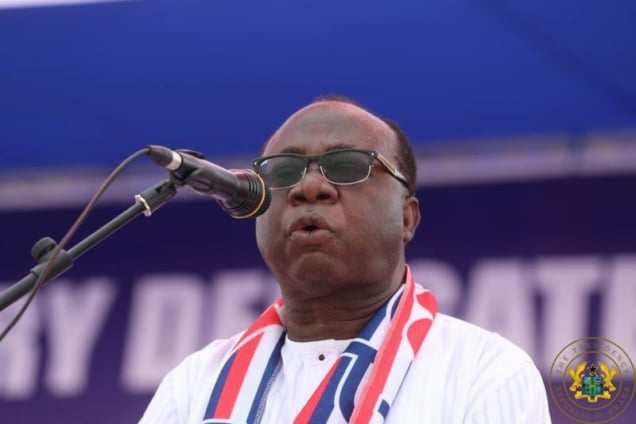
Freddie Blay, former National Chairman of the New Patriotic Party (NPP), vehemently denies accusations of illicitly acquiring government lands and funds, asserting his readiness to defend his reputation against what he terms as baseless and defamatory allegations. These accusations stem from Samuel Okudzeto Ablakwa, Member of Parliament and chair of the newly formed Office of Research and Accountability in Leadership (ORAL), a group focused on anti-corruption initiatives. Blay has responded by filing defamation lawsuits against Ablakwa, emphasizing that his family has not unlawfully benefited from public resources in any way. He challenges Ablakwa to substantiate his claims, expressing concern about the potential bias within ORAL given Ablakwa’s leadership role and prior public statements.
Blay’s core argument centers on the complete denial of any wrongdoing. He insists that neither he nor his family have received a single “pesewa” (Ghanaian currency unit) unlawfully from the government, nor have they acquired any government land through illegal means. He frames Ablakwa’s actions as a deliberate smear campaign designed to tarnish his image and that of his family. The accusations, he alleges, extend beyond mere statements and include orchestrated protests with placards accusing them of “state capture,” a serious allegation implying undue influence over government institutions and processes for personal gain. This public display of accusatory rhetoric, Blay contends, has caused significant reputational damage, prompting him and his children to seek legal recourse to protect their integrity.
The establishment of ORAL and Ablakwa’s role as its chair have become central to Blay’s defense. He expresses deep reservations about Ablakwa’s leadership, citing the MP’s previous public statements as evidence of a pre-existing bias against him. Blay questions the impartiality of any investigation conducted under Ablakwa’s direction, suggesting that the accusations are politically motivated and designed to damage his reputation. This perceived bias casts a shadow over the legitimacy of ORAL in Blay’s eyes, raising concerns about the fairness and objectivity of any potential inquiry.
While maintaining his innocence and questioning Ablakwa’s impartiality, Blay does not categorically refuse to cooperate with investigations. He clarifies that he is willing to engage with a legitimate, lawfully established organization conducting an impartial investigation based on concrete findings. However, his willingness is conditional. He underscores his apprehension about facing an inquiry led by Ablakwa, fearing that the MP’s alleged bias and previous defamatory statements might provoke a strong reaction from him. He expresses uncertainty about how he would conduct himself in such a situation, hinting at the potential for a heated exchange given the already strained relationship between the two.
This situation presents a complex interplay of accusations, denials, and legal proceedings, intertwined with the broader context of anti-corruption efforts in Ghana. Blay’s strong denial and proactive legal action underline his determination to clear his name and protect his family’s reputation. His challenge to Ablakwa to provide evidence for his claims highlights the need for substantiated accusations in public discourse, especially when dealing with sensitive issues like corruption allegations. The potential clash between Blay’s willingness to cooperate with a legitimate investigation and his apprehension about Ablakwa’s leadership of ORAL creates a delicate scenario that requires careful navigation to ensure a fair and transparent process.
The case also raises questions about the delicate balance between pursuing accountability and protecting individual reputations. While anti-corruption efforts are crucial for good governance, it is equally important to ensure that accusations are grounded in evidence and that investigations are conducted impartially, free from any pre-existing biases or political motivations. Blay’s concerns about Ablakwa’s leadership of ORAL highlight the importance of perceived impartiality in such investigations. The ongoing legal proceedings and the potential interaction between Blay and ORAL under Ablakwa’s chairmanship will likely be closely watched, as they could set a precedent for how similar situations are handled in the future.