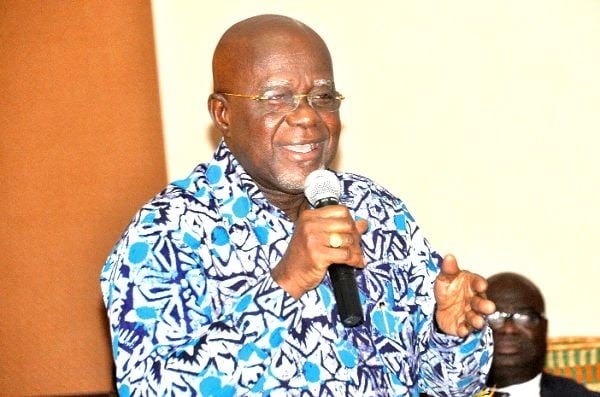
Hackman Owusu Agyeman, the Chairman of the Council of Elders for the New Patriotic Party (NPP), has publicly criticized Alan Kyerematen’s recent comments regarding former President John Agyekum Kufuor. The remarks in question were made in the context of Kufuor’s endorsement of Dr. Mahamudu Bawumia for the forthcoming 2024 general elections. Kyerematen questioned the depth of Kufuor’s relationship with Bawumia and suggested that the former president’s endorsement was unfounded. This comment, viewed by many as disrespectful, has triggered a considerable controversy among party members, particularly drawing Agyeman’s ire who felt it was an inappropriate critique of a political figure who has been pivotal in Kyerematen’s own career.
Agyeman characterized Kyerematen’s remarks about Kufuor as not only disrespectful but also as a denial of the former president’s considerable contributions to the political landscape and to Kyerematen’s personal journey. Asserting that Kufuor played a significant role in shaping Kyerematen’s career, he suggested that the current candidate’s comments should not diminish the legacy and support provided by Kufuor. Agyeman pointed out that Kufuor’s endorsement of Bawumia was an informed decision, grounded in years of leadership, and should not be casually dismissed by someone who has previously benefited from Kufuor’s guidance.
In detailing Kufuor’s instrumental role, Agyeman referenced specific actions taken during Kufuor’s presidency, likening the contributions of other prominent party figures to Kyerematen’s claims. He elaborated on Kufuor’s role during critical policy decisions, such as the Highly Indebted Poor Countries (HIPC) initiative, in which Kyerematen was notably absent from the key strategic discussions. Agyeman insisted that it was the collective efforts of seasoned leaders that shaped the party’s successes, and as such, Kyerematen’s assertion that he was integral to these initiatives lacked merit and credibility.
Agyeman expressed disappointment regarding Kyerematen’s apparent disregard for the foundations laid by Kufuor, emphasizing that the political landscape has changed significantly over the years, and candidates must adapt to these shifts. While he acknowledged Kyerematen’s ambitions, he indicated that the evolving context of political leadership necessitates new types of capabilities and understanding. By questioning Bawumia’s qualifications, Agyeman interpreted Kyerematen’s stance as an act of impudence that failed to respect both Bawumia’s capabilities and Kufuor’s endorsements.
Having previously envisioned himself as a flagbearer for the party, Agyeman articulated his realization of the evolving demands of leadership in the current era characterized by rapid technological advancements and shifts in voter expectation. He noted that Kufuor’s decision to support Bawumia over Kyerematen is indicative of the need for fresh vision aligned with contemporary challenges. The implication is that Kyerematen’s critiques are not just unfounded but overlook the nuances required for a successful leadership transition.
In summary, Agyeman’s statements underscored the vital importance of recognizing and respecting the contributions of predecessors in any political party. He affirmed that any discourse around endorsements and political support should maintain a level of integrity and acknowledgment of the sacrifices and efforts of those who have paved the way. The exchange highlights the ongoing contention within the NPP and raises questions about generational leadership, respect for experience, and the integrity of political discourse in shaping the party’s future direction.