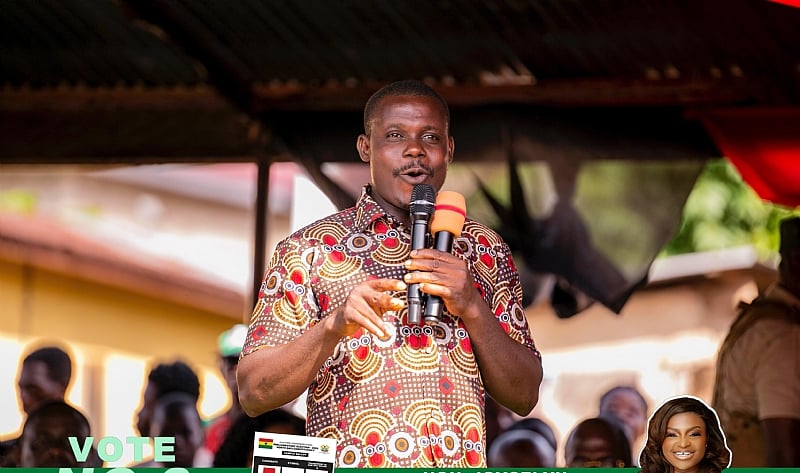
In a recent event that has drawn significant attention, the New Patriotic Party (NPP) expelled Addae Bright, a Youth Organizer from the North Dayi constituency, due to his public endorsement of the National Democratic Congress (NDC) during a rally in Botoku, Volta Region. Known by the nickname Zakpo, Bright expressed his support for the NDC’s parliamentary candidate, Joycelyn Tetteh, and NDC flagbearer, John Dramani Mahama. This expulsion, which is viewed as a stern demonstration of the NPP’s commitment to party loyalty, further complicates the party’s ongoing issues surrounding membership allegiance, especially with the upcoming general elections where some party members are running as independents. Bright’s actions are seen as a direct violation of Article 3(9)(1) of the NPP Constitution, which mandates automatic forfeiture of party membership for any member who supports another political party when the NPP has sponsored a candidate.
Bright had been serving as the Youth Organizer for the RC Primary Anfoega Wadamaxe polling station and was seen as an active member until his departure from party lines. Following the incident, the North Dayi Constituency Secretary, Mr. Baku Emmanuel K., made a public announcement regarding his expulsion, urging all NPP members to regard Bright as a non-member henceforth. The NPP has made it clear that any member who demonstrates support for a rival political party risks losing their membership, as illustrated by the precise wording of the constitution. This enforcement of rules establishes a strict framework for party conduct and loyalty but also highlights the potential for tensions within the party as it prepares for the December 7 general elections.
The rapid expulsion of Addae Bright has ignited discussions about the perceived inconsistencies in how the NPP applies its party loyalty rules. Observers have noted that while grassroots members like Bright face immediate repercussions, Members of Parliament (MPs) who choose to run as independents have not faced the same strict consequences. The party has been reluctant to declare these independent MPs’ seats vacant, suggesting a desire to maintain a united front in Parliament despite their defection. This leniency raises questions about the standard of loyalty enforced within the party’s hierarchy, suggesting an unequal treatment of members based on their political status and influence.
Critics argue that the preferential treatment given to high-profile members, such as MPs, undermines the party’s claim of valuing loyalty and discipline equally among its ranks. This perceived double standard has the potential to sow discord within the party and can lead to disillusionment among its grassroots supporters who see members of the higher echelon escaping punitive measures that are applied strictly to everyday members. As the NPP navigates these internal dynamics, the implications of such actions may ripple into the party’s operational unity and electoral prospects as the general elections approach.
The situation invites a broader discussion on the interpretation of party loyalty and the application of constitutional rules, which seems to vary significantly depending on the member’s influence and position. Observers suggest that the NPP’s commitment to enforcing loyalty is selective, as the party’s decisions appear to be influenced by the strategic need to retain parliamentary power rather than a consistent adherence to its constitution. Consequently, the party risks alienating its grassroots base while attempting to maintain a cohesive image at the parliamentary level.
As the NPP continues to grapple with issues of loyalty and representation, the expulsion of Addae Bright stands as a critical moment in the political landscape. It not only reflects the party’s stance on discipline but also exposes potential fractures in its hierarchical structure. As party loyalty is more stringently enforced at the grassroots level, the contrasting leniency shown towards members of parliament who defect raises important questions about the principles guiding the party’s decisions and the potential long-term implications of those principles on the NPP’s unity and electoral success in the upcoming elections.