The New Patriotic Party (NPP) has sharply criticized the Office of the Special Prosecutor (OSP) for its perceived unreasonable approach in investigating former Finance Minister Ken Ofori-Atta. The OSP has declared Ofori-Atta a wanted fugitive and insists on his physical presence in Ghana to answer questions regarding alleged financial irregularities, despite the former minister’s reported departure from the country for medical reasons in early 2025. The NPP contends that the OSP’s demand is unreasonable, particularly given the OSP’s previous actions in a separate investigation.
The central point of contention revolves around the OSP’s insistence on Ofori-Atta’s personal appearance. The former minister’s lawyers have communicated their willingness to cooperate fully with the investigation, offering to provide all necessary documents while Ofori-Atta remains abroad for an indefinite period due to his medical condition. This offer, along with documentation from the medical facility treating Ofori-Atta, has seemingly not swayed the OSP’s stance. Special Prosecutor Kissi Agyebeng maintains that Ofori-Atta’s physical presence is essential to address inquiries related to several high-profile cases, including the SML contract scandal, the National Cathedral project, and the Ambulance Spare Parts scandal.
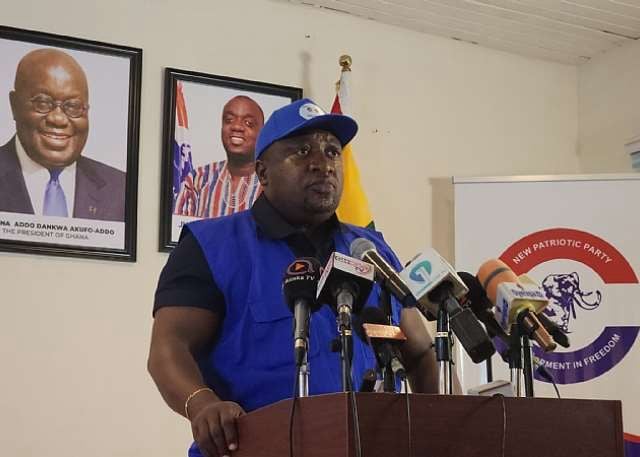
The NPP, however, argues that this insistence is inconsistent with the OSP’s previous conduct in the Airbus scandal investigation. NPP National Organizer Henry Nana Boakye highlighted that Mr. Agyebeng traveled to the United Kingdom to interview Samuel Adam Mahama, a brother of former President John Mahama, who was implicated in the scandal. The NPP questions why a similar approach cannot be adopted in Ofori-Atta’s case, especially given his health condition and the willingness of his legal team to cooperate. The NPP suggests that if the OSP deemed it necessary to travel abroad for an interview in the Airbus case, there should be no impediment to doing the same for Ofori-Atta.
The NPP’s criticism underscores a broader concern about the perceived double standard in the OSP’s investigative procedures. The party questions the urgency that necessitates Ofori-Atta’s immediate return, implying that the OSP’s demands are disproportionate to the situation. The NPP argues that if Agyebeng could accommodate the circumstances surrounding Samuel Mahama’s interview, the same consideration should be extended to Ofori-Atta, given his medical condition. The party’s argument hinges on the principle of consistency and fairness in the application of investigative procedures.
The contrasting approaches adopted by the OSP in these two cases have raised questions about the potential influence of political considerations. The NPP’s highlighting of the different treatment meted out to individuals connected to opposing political factions suggests a possible bias in the OSP’s actions. While the OSP maintains that its decisions are based solely on the specific requirements of each investigation, the NPP’s critique aims to expose what they perceive as an inconsistency that could be interpreted as politically motivated. The situation fuels the ongoing debate about the impartiality and independence of institutions tasked with combating corruption.
The ongoing dispute between the NPP and the OSP underscores the challenges inherent in conducting high-profile investigations, particularly when they involve politically connected individuals. The NPP’s questioning of the OSP’s procedures highlights the need for transparency and consistency in applying investigative protocols to maintain public trust and ensure the perception of fairness. The case also emphasizes the delicate balance between the pursuit of justice and the consideration of individual circumstances, such as health conditions, during investigations. The OSP’s insistence on Ofori-Atta’s return, despite his medical situation, raises questions about whether this pursuit overrides legitimate humanitarian concerns. The unfolding events will likely continue to be closely scrutinized, as they have implications for the future conduct of investigations and the relationship between political parties and anti-corruption bodies.