









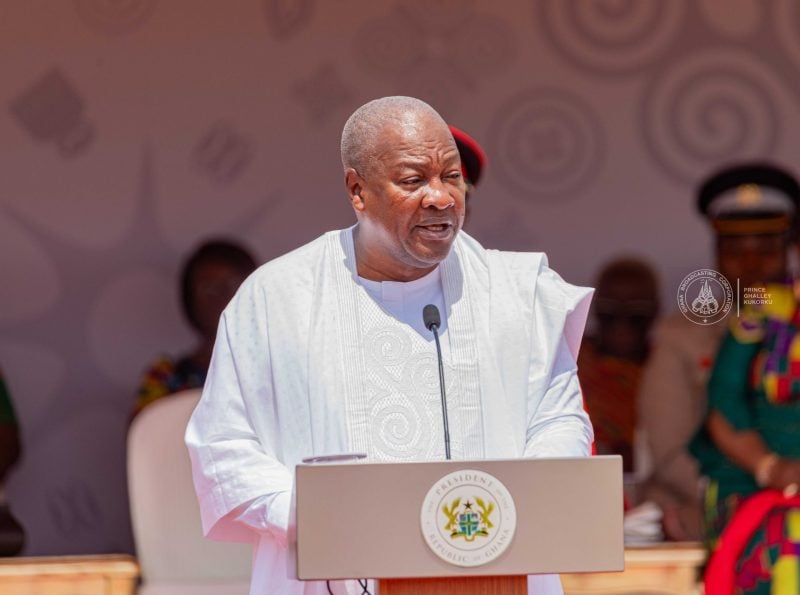
Ghana’s 68th Independence Day celebration served as a poignant moment of reflection on the nation’s journey, its triumphs, and its challenges. President John Dramani Mahama urged Ghanaians to contemplate the sacrifices made by their forebears in the struggle for self-rule and to assess their progress towards the vision of Osagyefo Dr. Kwame Nkrumah, Ghana’s founding father. Nkrumah envisioned a self-reliant, industrialized nation with a thriving economy and a strong sense of national pride rooted in Pan-African unity. However, the 1966 coup d’état, orchestrated by the CIA, shattered this dream, plunging Ghana into decades of instability and military rule. This dark chapter in Ghana’s history, revealed through declassified US documents, significantly hindered the nation’s progress and served as a stark reminder of the fragility of independence.
President Mahama emphasized the need for responsible stewardship of national assets, urging Ghanaians to consider their legacy for future generations. He underscored the importance of learning from past mistakes and charting a new course towards progress and development, avoiding the pitfalls of missed opportunities. He pledged his commitment to providing strong leadership and a clear vision to navigate the current economic challenges while safeguarding the nation’s future. The president acknowledged the recurring theme of Ghana’s dependence on imports, foreign aid, and IMF bailouts, highlighting the need to move beyond rhetoric and take decisive action to break the cycle of dependency. This call for self-reliance resonated with the theme of the celebration, “Reflect, Review, and Reset,” emphasizing the need for a fundamental shift in the nation’s approach to development.
The president outlined his administration’s policies aimed at achieving economic independence and prosperity. Fiscal discipline and living within the nation’s means were central to this strategy. He stressed the importance of boosting domestic revenue generation, expanding the economy, and creating opportunities for all citizens. The implementation of a 24-hour economy program was highlighted as a key initiative to stimulate job growth, enhance productivity, increase exports, and reduce reliance on foreign aid. This ambitious program aimed to revitalize the economy and create a more sustainable path towards development. The emphasis on domestic solutions underscored the president’s vision of a self-reliant Ghana.
Furthermore, the president unveiled the $10 billion “Big Push” initiative, a significant investment in modernizing infrastructure, creating jobs, and stimulating local industries. This ambitious project signified a shift towards internally driven development, reducing dependence on external funding. By prioritizing domestic investment and fostering local industries, the initiative aimed to create a more robust and self-sustaining economy. The president’s focus on these key initiatives demonstrates a commitment to breaking the cycle of dependency and building a more resilient and prosperous Ghana.
The 68th Independence Day celebration, therefore, served as a platform not only to commemorate the past but also to articulate a vision for the future. President Mahama’s address emphasized the importance of self-reliance, fiscal responsibility, and domestic-led development as key pillars for achieving lasting economic progress. The celebration’s theme, “Reflect, Review, and Reset,” captured the essence of this message, urging Ghanaians to learn from the past, assess the present, and chart a new course for a more prosperous and independent future. The presence of dignitaries, including former Tanzanian President Jakaya Kikwete, Vice President Naana Jane Opoku-Agyemang, and former Presidents Nana Addo Dankwa Akufo-Addo and John Agyekum Kufuor, underscored the significance of the occasion and the collective commitment to Ghana’s continued progress.
In essence, Ghana’s 68th Independence Day was not just a celebration of freedom from colonial rule but also a call to action. It was a moment to reflect on the nation’s journey, to acknowledge past missteps, and to recommit to the ideals of self-reliance and economic independence. President Mahama’s address, with its emphasis on fiscal discipline, domestic resource mobilization, and strategic investments in infrastructure and local industries, outlined a roadmap for achieving these goals. The celebration served as a reminder that true independence extends beyond political sovereignty and encompasses economic self-sufficiency and the ability to chart one’s own destiny. The “Reflect, Review and Reset” theme resonated deeply, signaling a commitment to building a more resilient, prosperous, and truly independent Ghana for future generations.









