









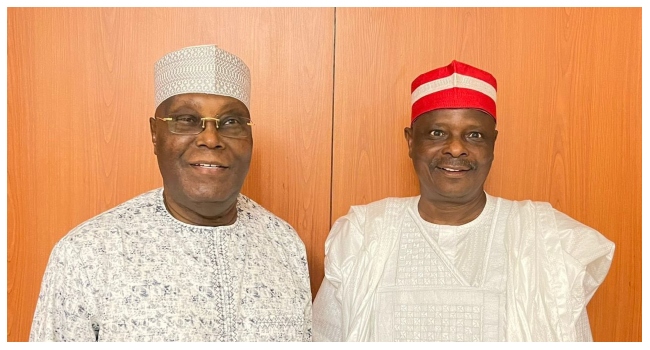
President Bola Tinubu’s recent media engagement sparked a firestorm of criticism from opposition figures, notably Atiku Abubakar of the PDP and Rabiu Kwankwaso of the NNPP. Central to their discontent was the President’s unwavering stance on fuel subsidy removal and his declared intention to continue borrowing for infrastructural projects. Atiku, through his spokesperson, lambasted the APC-led government for what he termed “borrowing without purpose,” emphasizing the lack of tangible improvements despite accumulating debt. He argued that the borrowing was not strategically directed towards specific projects and criticized the government for placing the burden of repayment on already struggling Nigerians through taxes. Atiku painted a bleak picture of the upcoming Christmas season, predicting it to be the hardest yet for many due to economic hardship and widespread hunger.
Kwankwaso echoed Atiku’s concerns, pointing to the recently presented budget as evidence of the government’s disconnect from the suffering of the people. He condemned the continued allocation of funds for non-essential items like vehicles while ordinary Nigerians were being asked to tighten their belts. Kwankwaso stressed the hypocrisy of the government’s austerity calls while it continued to spend lavishly. He called for a demonstrable commitment to cost-cutting from both the executive and legislative branches. The consensus among these opposition leaders was that the government’s economic policies were exacerbating the hardships faced by ordinary citizens.
The Labour Party also joined the chorus of dissent, with their National Legal Adviser, Kehinde Edun, condemning Tinubu’s borrowing plans as a misstep, citing the lack of improvement in infrastructure despite previous loans. He also criticized Tinubu’s reluctance to reduce the size of his cabinet, calling it “bravado” and predicting eventual downsizing due to necessity. Edun dismissed Tinubu’s justification for continued fuel subsidy removal as mere posturing, arguing that the policy had brought immense suffering. He maintained that the President’s actions reflected a disconnect from the realities faced by the populace.
The Coalition of United Political Parties (CUPP) further amplified the criticism, accusing the APC administration of lacking financial discipline. CUPP spokesperson, Mark Adebayo, pointed to the allocation of substantial funds for a presidential jet and convoy vehicles as evidence of misplaced priorities. He argued that a truly fiscally responsible government would not indulge in such expenditures while the nation grappled with economic hardship. Adebayo highlighted the existence of leaders in more developed economies who forgo such luxuries, emphasizing the need for the Nigerian government to prioritize the welfare of its citizens.
The PDP, in an official statement, characterized Tinubu’s media chat as a confirmation of the APC’s insensitivity and detachment from the plight of Nigerians. The party expressed concern over the lack of transparency regarding the purported savings from the fuel subsidy removal, questioning why Nigerians continued to suffer while the government failed to account for these funds. Furthermore, the PDP blamed the APC for the country’s porous borders, which facilitated the smuggling of petroleum products, thereby undermining the intended benefits of subsidy removal. The statement emphasized the government’s failure to fulfill its primary responsibilities of ensuring citizen welfare and national security.
As Christmas approached, the PDP, CUPP, and YPP all predicted a bleak festive season for Nigerians, citing the prevailing economic hardship and insecurity. The PDP’s Deputy National Youth Leader, Timothy Osadolor, accused the Tinubu administration of prioritizing self-enrichment over the well-being of the people. He described a nation grappling with hunger and frustration, with the cost of essential goods and services soaring beyond the reach of many. Osadolor painted a grim picture of families struggling to afford basic necessities, making this Christmas particularly challenging. The NNPP’s Ladipo Johnson echoed this sentiment, urging the government to reconsider its policies in light of the widespread suffering. He cited alarming statistics on inflation, the declining value of the naira, and the rising cost of living. Johnson expressed hope for a better year ahead but stressed the need for policy adjustments to alleviate the current hardship. Finally, CUPP’s Adebayo criticized President Tinubu’s apparent indifference to the suffering of Nigerians, accusing him of lacking robust policies to address the socio-economic challenges created by his administration. He condemned the government’s dismissive attitude towards the plight of the citizens, emphasizing the need for concrete action to alleviate the widespread hardship.









