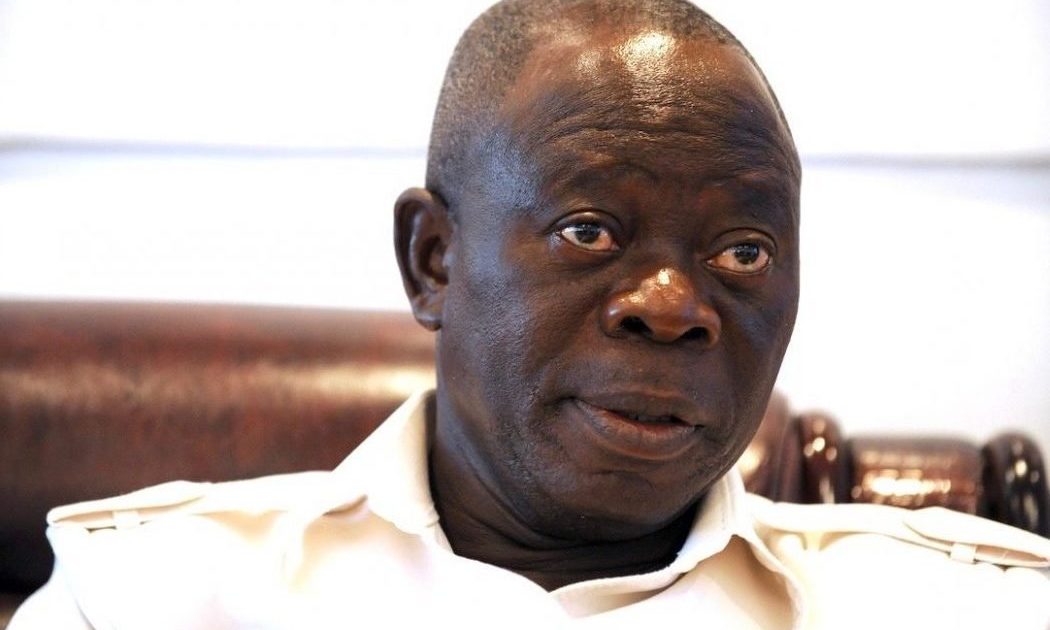
Senator Adams Oshiomhole, a former governor of Edo State and current senator representing Edo North, has defended the appointment of his son, Dr. Cyril Oshiomhole, as the Commissioner for Health in Edo State. The appointment, made by Governor Godwin Obaseki’s successor, Governor Monday Okphebolo, has drawn criticism and accusations of nepotism and political patronage, with some alleging that it represents a form of “state capture” and a reward for Oshiomhole’s support during the gubernatorial election. Oshiomhole, however, maintains that his son is qualified for the position, highlighting his extensive medical training and expertise in public health.
Oshiomhole addressed the controversy during an appearance on Channels Television’s Politics Today program. He acknowledged the potential for public perception issues and stated that he had expressed his reservations to both his son and the governor. He emphasized that he had previously discouraged his son from pursuing political office during his own tenure as governor, preferring to support other candidates. This time, however, the decision rested solely with Governor Okphebolo, and Oshiomhole feels he cannot unduly influence his adult son’s career choices.
The senator further underscored his commitment to providing his children with quality education, enabling them to pursue opportunities he himself lacked. He detailed Dr. Cyril Oshiomhole’s educational background, which includes a medical degree from Ahmadu Bello University and postgraduate studies at two prestigious American universities, Harvard and a university in Louisiana. He emphasized that his son’s appointment was based on merit and expertise, not familial connections, suggesting that being his son might even be a disadvantage in the current political climate. He argues that Dr. Cyril Oshiomhole’s qualifications speak for themselves and that he is serving “in spite of being Oshiomhole,” not because of it.
The controversy surrounding Cyril Oshiomhole’s appointment reflects the broader debate on nepotism and political patronage in Nigeria. Critics argue that such appointments undermine meritocracy and breed corruption, while proponents often defend them as a legitimate exercise of executive power. The situation is further complicated by the political dynamics in Edo State, where Oshiomhole and his successor, Governor Obaseki, have had a well-publicized falling out. The appointment of Oshiomhole’s son by Obaseki’s successor could be interpreted as a move to consolidate power and build alliances, further fueling the accusations of political maneuvering.
The debate also raises questions about the role of family connections in politics and the balance between parental influence and an individual’s autonomy. While Oshiomhole asserts that he did not actively promote his son’s appointment, his influence and political connections inevitably play a role in shaping his son’s opportunities. This is a common dilemma in political families, where the line between personal and professional relationships can become blurred. The public often scrutinizes such appointments with heightened sensitivity, raising concerns about fairness and transparency in the selection process.
Ultimately, the effectiveness of Dr. Cyril Oshiomhole’s tenure as Commissioner for Health will be the ultimate test of his suitability for the role. While his qualifications suggest he has the potential to succeed, his performance will be closely monitored by both supporters and critics. His success or failure will inevitably be viewed through the lens of his father’s political career, adding another layer of complexity to an already contentious appointment. The controversy highlights the ongoing challenges of balancing political considerations with meritocratic principles in appointments to public office and underscores the importance of transparency and accountability in governance.