









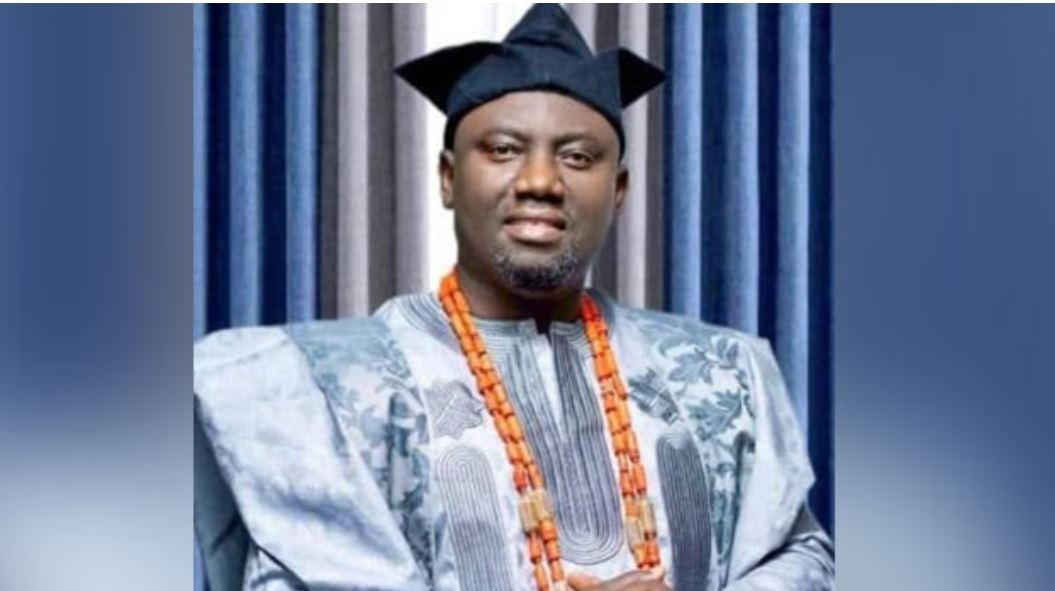
The ancient Yoruba town of Oyo, steeped in rich history and tradition, finds itself embroiled in a contentious chieftaincy dispute following the recent announcement of Prince Abimbola Owoade as the new Alaafin, the town’s paramount ruler. Governor Seyi Makinde’s endorsement of Owoade has ignited a firestorm of protest from the Oyo Mesi, the esteemed council of kingmakers responsible for selecting the Alaafin. The kingmakers have vehemently rejected the appointment, labeling it illegal, invalid, and a blatant disregard for established customs and traditions. This rejection throws the succession process into disarray and sets the stage for a potential legal battle over the rightful heir to the throne.
At the heart of the controversy lies a fundamental disagreement over the proper procedure for selecting the Alaafin. The kingmakers assert that their preferred candidate, Prince Luqman Adelodun Gbadegesin, secured the majority of votes during a selection process held in September 2022, in strict adherence to the Alaafin of Oyo Chieftaincy Declaration of 1961. They duly submitted Gbadegesin’s name to Governor Makinde for approval, but the governor, for reasons undisclosed, declined to endorse the selection. This refusal prompted the kingmakers to initiate legal action to prevent the governor from interfering with the traditional selection process. The case is presently under appeal.
The kingmakers’ outrage stems from what they perceive as a blatant disregard for their authority and a subversion of the established chieftaincy traditions. They contend that the governor’s subsequent convening of a select group of kingmakers and “emergency warrant chiefs” on January 9, 2025, to choose a new Alaafin was a calculated move to install his preferred candidate, Prince Owoade. They argue that such a meeting, held under the auspices of the Commissioner for Local Government and Chieftaincy Affairs, lacks legitimacy and violates the customary laws governing the Alaafin’s selection. They further maintain that the governor lacks the authority to convene such a meeting or to unilaterally approve the appointment of an Alaafin.
The kingmakers’ letter to Governor Makinde underscores their unwavering stance. They describe the January 9th meeting and subsequent appointment as “unlawful, illegal, invalid, null and void,” emphasizing that it contravenes both native law and custom, as well as the established Chieftaincy Declaration. Their challenge to the governor’s actions sets the stage for a potential showdown between traditional authority and governmental power, with the future of the Alaafin’s throne hanging in the balance. The dispute raises complex questions about the balance of power between traditional institutions and the state government, and the proper interpretation of customary laws in the modern era.
The controversy surrounding the Alaafin’s succession highlights the delicate interplay between tradition and modernity in contemporary Nigerian society. The kingmakers, as custodians of ancient customs and rituals, are fiercely protective of their role in selecting the Alaafin, a position deeply embedded in the cultural fabric of Oyo. They view the governor’s actions as an encroachment on their traditional prerogatives and a threat to the integrity of the chieftaincy institution. The governor, on the other hand, may argue that he is acting within his constitutional powers and seeking to ensure a smooth and timely succession process.
The legal battle that is likely to ensue will delve into the intricacies of the Alaafin of Oyo Chieftaincy Declaration of 1961 and the relevant customary laws. The court will have to determine whether the governor’s actions were within the bounds of his authority and whether the selection process that led to Prince Owoade’s appointment adhered to established procedures. The outcome of this legal battle will have far-reaching implications for the future of the Alaafin chieftaincy and could set a precedent for similar disputes in other traditional institutions across Nigeria. The situation in Oyo underscores the ongoing tension between tradition and modernization in the country and the need for a clear legal framework that respects both customary laws and the powers of the state.









