





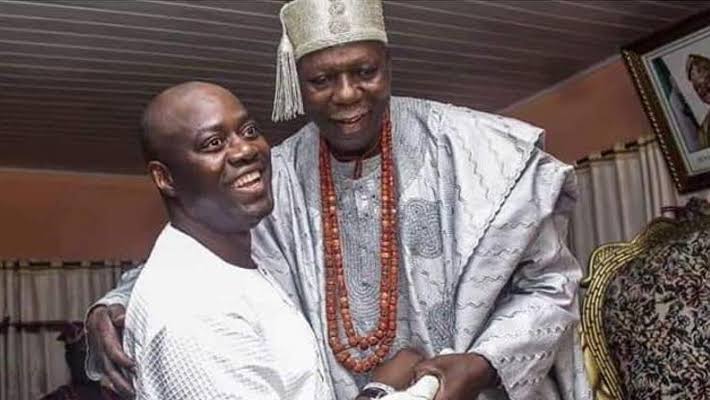
The reinstatement of Oba Samuel Adegbola as the Eleruwa of Eruwaland marks a significant turning point in the protracted chieftaincy dispute that had gripped the Ibarapa East Local Government Area of Oyo State. Governor Seyi Makinde, in a formal ceremony held at the Executive Chamber in Ibadan, presented the staff and instruments of office to Oba Adegbola, officially recognizing him as the legitimate ruler of the Eruwa people. This action effectively concludes a period of uncertainty that began in 2019 when the Supreme Court of Nigeria deposed Oba Adegbola, who had initially been installed in 1998. The governor’s decision to reinstate Oba Adegbola follows the recommendation of the Eruwa kingmakers, signaling a commitment to respecting traditional processes and upholding the will of the community.
The governor’s emphasis on non-interference in the affairs of traditional institutions underscores a crucial aspect of governance in a society where traditional rulers hold considerable influence. By affirming his administration’s policy of non-intervention, Governor Makinde seeks to create an environment where traditional institutions can operate independently and effectively fulfill their roles. This commitment to respecting the autonomy of traditional rulers is further reinforced by his advice to other political actors to refrain from unnecessary litigation concerning chieftaincy matters. The governor’s stance suggests a belief that resolving such disputes through legal channels can be counterproductive and ultimately detrimental to the development of the communities involved. He encourages a more conciliatory approach, emphasizing dialogue and consensus-building as more effective means of resolving internal conflicts within traditional settings.
Governor Makinde’s acknowledgment of the vital role traditional rulers play in security, cultural preservation, and heritage underscores the importance of these institutions within the broader governance framework. This recognition highlights the interconnectedness between traditional authority and the state’s overall development agenda. By acknowledging the contribution of traditional rulers to security, the governor implicitly recognizes their influence and potential to contribute to peace and stability within their communities. This perspective also underscores the importance of cultural preservation as a key element of societal identity and continuity, recognizing the role of traditional rulers as custodians of cultural heritage and traditions. This acknowledgment further emphasizes the symbiotic relationship between the state government and traditional institutions in achieving shared development goals.
The protracted nature of the Eruwa chieftaincy dispute, spanning several years, highlights the complexities inherent in such matters. The governor’s intervention, culminating in the reinstatement of Oba Adegbola, represents an attempt to bring closure to this protracted conflict and pave the way for reconciliation and progress within the Eruwa community. The governor’s statement also reveals the efforts made behind the scenes to resolve the issue since 2019, demonstrating a sustained commitment to finding a lasting solution. This dedication to resolving the dispute underscores the importance the governor places on stability and unity within the community, recognizing the detrimental impact of prolonged conflict on development and social cohesion.
Oba Adegbola’s acceptance speech, pledging to work towards reconciliation and collaborate with other traditional rulers, signals a commitment to unity and progress. His pledge to reconcile the Eruwa people reflects an understanding of the divisions created by the chieftaincy dispute and a commitment to healing the community. This commitment to reconciliation is essential for fostering a peaceful and prosperous future for Eruwa. Furthermore, Oba Adegbola’s pledge to collaborate with other traditional rulers demonstrates a recognition of the importance of collective action in achieving progress at the state level. This collaborative spirit is crucial for effective governance and ensures that traditional institutions work in concert with the state government to address the challenges facing the region.
The reinstatement of Oba Adegbola signifies more than just the resolution of a chieftaincy dispute; it represents a renewed opportunity for Eruwaland to embark on a path of development and progress. With the chieftaincy issue resolved, the community can now focus its energies on addressing other pressing concerns, such as infrastructure development, economic empowerment, and social welfare. The stability brought about by the resolution of the chieftaincy dispute creates a conducive environment for attracting investment and fostering economic growth. Moreover, it allows for a more unified approach to addressing community challenges, leveraging the combined efforts of the traditional leadership, the state government, and the people of Eruwaland. This collective focus on development holds the promise of a brighter future for the community, marking a new chapter in its history.








