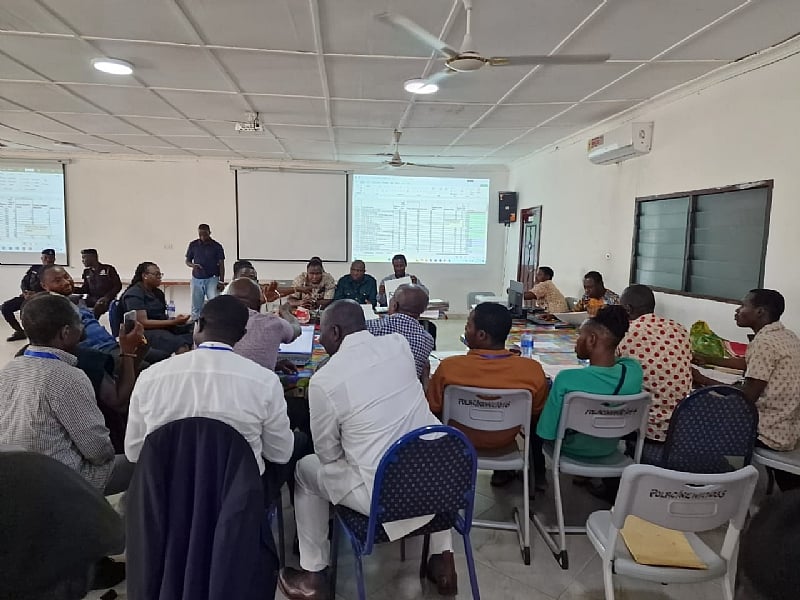
The political landscape in Ghana is experiencing heightened tension as the Electoral Commission (EC) embarks on a re-collation of parliamentary election results from four disputed constituencies: Suhum, Nsawam, Fanteakwa North, and Akwatia, all located in the Eastern Region. The initial collation process was marred by controversies and disagreements between party agents, particularly those of the National Democratic Congress (NDC) and the ruling New Patriotic Party (NPP), and EC officials, leading to an impasse. The EC subsequently decided to relocate the collation exercise to the National Police Training School in Tesano, Accra, a move aimed at ensuring a more controlled and secure environment for the process. However, this relocation has sparked further controversy and fueled accusations of a lack of transparency from the opposition NDC.
The heart of the contention lies in the disputed results from the four constituencies. The initial collation process in the Eastern Region was plagued by allegations of irregularities, with party agents questioning the accuracy and integrity of the tallied votes. The disagreements and resulting deadlock prevented the EC from finalizing the collation in the region, prompting the decision to move the process to the more secure location in Accra. While the EC maintains that the relocation is necessary to ensure a fair and accurate recount, the NDC has criticized the move, viewing it as a deliberate attempt to manipulate the results in favor of the ruling NPP.
The relocation of the collation exercise to Accra has significantly amplified the concerns of the NDC and other stakeholders. The NDC argues that conducting the recount in Accra, far from the constituencies in question, undermines the transparency and credibility of the electoral process. They contend that it limits the participation of local party agents and observers, making it more difficult to monitor the process and ensure its fairness. The NDC also alleges that the EC commenced the re-collation process in the absence of their representatives from Akwatia, further raising suspicions about the Commission’s intentions.
The NDC’s Deputy General Secretary, Peter Boamah Otokunor, voiced his party’s concerns, describing the situation as deeply troubling. He highlighted the fact that the re-collation began without the presence of NDC representatives from Akwatia, emphasizing that such an action is unlawful and undermines the integrity of the process. He also stated that his attempts to secure a short delay to allow the Akwatia representatives to arrive were rebuffed by the Regional EC Director, who cited “orders from above.” This statement further fuels the NDC’s suspicion of external influence and a predetermined outcome.
The NPP, on the other hand, has defended the EC’s decision to relocate the collation, arguing that it is a necessary measure to ensure order and accuracy in the process. They maintain that the move is aimed at creating a neutral and secure environment, free from the tensions and potential disruptions that characterized the initial collation in the Eastern Region. They dismiss the NDC’s concerns as unfounded and accuse the opposition party of attempting to politicize the process and undermine the authority of the EC. The divergent perspectives of the two major parties reflect the deep political polarization that characterizes the Ghanaian electoral landscape.
The unfolding situation highlights the critical importance of transparency and fairness in electoral processes. The controversy surrounding the re-collation underscores the need for clear and consistent communication from the EC to all stakeholders. Building trust in the electoral process is crucial for maintaining political stability and ensuring a peaceful transition of power. The EC must strive to address the concerns raised by the NDC and other stakeholders to ensure that the re-collation process is perceived as credible and legitimate by all parties involved. The outcome of this re-collation exercise and how the EC manages the ensuing controversies will significantly impact the public’s trust in the electoral system and the overall political stability of Ghana.