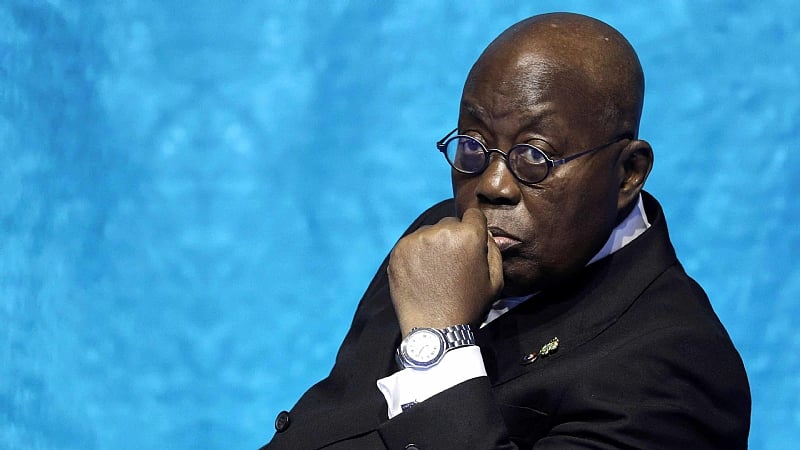
The 2024 Ghanaian general election marked a significant setback for the New Patriotic Party (NPP), resulting in a resounding defeat that sent shockwaves throughout the political landscape. The Alliance for Footsoldiers Advocacy (AFFA), a group closely aligned with the NPP, has directly attributed this electoral failure to the leadership of President Nana Addo Dankwa Akufo-Addo, asserting that his actions and decisions cultivated widespread discontent among the electorate, ultimately leading to the party’s downfall. AFFA’s analysis paints a picture of a presidency detached from the realities faced by ordinary Ghanaians, prioritizing personal loyalties over the needs of the nation, and implementing policies that further exacerbated economic hardship and eroded public trust.
Central to AFFA’s critique is President Akufo-Addo’s handling of the economic crisis that gripped Ghana in 2022. The group highlights his unwavering support for Finance Minister Ken Ofori-Atta, despite mounting calls for his dismissal, as a pivotal moment that solidified public perception of a government out of touch with the struggles of its citizens. This perceived intransigence, coupled with the implementation of controversial policies such as the Domestic Debt Exchange Programme (DDEP), the Electronic Levy (E-Levy), the Betting Tax, and the pursuit of the National Cathedral project, further fueled public anger and disillusionment. These measures were seen as adding to the economic burden on ordinary Ghanaians, while simultaneously signaling a prioritization of projects perceived as less crucial than addressing the immediate needs of the population.
Furthermore, AFFA points to the President’s stagnant approach to appointments within his administration, maintaining the same individuals in key positions throughout his eight-year tenure with minimal reshuffling. This lack of change was perceived as a sign of favoritism and a missed opportunity to inject fresh perspectives and dynamism into the government’s operations. This stagnation, combined with the alleged neglect of the party’s grassroots supporters, known as “footsoldiers,” while prioritizing a select few “praise-singers,” created a rift within the party and further eroded its support base. The perceived disconnect between the party’s headquarters and the presidency exacerbated this internal division, hindering effective communication and coordination.
The combination of these factors, according to AFFA, created a perfect storm that led to the NPP’s electoral defeat. The public, burdened by economic hardship and disillusioned by the government’s perceived insensitivity to their plight, expressed their frustration at the ballot box. AFFA characterizes the election results as a “revolt” against President Akufo-Addo’s intransigence, a clear message from the electorate that they desired a change in leadership and direction. The group argues that the defeat of Dr. Bawumia, the NPP’s presidential candidate, was not a reflection of his own shortcomings but rather a consequence of the accumulated grievances against the Akufo-Addo administration. He became, in AFFA’s words, “an unintended casualty of the bottled anger of the masses.”
In the aftermath of this electoral setback, AFFA calls for a comprehensive restructuring of the NPP. The group emphasizes the need for the party to reconnect with its grassroots base, prioritize the needs of ordinary Ghanaians, and adopt policies that address the economic challenges facing the nation. They advocate for a more inclusive and participatory approach to party governance, ensuring that the voices of all members are heard and valued. This reorganization, according to AFFA, is essential for the party to regain public trust and position itself for success in the 2028 elections.
AFFA’s statement serves as a stark indictment of the Akufo-Addo presidency, highlighting the perceived failures that led to the NPP’s electoral defeat. Their analysis emphasizes the importance of responsive governance, economic prudence, and internal party unity for any political party seeking to maintain public trust and electoral success. The call for restructuring and reorganization underscores the need for the NPP to learn from its mistakes and adapt to the evolving political landscape in order to remain a viable force in Ghanaian politics. The 2024 election serves as a critical juncture for the party, demanding a period of introspection, reform, and a renewed commitment to serving the interests of the Ghanaian people.