









The Imperative of Peacebuilding in West Africa: A Multifaceted Approach
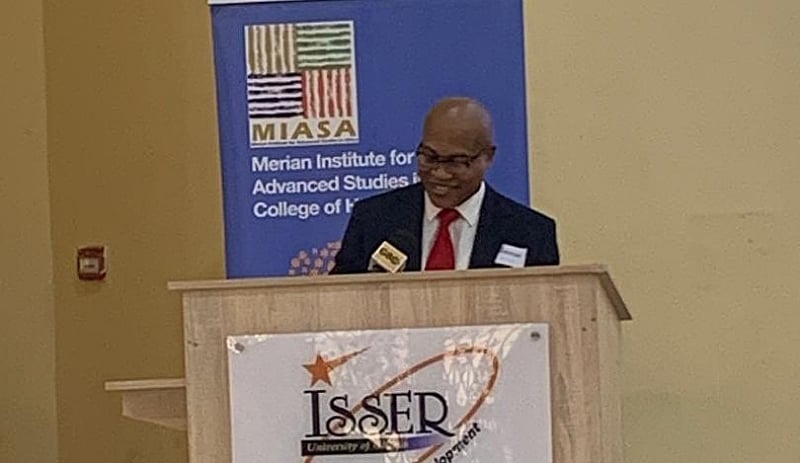
West Africa, a region of diverse cultures and immense potential, has long been grappling with a complex web of conflicts, ranging from insurgencies and political crises to ethnic tensions and economic disparities. These challenges hinder development, displace populations, and threaten the very fabric of societies. To address this multifaceted problem and pave the way for lasting peace, a comprehensive approach is required, one that encompasses not only immediate conflict resolution but also long-term investments in education, dialogue, and socio-economic development. This was the central message delivered by Dr. Aderemi Ajibewa, former Director of Political Affairs at the Economic Community of West African States (ECOWAS) Commission, at the 2024 Merian Institute for Advanced Studies in Africa (MIASA) Policy Conference.
Dr. Ajibewa emphasized the crucial role of education and dialogue in fostering a culture of peace. He argued that education empowers individuals with critical thinking skills, enabling them to understand the root causes of conflict and seek peaceful solutions. Combined with structured dialogue, education can provide a robust framework for addressing immediate conflicts while simultaneously laying the foundation for long-term harmony. The success of such initiatives, however, hinges on the collaborative efforts of governments, communities, and international partners. It necessitates a concerted effort to invest in educational programs that promote peace and tolerance, as well as creating platforms for dialogue where diverse voices can be heard and understood.
Conflict resolution policies are another crucial element in the pursuit of peace. By developing and implementing effective conflict-resolution mechanisms, nascent disputes can be managed before they escalate into full-blown crises. These mechanisms should be designed to address the specific causes of conflict within each context, considering factors such as ethnic tensions, resource scarcity, and political instability. Moreover, they must involve all relevant stakeholders, from local communities to national governments, to ensure ownership and buy-in.
The role of regional organizations, like ECOWAS, is also paramount in addressing the complex security challenges facing West Africa. Dr. Ajibewa highlighted the critical role of ECOWAS in promoting peace and stability, but he also stressed that its success depends on the collective efforts of all member states and international partners. He urged member states to renew their commitment to democratic governance, invest in socio-economic development, and collaborate to address regional challenges. He also called on international partners to continue their support and engagement, emphasizing that combined efforts are more effective than isolated initiatives.
The MIASA Policy Conference provided a platform for experts and policymakers to delve deeper into specific conflict dynamics. Dr. Jana Krause, a professor at the University of Oslo, shed light on the rising incidence of communal conflicts in Africa, emphasizing the need for peacebuilding efforts to address not only immediate issues but also the underlying attitudes and behaviors within local communities. Changing mindsets and promoting peaceful co-existence are crucial for achieving sustainable peace. Dr. Krause also underscored the importance of including women in peace processes, recognizing their critical role in preventing violence and strengthening social resilience. Women, often disproportionately affected by conflict, possess unique perspectives and skills that are invaluable in building sustainable peace.
Prof. Grace Diabah, Director of MIASA Ghana, reiterated the need for action-oriented solutions, emphasizing that dialogue must lead to tangible outcomes. She called for transparent electoral processes and citizen engagement to resolve disputes peacefully, reflecting on the challenges posed by post-election violence in Ghana. This highlights the importance of strengthening democratic institutions and fostering a culture of peaceful political participation. Furthermore, Prof. Diabah stressed that all stakeholders must ensure their actions actively promote sustainable peace, underscoring the need for a collective commitment to building a more peaceful and stable West Africa.
The MIASA Policy Conference served as a crucial platform for dialogue and collaboration, bringing together experts, policymakers, and practitioners to discuss the critical issue of peacebuilding in West Africa. The conference emphasized the need for a multi-pronged approach, encompassing education, dialogue, conflict resolution mechanisms, and regional cooperation. It highlighted the importance of addressing not only the immediate symptoms of conflict but also the underlying structural challenges that perpetuate instability. The discussions and recommendations emanating from the conference will hopefully contribute to developing and implementing effective peacebuilding strategies in the region.
The overarching message from the conference was clear: building lasting peace in West Africa requires a unified and strategic approach. By addressing immediate crises while simultaneously investing in long-term solutions, the region can move toward a future where stability and prosperity are not just aspirations but realities. This requires a sustained commitment from all stakeholders, including governments, communities, regional organizations, and international partners. By working together, West Africa can overcome its challenges and build a more peaceful and prosperous future for all its citizens. The MIASA Policy Conference serves as a testament to the ongoing efforts and the unwavering commitment to achieving this vital goal.









