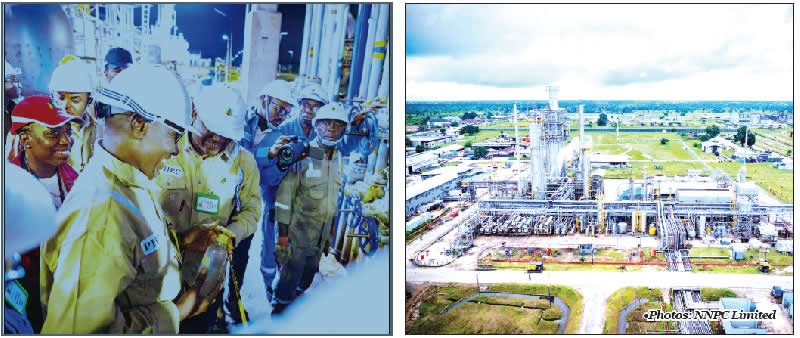
The Port Harcourt Refinery Company has recently commenced fuel production, marking a significant milestone for Nigeria’s oil sector after seven delays. On Tuesday, the Nigerian National Petroleum Company Limited (NNPCL) announced the release of approximately one million litres of refined products, equating to a daily supply of around 200 trucks. This comes following the revitalization of the old refinery, which has now been upgraded with modern equipment and is currently operating at 70% of its installed capacity of 60,000 barrels per day. Mele Kyari, the Group Chief Executive Officer of NNPCL, indicated that the larger refinery in the Eleme complex, with a capacity of 150,000 barrels, remains under construction. Although further improvements are anticipated at both the Warri and Kaduna refineries, Kyari chose not to provide specific timelines for future operations, adhering to directives from President Bola Tinubu aimed at avoiding further postponements.
The unveiling ceremony of the Port Harcourt refinery featured an impressive display to stakeholders, including marketers and regulatory officials, who witnessed the first loading of trucks at the facility. Farouk Ahmed, CEO of the Nigerian Midstream and Downstream Regulatory Authority, expressed optimism regarding the dual production capabilities of the Port Harcourt and Dangote refineries, which could potentially transition Nigeria from being a net importer to a net exporter of petroleum products. He emphasized that this development could foster competition within the sector and drive prices down, leading to enhanced availability of petroleum products across the nation. Ahmed also acknowledged the critical role refineries play in ensuring that consumers have more choices while enhancing the overall efficiency and affordability of fuel in the Nigerian market.
Despite the positive announcements surrounding the refinery’s operation, questions have emerged concerning the actual capabilities of the plant. Some industry insiders alleged that instead of producing petrol, the refinery was merely blending components, citing the absence of a catalytic platform unit necessary for gas production. However, NNPCL countered these claims, asserting that the refinery is indeed operational and capable of producing various petroleum products. According to NNPCL’s spokesperson, the facility is designed to produce diesel, low-pour fuel oil, and a select quantity of petrol through a blending process that meets industry standards. These assertions reaffirm the importance of blending components in refining processes, maintaining that such practices are routine and standard in global operations.
The announcement of resumed operations at the Port Harcourt Refinery has sparked excitement within the petroleum marketing community, with many marketers eager to access supplies from the state-owned facility. Representatives from various stakeholders, including the Petroleum Products Retail Outlet Owners Association of Nigeria (PETROAN) and the Independent Petroleum Marketers Association of Nigeria (IPMAN), praised the NNPCL and President Tinubu for the accomplishment, viewing it as a significant step toward reviving the country’s economy and promoting competition in the sector. The enthusiasm surrounding the reopening of the refinery harbors the potential for enhanced job opportunities and increased economic activity, with marketers expressing their readiness to distribute products effectively throughout Nigeria.
Moreover, the successful progress of the Port Harcourt refinery signifies a broader shift in Nigeria’s energy landscape, particularly with advancements made by the Dangote refinery. With the Dangote plant beginning production in September, the Port Harcourt facility emerges as a key player in the market, presenting new competition in the downstream sector. Industry insiders anticipate that the increased availability of refined products from both facilities will alleviate issues associated with monopolistic practices and improve supply chains, benefitting both marketers and consumers alike. Cited as an essential move toward deregulation, this development intends to eliminate monopolies, fostering an increased competitive environment where marketers can choose sources based on cost and availability.
President Tinubu’s commitment to revitalizing Nigeria’s refining capabilities went beyond the Port Harcourt facility, also aiming to expedite the operations of the Warri and Kaduna refineries. Congratulating the NNPCL, Tinubu acknowledged the foundational work laid by former President Muhammadu Buhari in rehabilitating the country’s refineries and expressed appreciation for the support of financing partners like the African Export-Import Bank. The president’s focus on enhancing domestic daily production capacity, alongside reinforcing the operational capabilities of privately-owned refineries, positions Nigeria as a potential energy hub while emphasizing the importance of integrity, accountability, and infrastructural improvements. These stated objectives resonate closely with the administration’s broader agenda for economic prosperity and energy sufficiency for the nation.
In conclusion, the refurbishment of the Port Harcourt Refinery marks a pivotal juncture for Nigeria’s petroleum industry, heralding a new era of potential self-sufficiency through local refinery operations. With the combined efforts of the NNPCL and the synergy among stakeholders, the prospects of reducing dependence on imported petroleum products seem increasingly realistic. The developments resulting from the resumed operations at the refinery, coupled with the active engagement of other refineries, promise to invigorate the Nigerian economy by providing competitive pricing, improved availability, and enhanced production levels in the domestic fuel market. As the country moves towards establishing a more resilient energy infrastructure, the implications of these reforms may have lasting benefits for the national economic landscape.