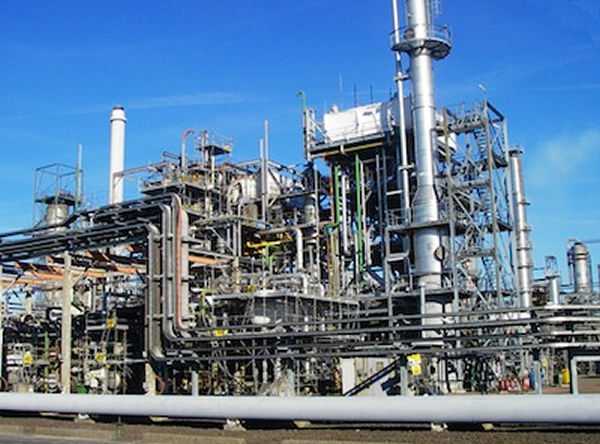
The Port Harcourt Refining Company (PHRC) has recently clarified that while its operations have not been completely stopped, they have been scaled down to allow for essential improvements to the facility. This announcement came in response to assertions made by the Independent Petroleum Marketers Association of Nigeria (IPMAN), which stated they would avoid purchasing fuel from the Port Harcourt refinery if the Nigerian National Petroleum Company Limited (NNPCL) continued to sell at elevated prices. Reports claimed that NNPCL was selling petrol at N1,030 per litre, surpassing the prices offered by the Dangote Petroleum Refinery. In the face of these allegations, while NNPCL denied them, they did not disclose the actual pricing for the petrol produced at the rehabilitated refinery.
During a recent media tour of the refinery, PHRC’s Managing Director, Ibrahim Onoja, and the Executive Director of Operations, Moyi Maidunama, assured journalists that the facility was indeed operational, albeit at reduced capacity to tackle necessary technical upgrades. Maidunama emphasized that this operational reduction was temporary and was crucial for enhancement purposes. He detailed how current processes are being managed efficiently, despite limited truck availability. Worlu Joel, the Terminal Manager at the Port Harcourt Depot, corroborated that while the facility had began distributing products like Premium Motor Spirit, kerosene, and diesel, they faced challenges due to a shortage of tanker drivers – leading to pleas for more drivers to expedite product evacuation.
Onoja noted significant strides in modernizing the refinery, stating that extensive upgrades had occurred to improve both efficiency and reliability. The team pledged a commitment to consistent product distribution amidst ongoing improvements, highlighting their revamping efforts that included replacing key equipment. However, the questions surrounding pricing from the Port Harcourt facility remained pertinent, especially with IPMAN vocalizing concerns over the proposed price tag of N1,030, which they deemed unacceptable compared to alternatives. IPMAN spokesperson Chinedu Ukadike reiterated that independent marketers would seek cheaper sources if Port Harcourt’s pricing did not align favorably with market expectations.
On the pricing front, the Crude Oil Refineries Owners Association of Nigeria (CORAN) suggested that the blended products from the Port Harcourt refinery should naturally be less expensive than those produced directly by the Dangote refinery or imported fuels. Eche Idoko, CORAN’s National Publicity Secretary, elaborated on the blending process, where naphtha— a hydrocarbon mixture— is combined with Cracked C5 for petrol production. While this method might be economically beneficial, concerns about quality and environmental impacts from the blending process were highlighted, suggesting potential pitfalls regarding vehicle performance and safety if such blended fuel failed to meet international standards.
Further insights from energy consultant Henry Adigun indicated that the price of petrol from the Port Harcourt refinery should hover around N860 to N870 due to the blending involved. Yet, he pointed out that while the refinery is not strictly a blending facility, it has not yet reached a stage of full operational capacity to produce unblended petrol. Adigun clarified that straight-run gasoline produced at the current stage has elevated sulphur levels and confirms that blending, while necessary at this point, is a common practice in many global refinery operations. He maintained that the refinery still holds the potential to function beyond just blending as improvements progress.
As the situation develops, stakeholders such as IPMAN and CORAN continue to assert that pricing must be competitive to encourage uptake of the locally produced petrol. Market dynamics suggest that unless NNPCL demonstrates flexibility in their pricing models, the Port Harcourt refinery may struggle to attract meaningful patronage from independent marketers like those associated with IPMAN. The refining sector’s complexities, along with the existing operational issues and market regulation by the NNPCL, highlight a critical juncture for the Port Harcourt facility as it seeks to stabilize its outputs and regain traction in a competitive market. The promise of adjustments in pricing and sustained product distribution will be key factors influencing both the refinery’s operational success and its future relationship with independent marketers and consumers alike.