









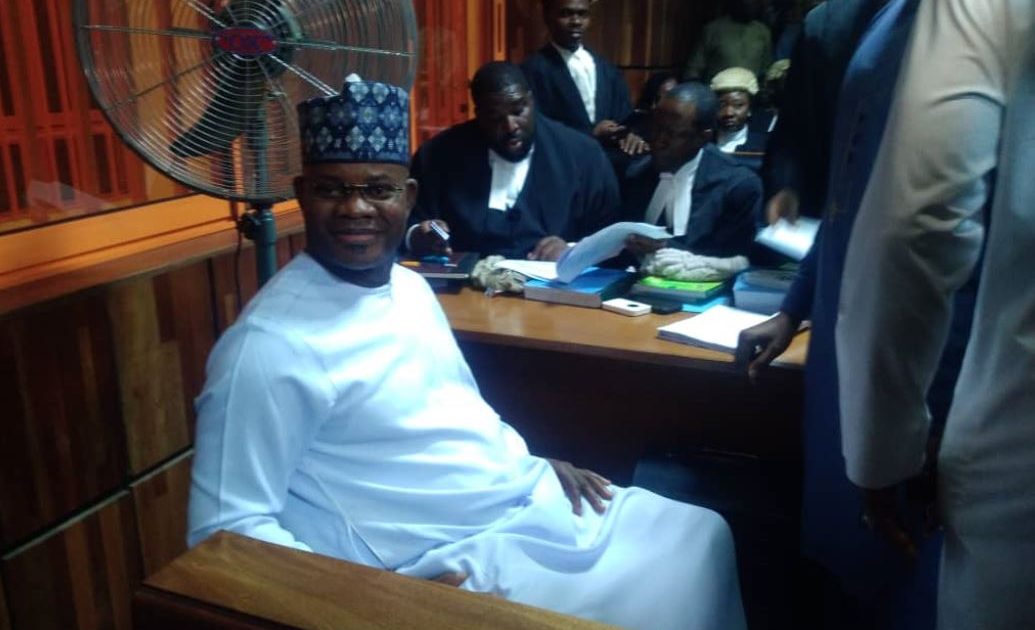
Yahaya Bello, the immediate former governor of Kogi State, has recently arrived at the Federal Capital Territory High Court in Abuja to face serious allegations of fraud amounting to N110 billion. The Economic and Financial Crimes Commission (EFCC) declared him wanted in April 2024, marking a significant escalation in the scrutiny surrounding his financial dealings during his tenure as governor. Reports indicate that after the EFCC issued a wanted notice, Bello voluntarily presented himself at the commission’s Abuja headquarters, where he underwent an intensive questioning session. Following this inquiry, he was subsequently taken to court the next morning, highlighting the urgency and seriousness of the charges against him.
The EFCC’s legal actions date back to the filing of numerous charges against Bello and several associates, including his nephews Ali Bello, Dauda Suliman, and Abdulsalam Hudu. Initially, the commission had raised a total of 19 charges specifically targeting Bello and his relatives, which revolve around money laundering offenses totaling over N80 billion. This indicates a broader pattern of alleged financial misconduct that could not only impact Bello’s personal life but may also raise questions about financial governance and accountability among public officials in Nigeria. The EFCC’s attempts to bring him to justice have been complicated, as they have faced obstacles in promptly getting him arraigned after the charges were initially filed.
Bello’s case exemplifies a much larger issue of corruption and financial mismanagement that has plagued not just Kogi State but Nigeria as a whole. The priority given to the ongoing investigations and legal proceedings underscores the challenges faced by the EFCC in combating corruption effectively. The complexities of these financial crimes, compounded by the high-profile nature of the individuals involved, can complicate the prosecution process, creating a significant public interest in the outcomes of this case. As the former governor is scrutinized, the implications of these allegations may resonate throughout the region, potentially affecting political stability and trust in governmental institutions.
In the wake of these developments, the media and public discourse surrounding Bello’s situation have intensified. Many Nigerians are closely following the case, recognizing that it reflects broader concerns about governance and transparency in the public sector. The EFCC’s role in addressing such high-profile cases may either strengthen its mandate or highlight limitations in prosecuting influential figures. The evolution of this case is likely to serve as a reflection of the effectiveness of Nigeria’s legal and political systems regarding accountability measures for politicians and government officials.
Moreover, social media and public sentiment seem to play a crucial role in shaping the perceptions around this case. As information flows rapidly through various channels, public opinion could potentially influence the trajectory of the allegations against Bello. The media’s role in investigating and reporting on corruption ensures that citizens remain informed and engaged with the judicial processes surrounding such high-profile figures. As the hearing progresses, public scrutiny of the EFCC’s actions could either reinforce confidence in the fight against corruption or expose weaknesses in the system.
In conclusion, Yahaya Bello’s arraignment for alleged fraud and money laundering presents a critical moment for both the former governor and the Nigerian legal system. The EFCC’s ability to navigate the complexities of this case will have lasting implications for how corruption is dealt with at high levels of government. As Bello and his associates face serious charges, the outcomes could ultimately influence public trust in political institutions and accountability in Nigeria. The focus remains on the forthcoming judicial proceedings, and how they unfold will be instrumental in each of the stakeholders’ paths moving forward.









