





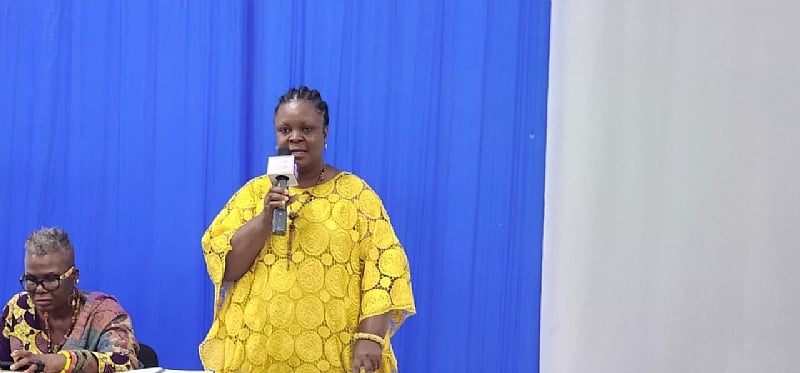
The Coalition of NGOs for Women and Children, in conjunction with the Golden Mothers Vision International, has issued a fervent call for action against the rising tide of online harassment and disrespect targeted at women, particularly queen mothers in Ghana. This appeal follows a recent incident involving Mrs. Millicent Adom Kyei Duah, also known as Nana Hemaa Owoahene Owoabrempong Ahwenepa Nkasa, who became the victim of online abuse, highlighting the vulnerability of women in positions of authority to cyberbullying. The Coalition, deeply disturbed by this and other incidents, including the physical assault and public humiliation of a queen mother in Kwahu Abetifi, demands immediate intervention from law enforcement agencies and the judiciary. They urge the police to apprehend and prosecute the perpetrators of these offenses, emphasizing the need for harsher punishments to deter future acts of violence and harassment against women. They underscore the existing legal framework in Ghana, citing the Domestic Violence Act of 2007 and the Cybercrime Act of 2012, which clearly prohibit such behaviors. This call for justice transcends the individual cases and aims to foster a societal shift towards respect and dignity for all women, especially those holding traditional leadership roles.
The Coalition emphasizes the urgent need to leverage existing legal instruments like the Domestic Violence Act and the Cybercrime Act to protect women from all forms of abuse, both physical and online. The Domestic Violence Act explicitly criminalizes various forms of violence against women, encompassing not only physical harm but also emotional, psychological, and verbal abuse. The Cybercrime Act, on the other hand, addresses the growing menace of online harassment, making it an offense to utilize electronic communication platforms for intimidation, threats, and the dissemination of harmful content. By invoking these legal provisions, the Coalition aims to create a strong deterrent effect, ensuring that perpetrators are held accountable for their actions and that potential offenders are aware of the legal ramifications of their behavior. The emphasis on stricter enforcement and harsher punishments is viewed as crucial in fostering a culture of respect and safeguarding the dignity of women, particularly queen mothers, who hold significant cultural and social standing.
The advocacy groups also highlight the broader societal implications of these incidents, arguing that they represent a blatant disregard for the traditional institution of queen mothers and undermine the important role they play in Ghanaian society. Queen mothers are not merely symbolic figures; they are often key decision-makers in their communities, mediators in disputes, and custodians of cultural heritage. The disrespect shown towards them online and through physical acts of violence, therefore, represents an attack on the very fabric of Ghanaian tradition and social order. The call for action is not simply about protecting individual women; it is about preserving the integrity of cultural institutions and ensuring that women in leadership positions are accorded the respect and dignity they deserve. This call extends beyond law enforcement to encompass a broader societal change in attitudes and behaviors, emphasizing the collective responsibility to create a culture of respect and equality.
Board members of the Golden Mothers Vision International echo these sentiments, highlighting the pervasiveness of online harassment and the detrimental impact it has on the reputation and emotional well-being of women. Mrs. Adjo Palmer, a board member, emphasizes that while no one is immune from criticism, the deliberate use of social media to spread insults and malicious content targeting a person’s integrity is unacceptable. She underscores the role of gender advocates in combating this trend and their unwavering commitment to securing justice for all queen mothers. The focus is not on silencing criticism but on establishing a clear distinction between constructive dialogue and malicious attacks that aim to demean and humiliate. The advocacy groups call on various stakeholders, including the judiciary, the National House of Chiefs, and the Association of Queen Mothers, to take decisive action in protecting the dignity of queen mothers and ensuring that perpetrators of online harassment face the full force of the law.
Naa Obeye Dromo I, the Queen Mother of Mamprobi, Ngleshie Allata Traditional Council, adds another dimension to the discussion by emphasizing the ongoing struggle for gender equality in Ghanaian society. She acknowledges the progress made in terms of women’s participation in various fields, including traditionally male-dominated professions, but laments the continued exclusion of women from key decision-making processes. She specifically points to the marginalization of women in the National and Regional Houses of Chiefs, where they are often relegated to observer status, their voices unheard and their contributions undervalued. This exclusion, she argues, perpetuates a system where decisions are made about women without their input, hindering their ability to fully participate in shaping the future of their communities and the nation as a whole. She urges women to be more assertive and claim their rightful place at the decision-making table, challenging the traditional power structures that perpetuate gender inequality.
Naa Dromo’s call for empowerment resonates with the broader message of the Coalition and the Golden Mothers Vision International, advocating for a fundamental shift in societal attitudes and the creation of a more inclusive environment for women. She emphasizes the importance of unity and collective action, urging women to come together and amplify their voices to challenge the status quo. Her vision extends beyond simply increasing women’s representation in existing structures; she envisions a future where a woman could lead the nation as President, a testament to the transformative potential of gender equality. This aspirational goal underlines the urgent need to dismantle the barriers that prevent women from realizing their full potential and to foster a society that values and celebrates the contributions of women in all spheres of life. The combined call to action from these organizations and individuals represents a powerful push for gender equality and respect for women in positions of authority in Ghana.








