









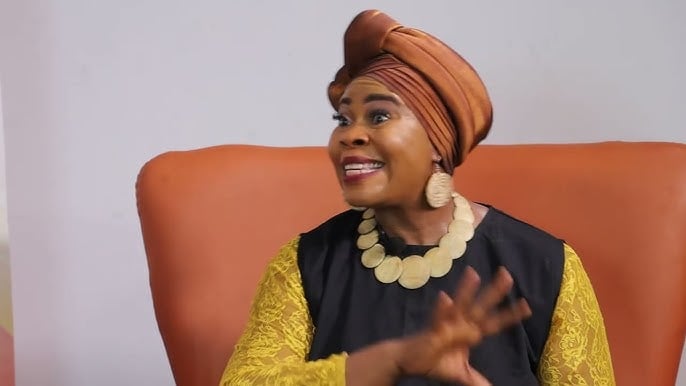
Dr. Sarah Dorgbadzie, a distinguished storyteller, cantor, and director, has reignited a crucial discourse on Africa’s rich spiritual heritage, vehemently asserting that Africans possessed a deep understanding and connection with God long before the advent of colonialism. Her argument challenges the pervasive narrative that often portrays African spirituality as primitive or non-existent before the arrival of European missionaries. In a compelling appearance on the Standpoint show hosted by Gifty Anti, Dr. Dorgbadzie passionately articulated her position, emphasizing the abundant evidence embedded within African cultures, languages, and traditional practices that point towards a pre-colonial relationship with the divine. She dismissed the notion that Europeans introduced spirituality to Africa as a misconception, highlighting the inherent spiritual depth already present within the continent’s diverse societies.
Dr. Dorgbadzie’s central argument revolves around the idea that God revealed himself to African ancestors in ways that resonated with their unique cultural and environmental contexts. This tailored approach to divine revelation resulted in a diverse tapestry of spiritual expressions across the continent, each reflecting a deep understanding of God’s power and presence. This diversity, she argues, is not a sign of a lack of spiritual understanding, but rather a testament to the multifaceted nature of the divine and the varied ways in which different communities connect with the spiritual realm. She emphasized that the specific names and attributes given to God within various African tribes reflect unique cultural perspectives and interpretations of the divine, further solidifying her argument against a homogenous pre-colonial African spirituality.
Drawing on examples from Ghana, her native country, Dr. Dorgbadzie highlighted the distinct names and attributes ascribed to God by different ethnic groups. The Ga people, for instance, refer to God as “Ataa Naa Nyonmo,” which translates to “the great father above.” This name emphasizes God’s paternal role and his transcendent position in the cosmos. The Ewe people, on the other hand, call God “Mawu,” emphasizing his all-encompassing power and creative force as the originator of all things. The Ashanti people know God as “Nyame,” the giver of life, highlighting his role as the source and sustainer of all existence. These distinct names, according to Dr. Dorgbadzie, demonstrate the profound reverence for God that existed within these communities long before colonial influence. They also illustrate the nuanced understanding of God’s various attributes and roles within the natural and spiritual world.
Dr. Dorgbadzie’s assertions challenge the historical narrative that often depicts African spirituality as underdeveloped or needing external intervention. By highlighting the diverse ways in which different African communities conceptualized and interacted with the divine, she emphasizes the richness and complexity of pre-colonial African spiritual systems. Her argument underscores the importance of recognizing and respecting the inherent spiritual depth within African traditions, rather than imposing external interpretations or narratives. This perspective contributes to a more accurate and nuanced understanding of African history and culture, challenging the lingering effects of colonial narratives that often diminish or misrepresent indigenous spiritual practices.
The implications of Dr. Dorgbadzie’s arguments extend beyond simply correcting historical inaccuracies. Her work contributes to a broader movement of reclaiming and celebrating African cultural heritage and identity. By emphasizing the inherent spirituality within African traditions, she empowers African communities to reconnect with their ancestral roots and to view their cultural heritage with pride and understanding. This empowerment is crucial in combating the lasting psychological and social impacts of colonialism, which often sought to delegitimize and suppress indigenous cultural expressions. Her work also encourages a more inclusive and respectful dialogue about religion and spirituality, recognizing the validity and depth of diverse spiritual traditions around the world.
In conclusion, Dr. Dorgbadzie’s passionate advocacy for the recognition of pre-colonial African spirituality offers a powerful counter-narrative to the often-misrepresented history of the continent. Her argument, supported by examples from Ghanaian culture and language, demonstrates the rich and diverse ways in which African communities connected with the divine long before European contact. This perspective not only corrects historical inaccuracies but also contributes to the ongoing process of reclaiming and celebrating African cultural heritage. Her work highlights the importance of acknowledging and respecting the inherent spirituality within African traditions, fostering a more nuanced and inclusive understanding of global religious and spiritual diversity. By challenging outdated narratives and promoting a more accurate representation of African history, Dr. Dorgbadzie’s work contributes significantly to the ongoing dialogue on cultural identity, historical representation, and the diverse expressions of human spirituality.









