





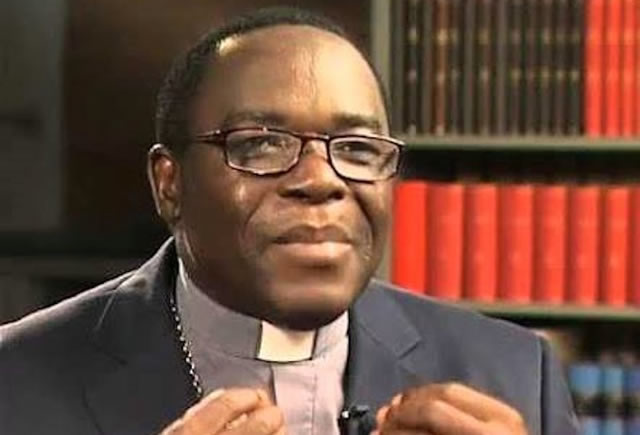
On Sunday, the Presidency defended President Bola Tinubu against the remarks made by the Catholic Bishop of Sokoto Diocese, Mathew Kukah, who labeled many Nigerian leaders, including Tinubu, as “accidental leaders.” Mr. Bayo Onanuga, the Special Adviser to the President on Information and Strategy, emphasized in an interview that President Tinubu is well-prepared for his role and is actively working towards significant improvements in Nigeria. Onanuga’s comments were a direct rebuttal of Bishop Kukah’s assertion that Nigeria’s leadership trajectory has generally been marked by accidents rather than intentional readiness.
In his keynote address during the unveiling of a new school building and the Amaka Ndoma-Egba Memorial Lecture, Bishop Kukah presented a historical overview of Nigerian leadership, pointing out that most leaders stepped into their roles due to unforeseen circumstances rather than through deliberate planning. He mentioned President Tinubu as one of those struggling to find his footing in governance after succeeding former President Muhammadu Buhari, who had distanced himself from active governance in his final years. Kukah’s narrative extended back through the lineage of Nigerian leaders, illustrating a pattern where none appeared to have genuinely anticipated their ascendance to power.
Onanuga rejected Kukah’s characterizations, insisting that President Tinubu is a leader who has prepared extensively for his position. He noted that Tinubu has frequently articulated his readiness and commitment to elevating the country’s status. According to Onanuga, this preparation is evidenced by a series of reforms currently underway in various sectors of the country, which he says are pivotal in ensuring a positive turnaround that reflects Tinubu’s capability as a leader rather than an accidental occupant of the presidency.
The presidential adviser further emphasized that genuine reforms take time and, therefore, the impact of Tinubu’s policies may not be immediately visible. He acknowledged that changes in governance can be challenging and may initially encounter resistance or cause discomfort among citizens. However, Onanuga insisted that Tinubu is mindful of the implications of his reforms and is taking steps to mitigate any negative effects, ensuring that no groups are left behind in the transition towards a more efficient governance model.
Onanuga pointed to reforms in key sectors such as taxation and the oil industry as evidence of Tinubu’s proactive leadership. He argued that these initiatives showcase the president’s determination to address longstanding issues in the country and drive a comprehensive change that benefits all citizens. The spokesperson underscored that by tackling systemic problems head-on, the administration is laying the groundwork for a more sustainable and equitable future for Nigeria.
In summary, while Bishop Kukah raises valid concerns about the preparedness of many leaders in Nigerian history, Onanuga’s defense of President Tinubu stands as a call for patience and recognition of the substantial reforms currently in progress. This discussion emphasizes the ongoing struggle within Nigerian politics regarding the nature of leadership and the complexities that come with governing a nation facing numerous socio-economic challenges. As President Tinubu continues to navigate these hurdles, the dialogue surrounding the definition of leadership in Nigeria remains a poignant issue.








